Albergue de Peregrinos, Monreal. 15.10.
One of the best things about the Camino – at least, for somebody who does not particularly enjoy sticking to a strict plan – is its absolute freedom. You can aim for a particular destination at the end of the morning, but if you overshoot, or find a place you like along the way, you can always change your plan. And – it goes without saying – there is no “true” Camino. There never has been. There is simply your route to Santiago, wherever that may lead you.
Today, I decided to take a major detour through the Foz de Lumbier, deviating from the “official” Camino by some six kilometres, in search of one of the most striking landscapes to be seen on all of the routes to Santiago de Compostela.
Google Maps suggested the detour would take around eight hours, so I set out early, leaving Sangüesa’s albergue at around 5.15am (5.20, technically, as I left my sticks behind and had to double-back to get them). The Camino turns off about half a kilometre north of Sangüesa, just before the Smurfit industrial complex, but I pushed on along the road towards Liédana. There was quite a bit of traffic at first, but it was mostly workers going to the factory: after leaving the complex behind, I hardly saw anyone on the road.
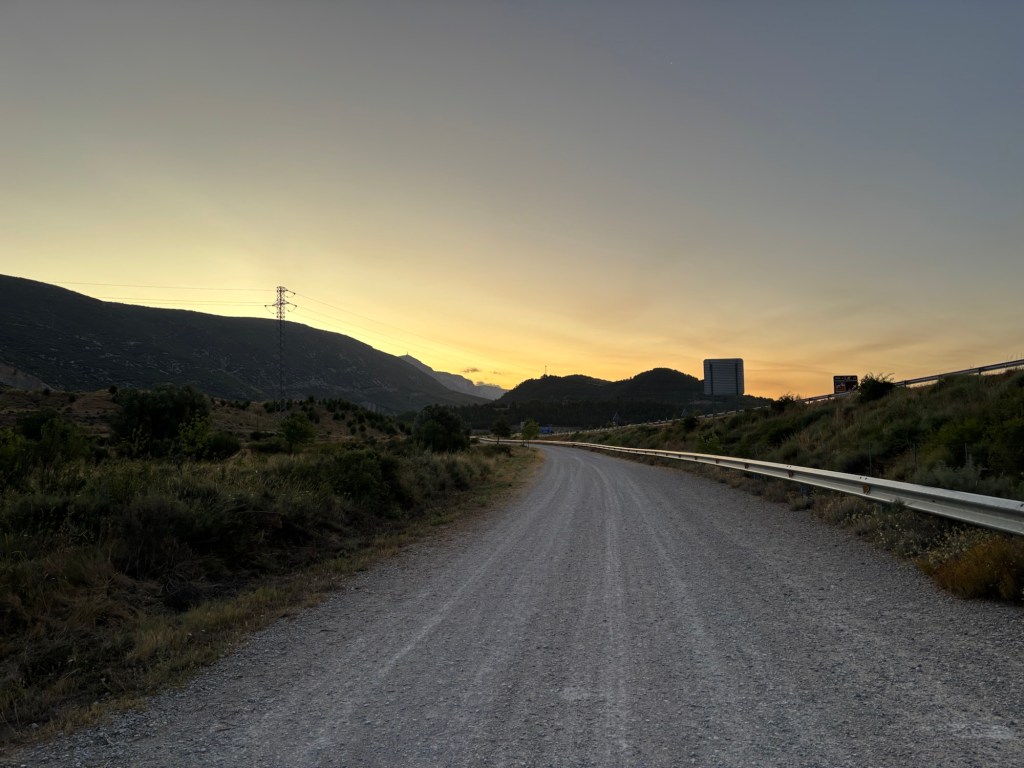
There were a few scattered yellow arrows west of Liédana, indicating that this must once have been one of the many Camino routes, if not perhaps one of the more commonly known alternatives. I had timed my arrival at La Foz for sunrise, knowing that any earlier would have been far too cold and dark and any later would risk a merciless march along the roads later on. Plus, in the first hour after dawn, it’s always possible you’ll find something unexpected, as the animals of the night make their final rounds before retreating into the dark places where they hide during the day.
I had not counted on the wind. A fierce north wind was blowing this morning, almost strong enough to knock the sunglasses off the top of my head, and easily powerful enough to make it impossible to listen to the audiobook I had on (Robert Harris’ Conclave – a little late to the party, I know).
La Foz de Lumbier is one of two major canyons that can be found in the Sierra de Leyre, formed by the southwest passage of two rivers, the Irati and the Salazar. The other, La Foz de Arbaiun, is even grander still, but stands some twelve kilometres to the east of Lumbier, putting it well out of reach of even this overambitious pilgrim for today.
The north wind was still howling down the canyon when I arrived, which made the tunnel access all the spookier: the only way in and out of the canyon is via two long tunnels cut into the cliffs, neither of which are lit. The southern tunnel curves around to the right, pitching you into total darkness for half a minute or so.
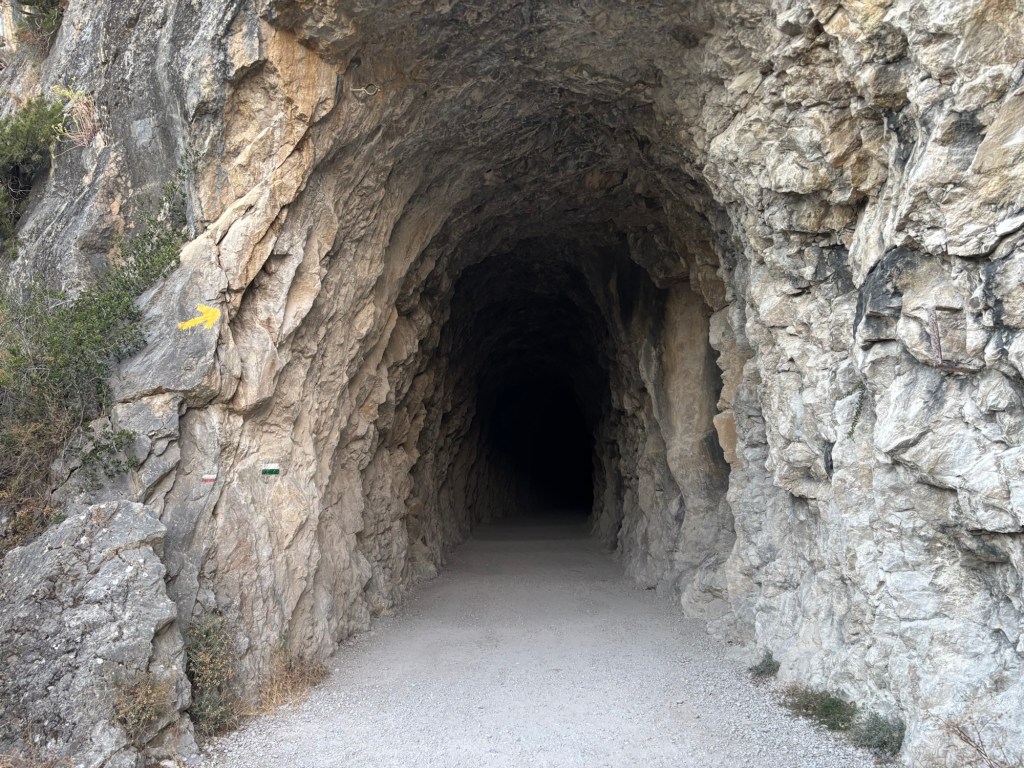
Once inside, a gravel track known as a Via Verde (a converted railway line) leads you along the gorge. Had I arrived later in the day, perhaps, I might have seen some of the canyon’s famous Egyptian Vultures: bizarre, chicken-faced creatures with white plumage and diamond-shaped tales that migrate to Spain from their winter quarters in Africa each year. However, they were nowhere to be seen this morning, presumably sitting on their nests deep in the many caves within the cliffs.
The gorge’s other resident vultures, however, were everywhere.
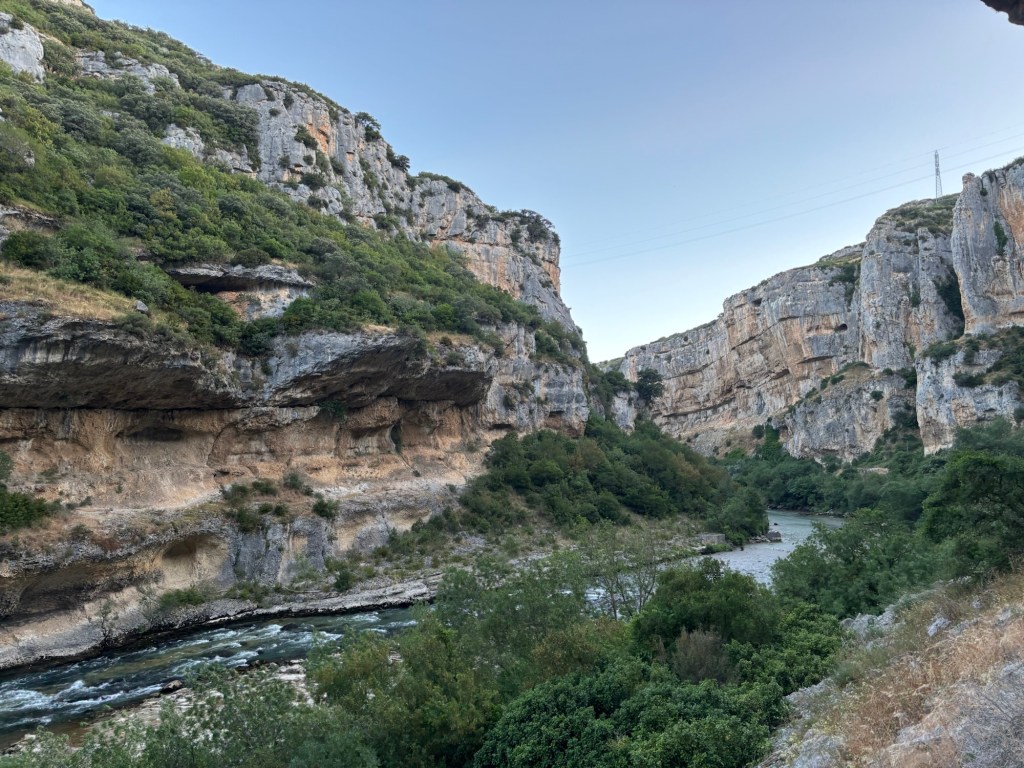
I couldn’t shake the feeling that my passage through the canyon was being very closely watched, as though hundreds of eyes were following me along the river. My guess wasn’t far off the mark: once my eyes adapted to the twilight of the canyon, I realised that many of the bushes atop the canyon walls were in fact a great host of griffons, staring down at me with bobbing movements of their snakelike necks.
Every so often one or two of them would spread their monstrously huge wings and take off into the morning, before returning, feet dangling, to land on some other outcrop downriver, before turning their hulking shapes to see how much progress I had made.
I make no secret of my love for vultures. They are far and away my favourite animals on this planet, and especially griffons. I have never recovered from seeing one for the first time during that first trip to Spain: never accustomed to anything larger than a herring full, I was spellbound by the sheer size of the beasts, with their hulking shape, their silent circling flight and the long, trailing fingers on the end of each wing. That obsession only intensified when I came face to face with them during a solitary climb up the misty mountain of El Gastor, where I spent an incredible hour watching the giants appear suddenly out of the mist at eye level, merely feet away from my perch at the edge of the mountain.
So perhaps you’ll understand why I was so quick to slap an extra six kilometres onto today’s 27km hike, if only to spend some time in the presence of these magnificent creatures. They truly take my breath away.

But Lumbier had more than just vultures to sling at me. Just before leaving the gorge, I noticed something moving in the water below. It might have been the wind, which had been making shapes across the surface of the river all morning, but this was moving slowly against the current. Something long, snake-like, with a white-whiskered face: an otter. Talk about a stroke of luck! Just like the lynx I encountered in Doñana earlier this year, this was a first: I have never seen an otter in the wild before, or at least, one that I could call with any degree of certainty. iPhone cameras are good, but they can’t zoom and they’re not brilliant at moving objects in low light, but if you look closely you can just about tell what you’re looking at!
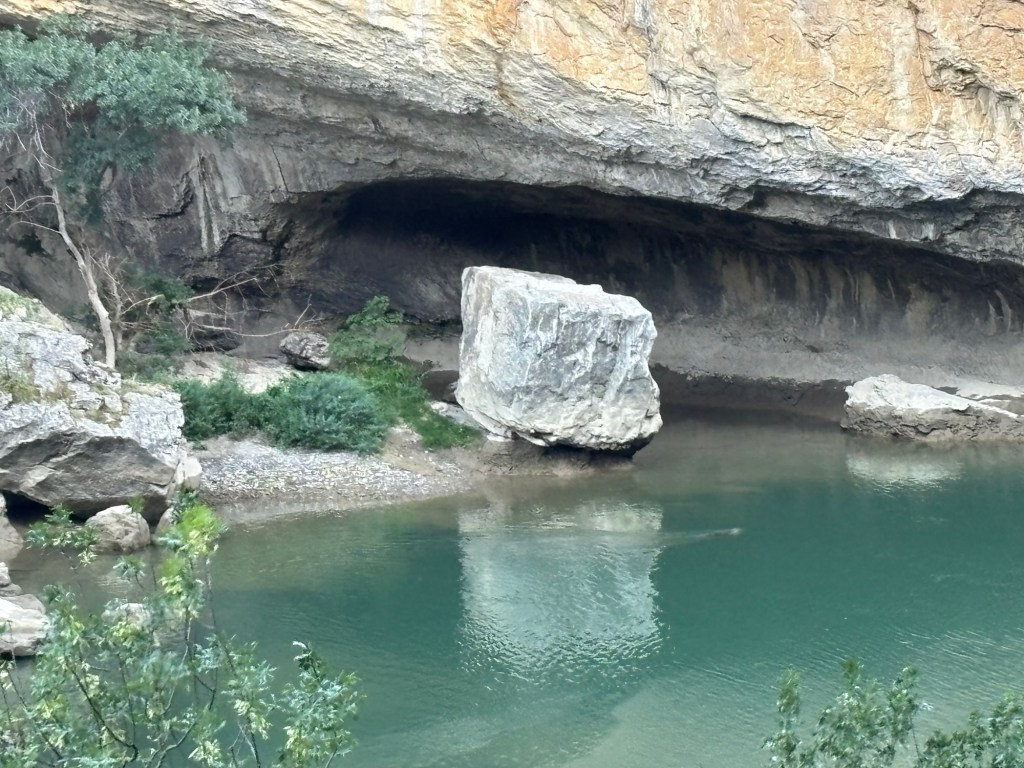
Really, I ought to have hung around at the other side of the tunnel to see if it reappeared, but I wasn’t entirely sure how long it would take me to get back to the Camino, so I played it safe and left the otter to his morning swim. I certainly couldn’t have done an awful lot better with my phone camera even if it did return. I’ll just have to come back someday with the rest of my kit.
Instead, I skirted the town of Lumbier and made my way back to the Camino. This was easier said than done: the “official” route meanders through the turbine-topped hills on the other side of the roaring A-21. Getting back to it was no easy feat, so I followed the old concrete road to Jaca for about 8km.
Normally, road stretches along the Camino can be quite hairy, with grim or even challenging looks from drivers. A spate of pilgrim deaths on the “original” Camino, now overlaid with concrete highways, led to the move toward the current network of tracks and footpaths. However, thanks to the A-21, which runs parallel, there was hardly anyone on the road at all, which made for a very peaceful (if monotonous) walk.
The sun was well on its way to its throne in the Castilian sky by now, and with it, the vultures of La Foz de Lumbier came drifting out on the thermals, as though to see me off.
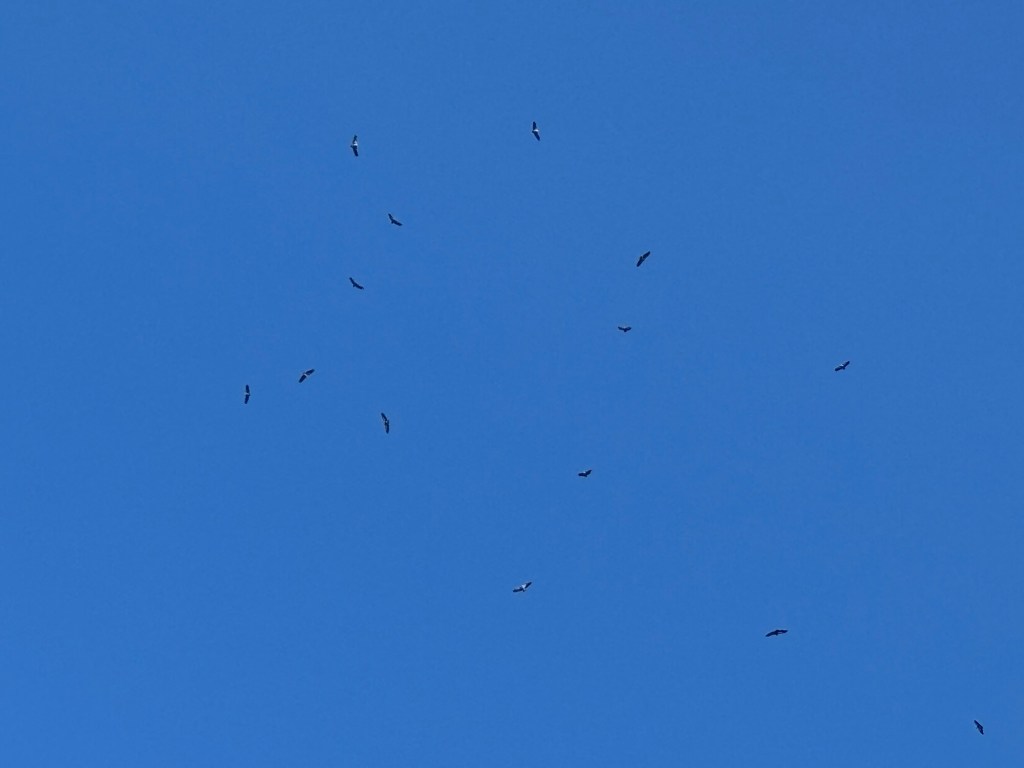
I had a veritable fleet of raptors to keep me company today. As well as the vultures, a few kestrels, buzzards and booted eagles were circling the hills around Izco, along with the usual red and black kites. Today added two new encounters to the mix: a pair of short-toed eagles – exceptional snake-hunters – and a young hen harrier, my first (and hopefully not last) of the Camino. I have an especial fondness for harriers, especially the ghostly grey males, whose long, tapering wings and bouncy flight always conjure up images of the endless meseta in my head.
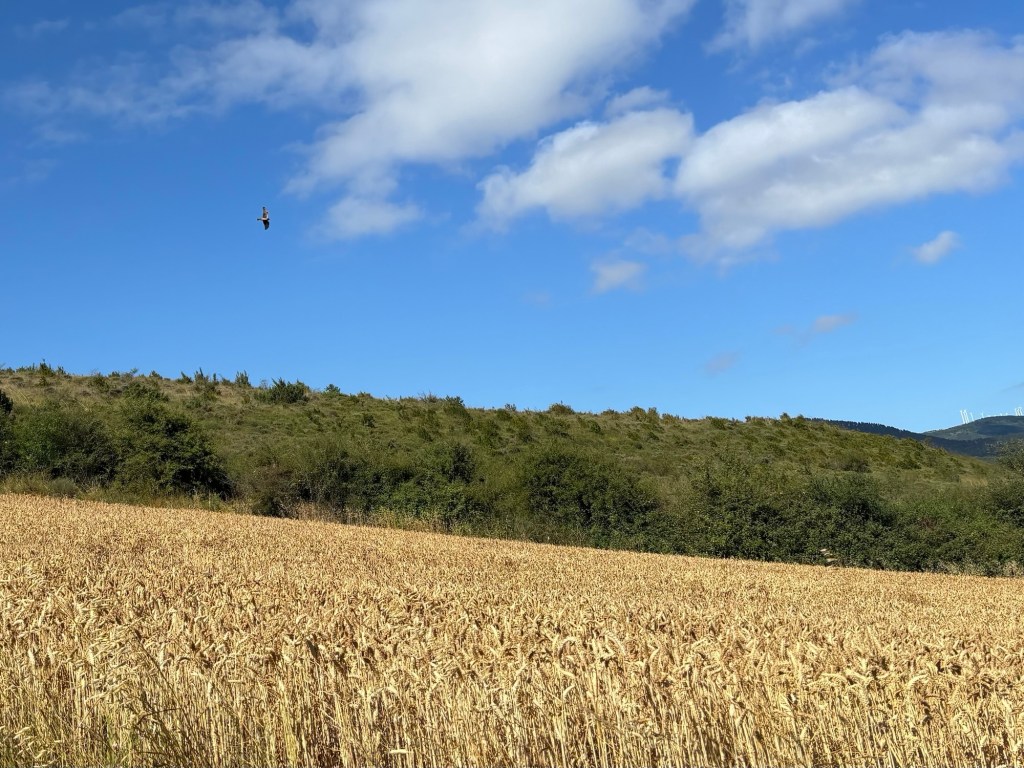
The cattle-crowded foothills of the French Pyrenees seem like an age ago. We are now very much in crop country. It hasn’t had much of an impact on the flies, which are everywhere this summer (I suspect the two months of rain Spain had this spring has caused their numbers to explode this year), but it does make for considerably easier terrain.

Contrary to what the guidebooks say, Monreal does have a working bar/restaurante. The hospitalera should know – it’s her husband who runs it! So I will grab a pizza there tonight, before the last long march of the Camino Aragonés tomorrow toward Puente La Reina and the start of the next stage of my journey: the busier Camino Francés. At least, I hope it will be busier! There’s no guarantee in July, but it should at least have more than one pilgrim in the albergue from night to night! BB x
 The Book of Barnabas