The Flat, Taunton. 21.49.
Jumpin’ Jack Flash – The Rolling Stones
Tonight is my last night in the comfort of my own home. By this time tomorrow, I will have checked into my hostel in Bordeaux, the first of six weeks of bunk beds, temperamental showers and creaky metal lockers. Six weeks is as long as a half term – I have to keep reminding myself of that fact. Six weeks is a very long time to be on the road. But my bag is nearly packed and I’m starting to get itchy feet. Let’s hope that’s the only condition my feet suffer from over the next month and a half!
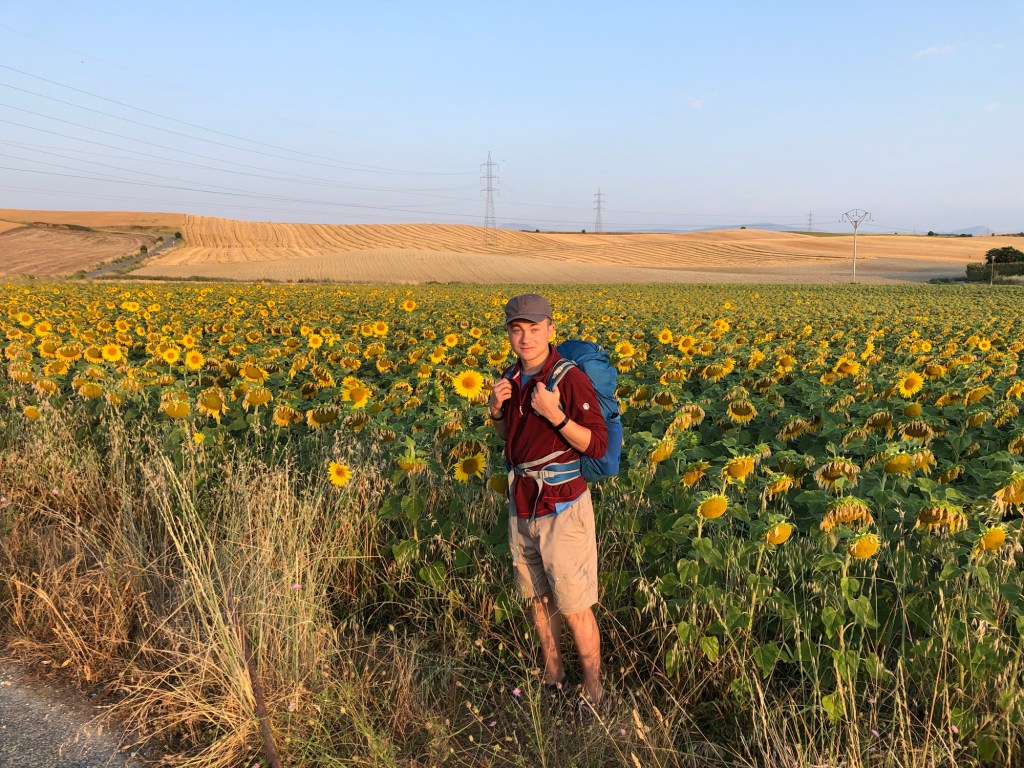
That’s me – a much younger version of me, that is – on my first Camino, some six years ago. A lot has changed since then! Back then, I was still a humble teaching assistant, without the PGCE or the workload that comes with it. I couldn’t walk more than a week or so of the Camino because I was being ousted from my house on site, which had caught the eye of an ambitious young minister, and I had my PGCE Numeracy skills test to revise for (which was nowhere near as hard as I thought it would be). The girl I was with at the time would also not have been overly keen on me staying away so long, so it was only an eight day affair, from St-Jean-Pied-de-Port to Logroño.
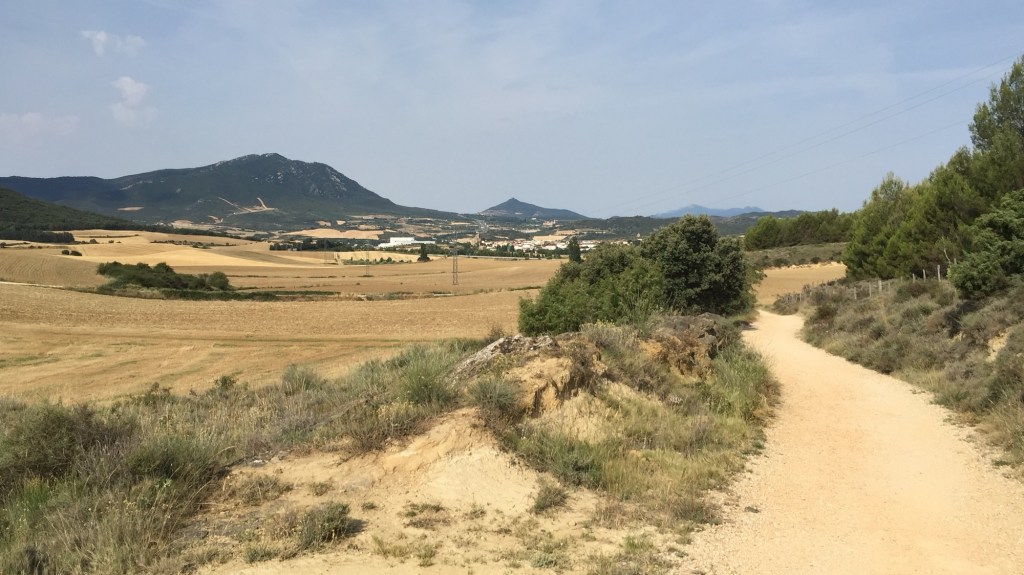
I considered various Caminos this summer, including the Norte and the Plata. The fiendish heat forecast for the summer put me off the Plata, which would have taken me through easily my favourite regions of Spain – Andalucía and Extremadura – and the tarmac trails and relatively high cost ultimately dissuaded me from the Norte. Rumours are currently circulating that they’re filming the sequel to Martin Sheen’s The Way on the Norte this summer, so I think I’ve made the right choice.
I’ve done the Francés before, so why am I doing it again? For the same reason I second-guessed the Plata: you are more likely to find people on the Francés, and it’s the people who make or break the Camino. I met an ensemble cast of characters on my last run: Mikkel the Dane, Domenico the Carabiniere, the Professor, Mamasita the German drunkard and Simas, who walked with me to the end of the road in Fisterra. People from all walks of life can be found on the Camino, and especially on the Francés, which is by far the most affordable of all the available options.
But I’m not doing the same route. Not entirely. This year I’m starting in Oloron-Sainte-Marie, some sixty-five kilometres to the east of Saint-Jean-Pied-de-Port. The Camino Aragonés – by some accounts, the “original” Camino Francés – starts a few days’ march to the south at the pass of Somport, but I want to enjoy the unbridled majesty of the Pyrenees, so rather than catching a bus to the border, I’m going to walk the last few days of the Chemin d’Arles, one of the French pilgrim roads that leads up into the mountains.
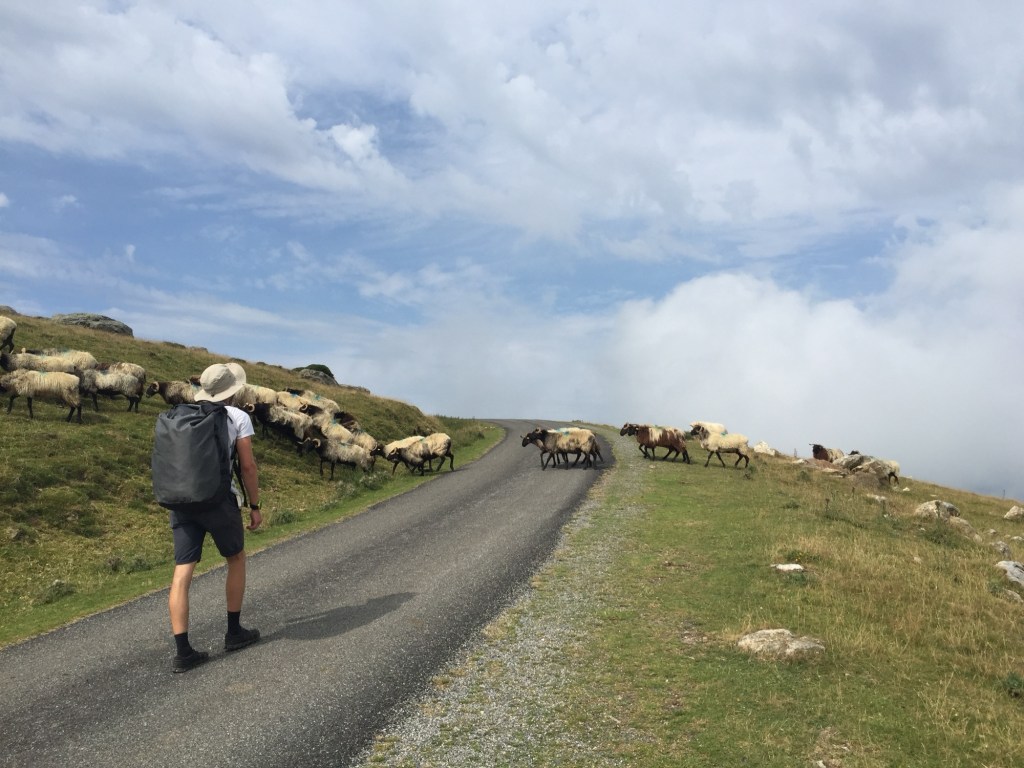
The more popular Napoleon Route from Saint-Jean-Pied-de-Port begins with a monstrously steep climb up and over Lepoeder summit at the western edge of the Pyrenees. I walked that way years ago with three Italian guys. One of them had done the Aragonés before and was full of praise for its natural beauty, and so it is to him, I suppose, that I owe the seeds of this itinerary.
The scenery on the Napoleon route is spectacular, and the elevation is certainly nothing to sniff at, but if memory serves, it felt more like a giant hill than a mountain (or, at the very least, a Scottish highland). The Camino Aragonés, on the other hand, cuts straight through the heart of the Pyrenees.
I’m rather picky when it comes to mountains, largely on account of having been dreadfully spoilt by a year in the rugged limestone-scarred hills of the Sierra de Grazalema as a kid. Unless it’s sheer, craggy and haunted by the hulking shadows of an eagle, it’s not mountain enough for me.
Maybe I’ll get lucky and see a lammergeier – easily identifiable by their diamond-shaped tails. Maybe. Right now, I’d settle for some mountain air. My flat has only one window that can open, and all the others are frosted and quintuple-glazed – one of the downsides of living attached to a boarding house.

After Somport, the Camino Aragonés winds down to the Aragonese city of Jaca before arcing around to the west. I’ll be joining the Camino Francés at Puente La Reina, after which I will be on familiar territory as far as León. The meseta is legendarily testing, but I wouldn’t walk it any other time of year. There’s something powerful about taking the pilgrim road straight across the Sun’s anvil.
Well, I suppose I’d better start packing my bag, and then try to get some sleep. I’ve a routine to get into, after all. See you on the other side. BB x
 The Book of Barnabas