The Shell Thief

Pensión Doña Lubina, Fisterra. 21.20.

First Dates is on TV. I can never find the equivalent in the UK, but in Spain it seems like it’s always on. Tonight’s couples include a pensioner from Sevilla, a rocker in his fifties and a Colombian male model whose dealbreakers in a would-be partner include the term “vergón”. Spanish TV, like Spanish music, certainly doesn’t deal in subtlety.


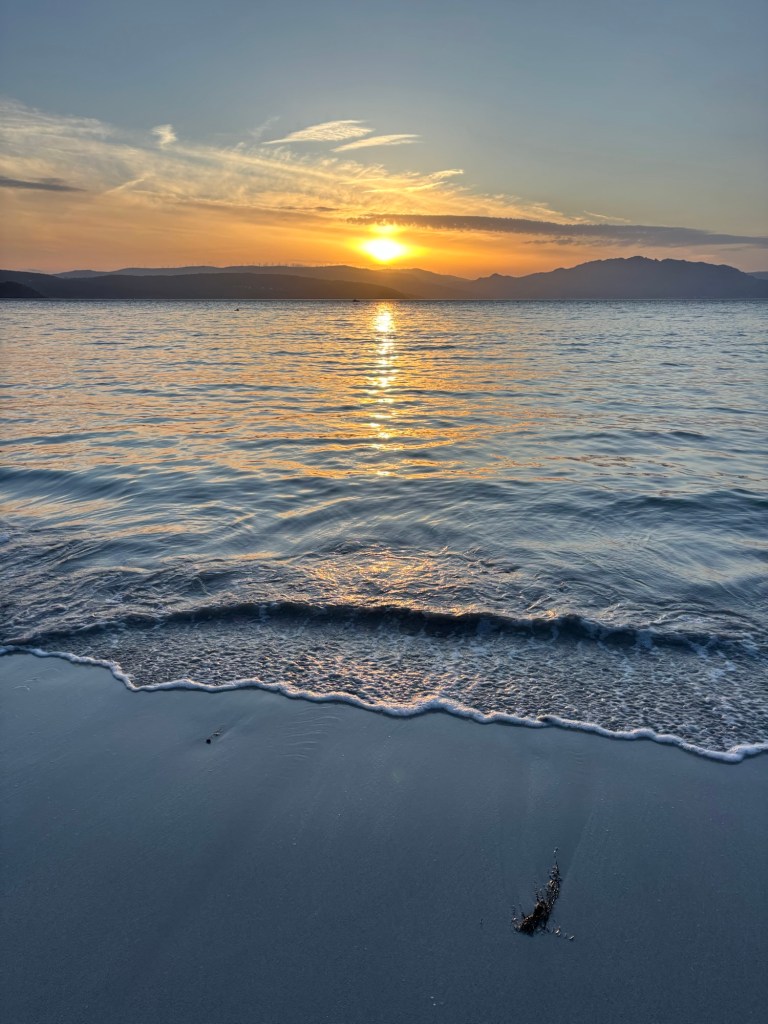
I woke up around six this morning to the sound of the waves breaking on the shore outside – the same gentle woosh that I can hear as I write.

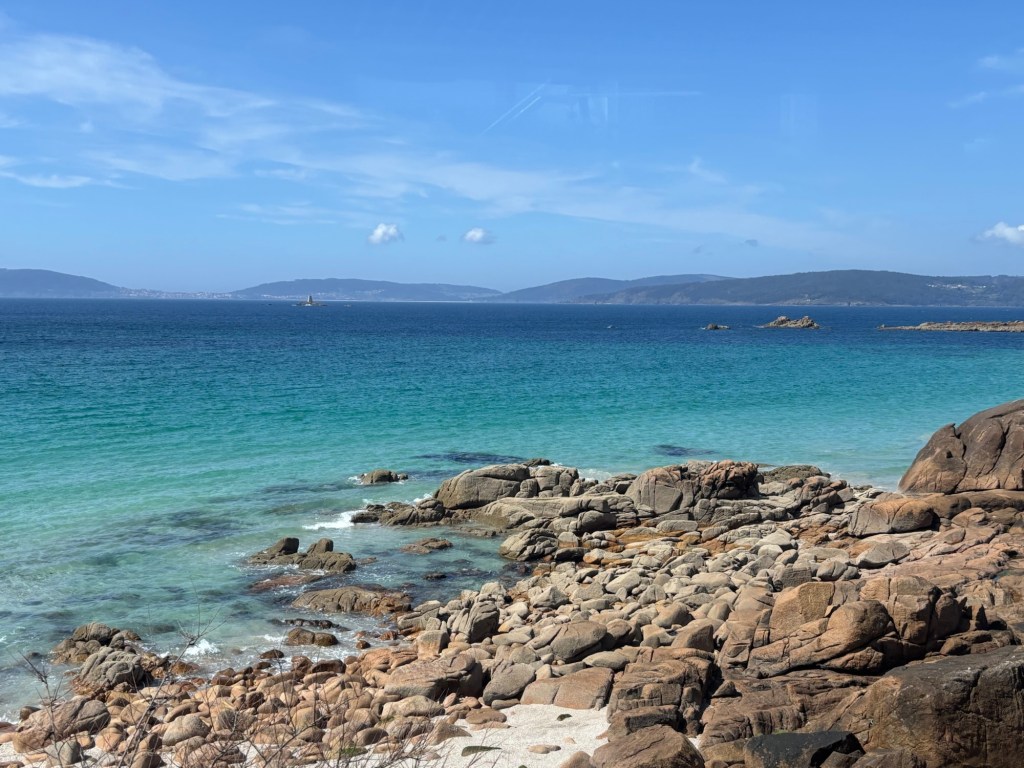
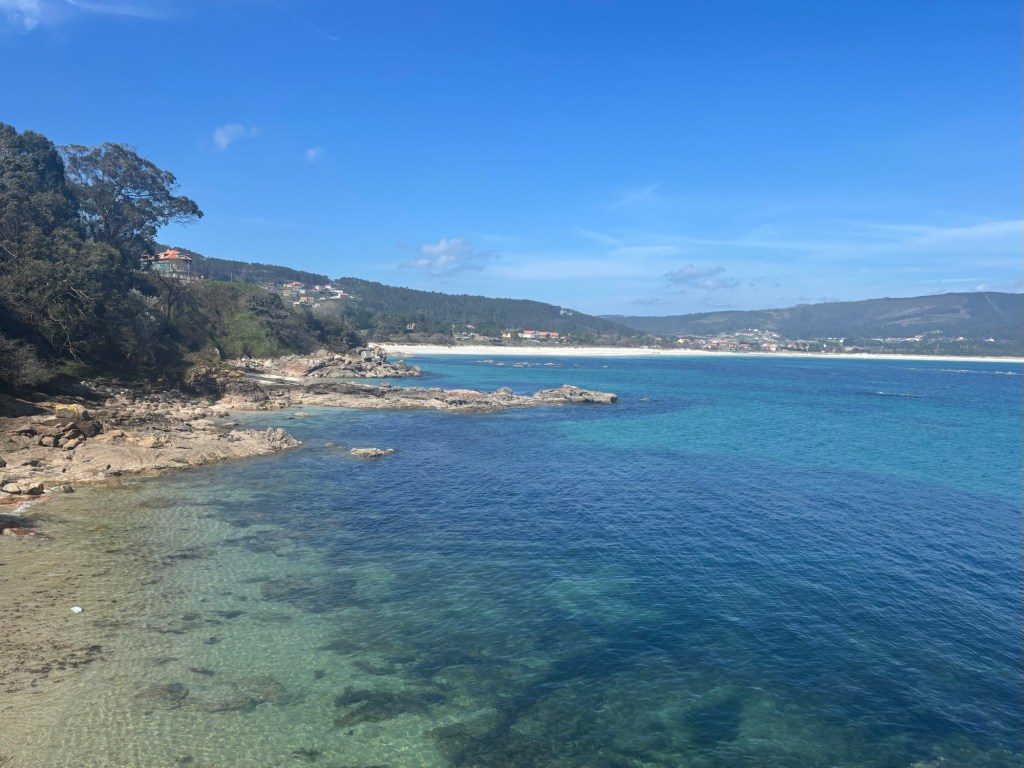
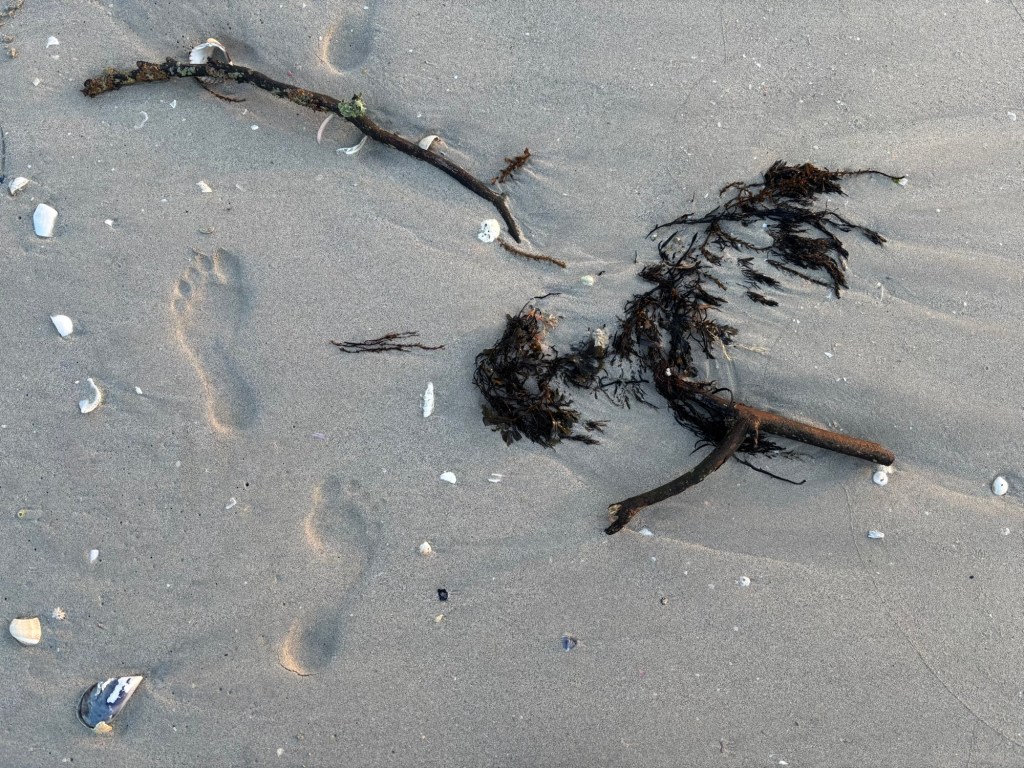
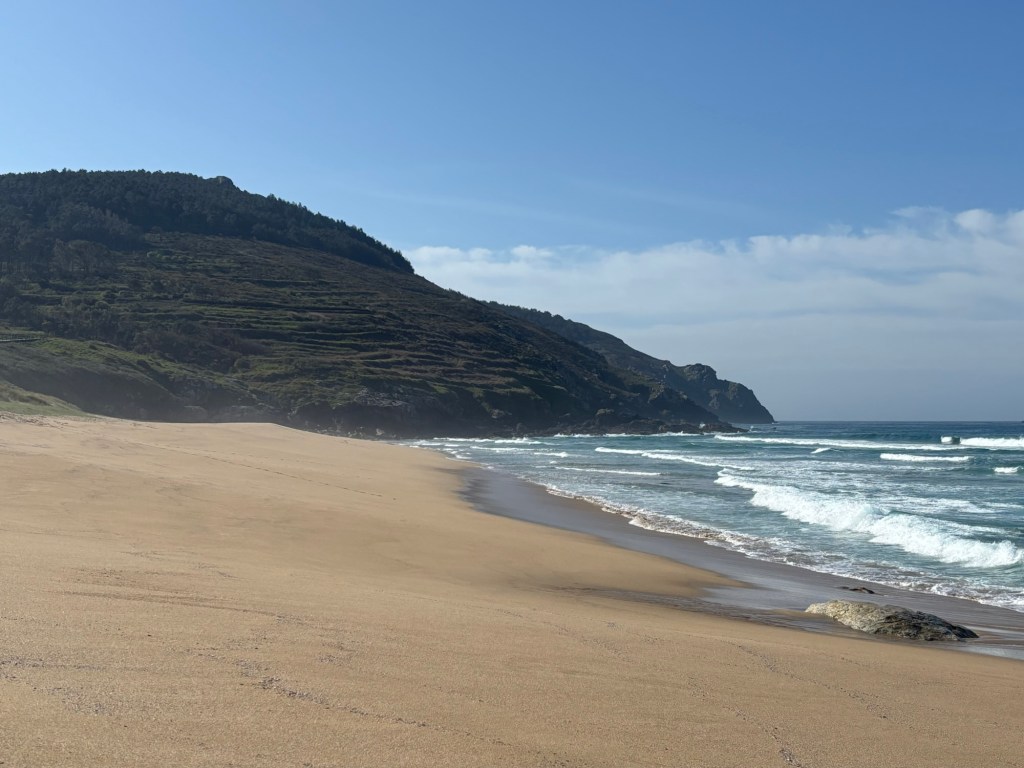
The sun crested the jagged bluff of Monte Pindo shortly after 8.15, so I slipped down to the beach to catch the light. A couple of dog walkers were out and about and a single pilgrim sat reading in the dunes, but otherwise the long curved bay of Playa Langosteira was empty. The tide had come in during the night, leaving a breadcrumb trail of seashells all along the tidal maximum. A beautiful sight, to be sure.

Or, at least, it should have been. Only, the only shells left on the beach were broken. It looked as though the sea had kept the best ones to itself and spat out the rest. As it turns out, the truth wasn’t far off.

A barefoot pilgrim stood a hundred metres or so ahead of me, turning something over in her hand. Satisfied with whatever it was, she moved further along the beach, stopped, and stooped to pick something up. Clearly, she was looking for seashells. She must have repeated the exercise about eight or nine times before I overtook her. I didn’t turn to see if she had more to find, but I did catch a glimpse of a large collection of seashells in the crook of her arm as I passed.

I’m not really one for calling people out. Anyone who knows me even in passing will know the last thing I ever want to do is to risk upsetting anyone, even when the matter seems ridiculously trivial. It’s a people-pleasing tendency of mine that I’ve never been particularly good at quashing. However, if there’s a line in the sand, it’s when I see someone doing something that threatens the natural world in some way. And this definitely constitutes a transgression in my book.

Before you think me a busybody, I feel I need to point out that this isn’t just high-handedness on my part. The law is on my side here. In 2017, faced with a surge in tourists in coastal areas (still a major problem today), the Spanish government passed the Ley de costas, which – to the official letter of the law – “forbids the extraction of any element of the public littoral domain, such as sand, shells or stones”. This makes it illegal to beach-comb in any part of the Spanish territory, from Galicia and the Costa Brava to the Balearics and the Canary Islands. Period.

If my experience of this country and its people is anything to go by, I’d be surprised if the Spanish police actually enforce this law, but the consequences of falling foul of it can be severe: the fines for collecting seashells range from 500 to 3,000 euros. The Mediterranean island of Sardinia is even stricter: taking large quantities of sand from its famous beaches can lead to a prison sentence.


There’s a very good reason for all of this. It’s easy to say that if we all took five or six shells from the beach on our holidays, soon there’d be nothing left to take. But there’s more to it than that.

Seashells are a fundamental part of the littoral ecosystem. The continual pounding of the waves eventually grinds them into fragments – the same fragments that make up the sand beneath your feet. In a way, your average beach is actually an enormous marine graveyard. Without the shells, there’d be less sand to go around, seriously threatening the thousands of creatures that make their home in the littoral zone and the birds that rely on them as a food source.

Discarded shells serve a second purpose. Nothing goes to waste in the ocean. Besides the obvious hermit crabs, who literally depend upon seashells to survive, an abandoned shell provides a much-needed shelter for smaller creatures like shrimps and fish fry, who use these temporary refuges until they are large enough to avoid some of their former predators, as well as a holdfast for barnacles, limpets and chitons. Larger shells may even harbour an octopus, a creature perfectly adapted to squeezing into the most awkward of spots to escape from predators.

Which they definitely need to do on the regular in these waters, given the Galician obsession with octopus as a delicacy.


Sorry… I got up on my pulpit there. In truth, I was mulling all of this over in my head as I read a signboard by the beach exit which detailed some of the above, while the beachcombing pilgrim stood washing every single shell she’d collected under the outdoor shower. I didn’t want to challenge her, but I couldn’t just let her take all those shells away. She laid them out in three rows along the wall as she washed them. She must have amassed around thirty in all, from scallops to periwinkles and everything in between.

When it looked like she had finished with the ablutions, I got her attention and told her politely to take one if she had to, but to leave the rest behind. She looked confused. I repeated myself in Spanish, but that didn’t seem to work either. She looked like she might have been Thai or Malay, so Spanish wouldn’t have been much use. I tried French. I pointed at the sign and tried to indicate that taking the shells was wrong – not that it would have done much good, as the sign was in Galician and Spanish and faded in places due to the ravages of sun, sand and surf, and thus presumably illegible to the average tourist. Nothing.

I even tried mimicking handcuffs and paying a fine. She just stared at me and held out one of her shells for me to take, presumably thinking I wanted one. I shook my head and said “illegal” a couple of times. She said “OK” and wandered off. I didn’t see where she went, or if she left the shells behind. She didn’t return to the beach, at any rate.

When I was a kid I got walloped for trying to stop a couple of older boys from stealing a frog. They had caught one in a bucket and were taking it away to put in their garden. In a fit of fury I still can’t explain, I snatched the bucket and legged it to the river to release the creature. I was pushed into the water for my insolence and given a couple of kicks for good measure, but I had achieved what I set out to do: the frog got away.

Was it my place to give that girl a ticking off? Probably not. But we have to stand up for the things we believe in. Without principles, we are merely waiting out our time on this earth. Our core beliefs give us grounding, a rock to stand on, which no wind or waves or wickedness can wear away.

I’ve got back onto the pulpit again. I’d better get off before I end up considering a career in the clergy. BB x

At the End of the World

Cape Finisterre, 20.11.

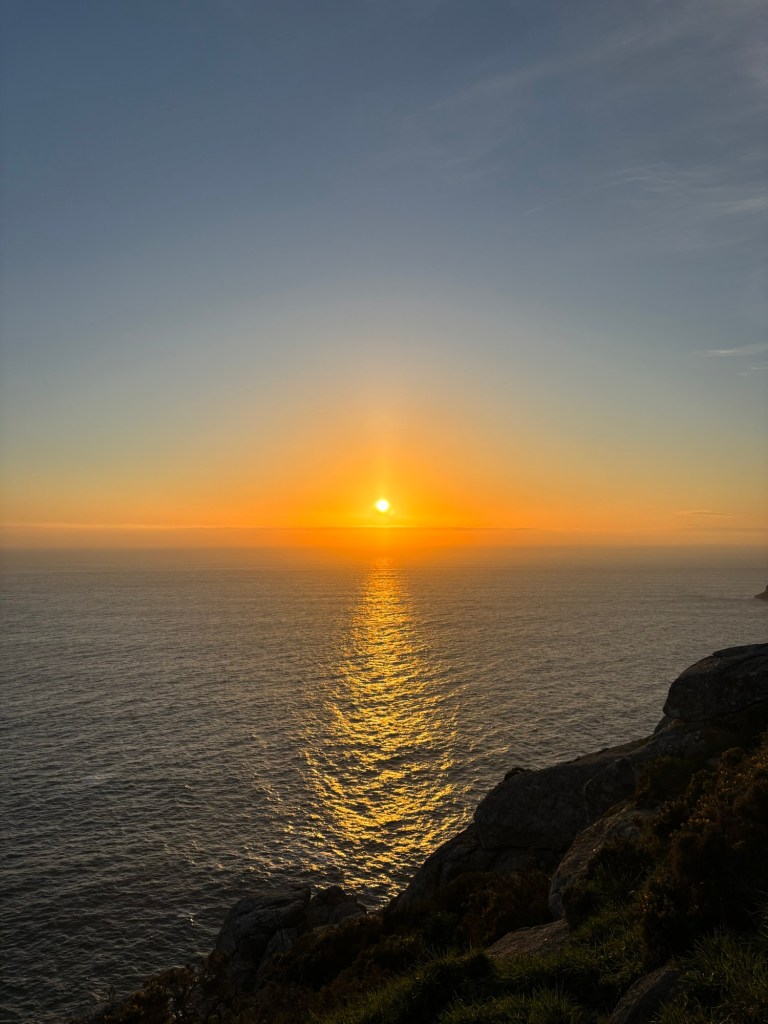
Galicia provides. Happiness writes white but the white light is brilliant, like the sands that run along the length of the bay beneath my window. Like the feathers of the gannets and terns that dance above the face of the water. Like the sparkling reflection of the sun as it sinks below the horizon along the 42nd parallel north, disappearing beyond the Atlantic, beyond Chicago, beyond the end of the world.


Madrid feels a world away. I caught the early AVLO train from Chamartín and joined a modest number of passengers on the three hour journey to Spain’s north-westernmost region. The railway line tunnels under the snowy peaks of the Guadarrama before racing across the featureless plains of Zamora and then, slowly, climbing into the wooded hills and craggy moors west of Astorga before rolling through the deep valleys of Galicia proper. Spain is one of those countries that alters radically as you travel through it, and the Madrid-A Coruña train is a very good way to prove that point.


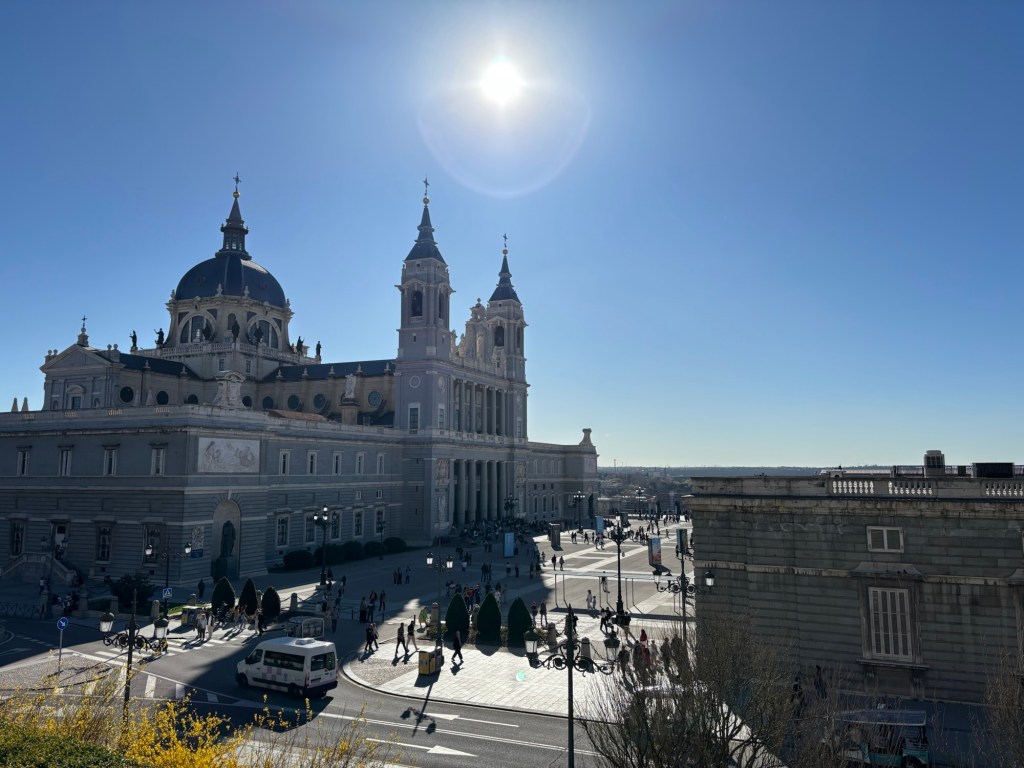
I arrived in Santiago de Compostela with a couple of hours to kill before the bus to Fisterra, so I wandered into town and sat in the main square in front of the cathedral for a while. A few school groups posed noisily in front of the cathedral, while exhausted pilgrims sat at the feet of the pillars, soaking up the sunlight to recharge their batteries. There aren’t as many now as there were during the summer. I guess that’s to be expected. The year I made the trek, 2023, was also a delayed holy year, the first since the COVID-19 pandemic shut the Camino down, so the numbers were especially high.

I wonder how far these bold pilgrims had come this year. What friends did they make on their journey? What memories will they take away with them forever? Did somebody watching from the sidelines wonder that about me, years ago?


The bus from Santiago to Fisterra is almost as long as the train from Madrid, but it does travel along one of the most scenic routes in the whole country. To reach the famous cape, it first has to pass through all the towns and villages along the coast, fording the great rías that weave through the cliffs on their way to the sea. The sun came out from behind the clouds just as the cape came into sight, and the whole coast seemed to come to life: the yellow flowers of the gorse shone like gold, the sand beneath the shallows glittered like jade. My heart did a similar leap once when I saw the silhouette of Olvera, my old hometown, for the first time in seven years. It made me smile to think that this place had joined that pantheon.


I arrived early, so I went down to the beach to soak up the sea air for a while. Fisterra is so special to me because it combines the two sides of my heart: the sounds and smells of the sea from my childhood in England, and the language, cliffs and mountains of my adult love for Spain. Mountains take my breath away (especially the craggy limestone kind) and marshes hold a special kind of rapture for me, but I think I will always come back to the sea when I need to feel whole again.

As I watched, a sandwich tern flapped into the little bay and started diving for fish. It was a beautiful sight to see, for the waters are so clear here that I could see the bird’s brilliant white form beneath the water after it had dived, moving like a living arrow. After five attempts it speared a shining silver fish and took off to the south with its catch in its beak. I realised the path on Google Maps didn’t actually exist and beat a quick retreat to the hotel for check-in.


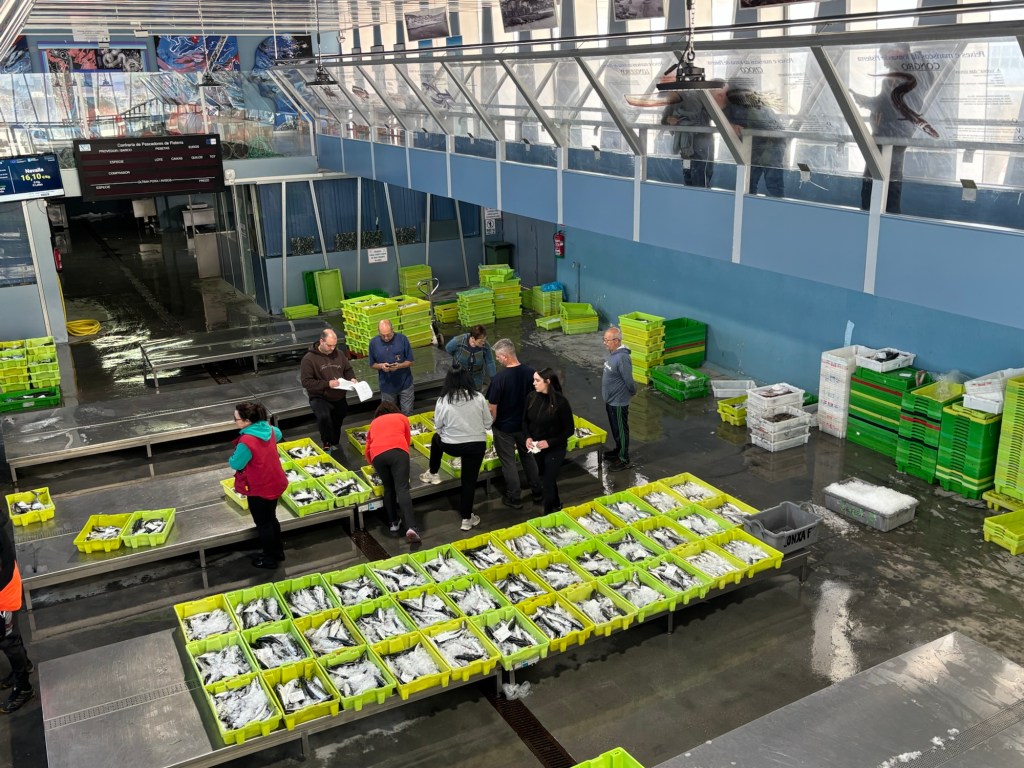
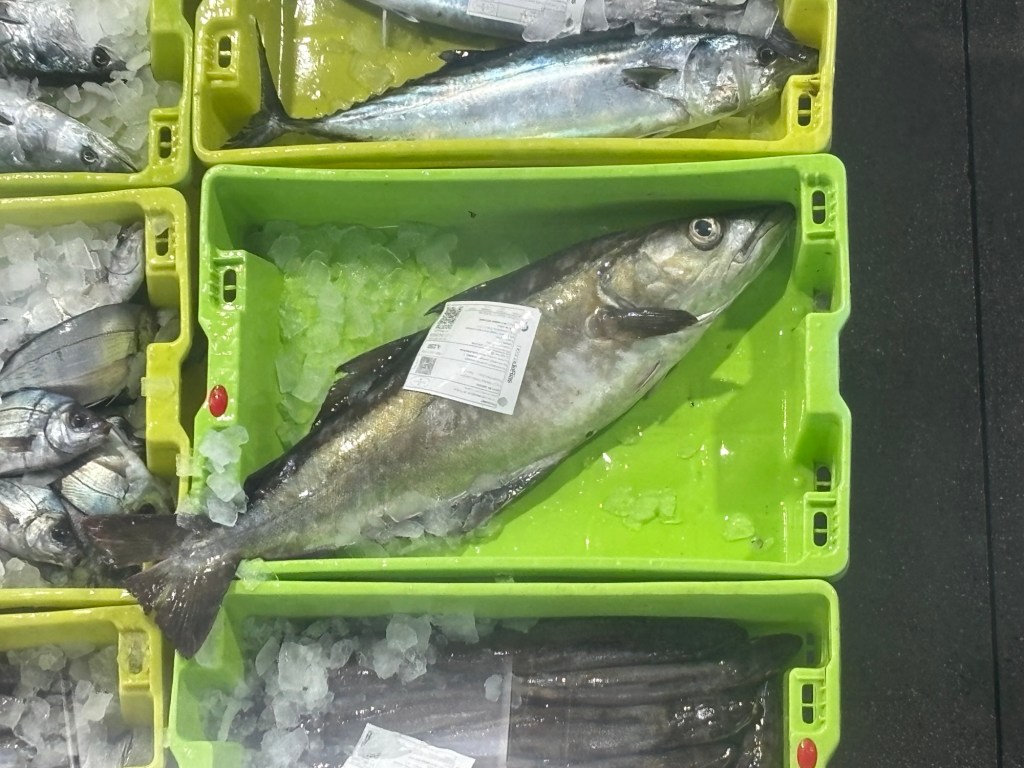
The last time I was here, I only saw the town’s fishery out of hours. I got lucky this afternoon: on my way to the cape I dropped in and caught the daily auction (or lonxa) in full flight. Crates of hake, mackerel, red gurnard and more than a dozen other species I learned to identify as a kid went to the highest bidder in one of the mildest mannered auctions I’ve ever seen (though, to be fair, I haven’t seen that many auctions). Some of the larger fish had QR codes slapped on the sides linking them to the fishermen who caught them, I suppose – my camera didn’t reach far enough to tell.


On one side of the room, crates of sea urchins were stacked fifteen high. I didn’t see any percebes (the region’s famous goose barnacles), but then, the manner by which they are collected is very different indeed, so that’s hardly surprising.

I left before the giant anglerfish went under the hammer. I’d have been curious to know how much that went for.


I called home from the cape and said I’d be back before sunset. It’s now fifteen minutes to sunset and I’m still here, but I’m glad I stayed. The weather here is so changeable and this might be my only chance to watch the sunset from the cape, as it was rained off the last time I was here. A small cohort of like-minded pilgrims and locals have come out here with the same idea. A couple of noisy Spaniards made a pig’s ear of taking a highly choreographed selfie nearby, much to everyone’s frustration, but they’ve gone now, and it’s been nothing but the sound of the waves for the last twenty minutes.

I’m going to stop writing now. The sun will be sinking below the horizon soon and I want to appreciate every second as it does. See you on the other side. BB x

Lost Souls

Calle de San Millán, Madrid. 21.03.

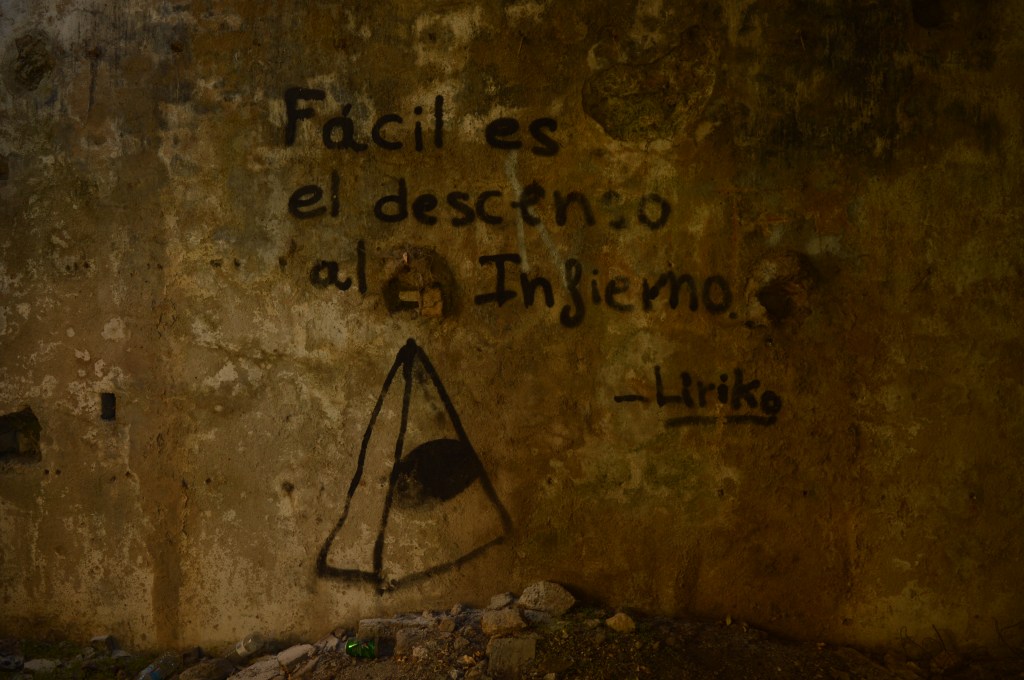
The gates of Hell are open night and day / smooth the descent, and easy the way.

Virgil, The Aeneid

At the foot of the mighty bridge that spans the gorge over the Río Tajo in Ronda, the yellowing ruin of an old pumphouse steadily crumbles into oblivion. Trees grow out of its windows and human and animal detritus clusters against its walls, as though they shrink from the searching light of the world beyond. Abandoned spots like this would be covered in graffiti in England; profane scribbles and indecipherable tags whose meanings will fade from the world long before their makers. A single graffito marks the eastern wall. Of all things, it is a quote from Virgil.


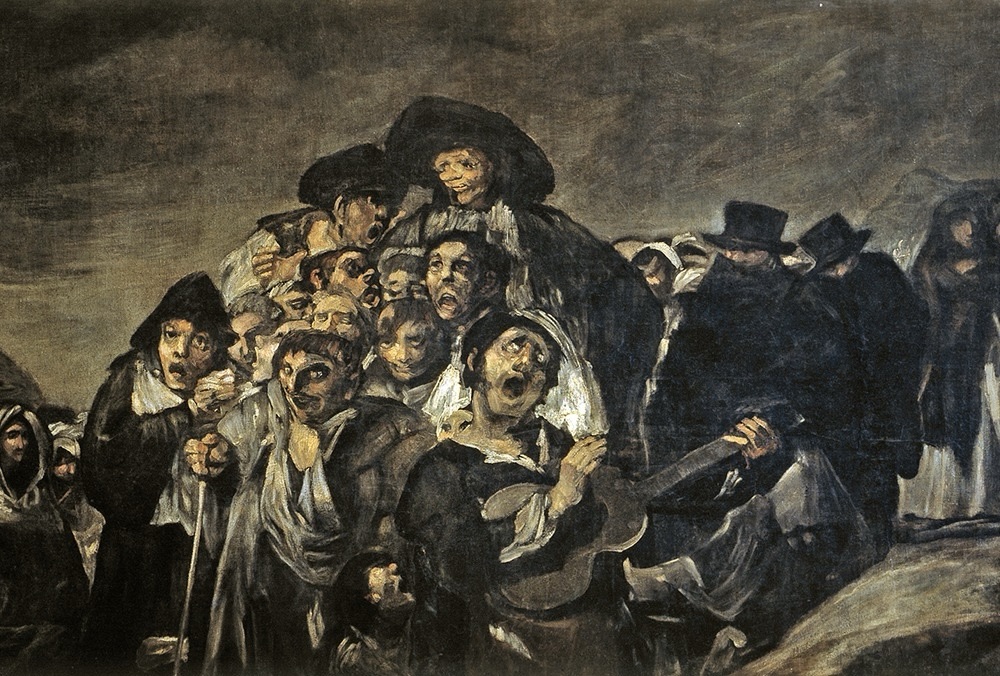
The memory came into my head as I stood before Goya’s Pinturas negras in the depths of the Prado, bewitched – and not for the first time – by the unfettered darkness on the canvas.


In the opinion of this jaded wanderer, there are few artists who can hold a candle to Goya, an artist whose style was shaped – or, perhaps, perfected – by the ravages of one of the darkest periods in Spain’s history.

The Prado does a fantastic job at telling his story. On the top floor, illuminated by the brilliant natural glow of several skylights, his early works shine with an innocent halo. Paintings such as El quitasol and La vendimia tell of a happier time, when Goya was young and using his gifts to make a name for himself in the circles of the rich and powerful, as many an artist had done before him for generations.

Descend to the ground floor, and some of his younger naïveté is stripped away like a layer of paint to reveal a cunning eye for detail and social commentary. Unlike the illustrious royal portraits by Titian and Velázquez which grace the walls further down, Goya’s subjects are painted as they are, without any false veneers of lustre or glory. Maja vestida has a cute smile, but she is a pale imitation of Maja vestida, whose knowing expression betrays a far greater honesty.

And then you descend to the basement. The lights dim. War comes to Spain, Goya’s former patrons flee for their lives, and the country descends into chaos. Goya sees it all and sketches furiously. The illness that robbed him of his hearing pushes him into a deeper, darker school of thought, and his subjects trade their rosy cheeks and playful smiles for pallid masks and devilish grins. At the same time, the faces become much more recognisably Iberian, replacing the stateless Western mannequins who previously adorned his tapestries. Still a master of light, Goya now perfects its dexter side, drawing on the darkness of the maddening world around him, culminating in the macabre frescos of the Quinta del sordo. The sunken, bulging eyes of Saturn and his gaping maw stare out of the canvas with a malice that is at once pitiful and horrifying.

An American girl is toured swiftly around the room by her imperious mother, the latter commenting loudly on the broader collection ‘back home in Washington’. A Latin-looking schoolboy fills out a couple of questions on a worksheet on one of the paintings and moves on. Two young parents push their infant child by in a pushchair. They cast Saturn a brief glance and move on, a little faster. A gallery official in black and red watches from a corner, but nobody needs reminding that photos are not allowed in here. Goya’s demons still have the power to strike terror, two hundred years later.


Out in the daylight, Madrid goes about its business. My footsteps take me back into the heart of the city. There are a lot of indios about: current estimates hold that they make up one in seven of the capital’s population. In the city centre, I’d wager the ratio is even higher. Pizarro’s pigeons have come home to roost.

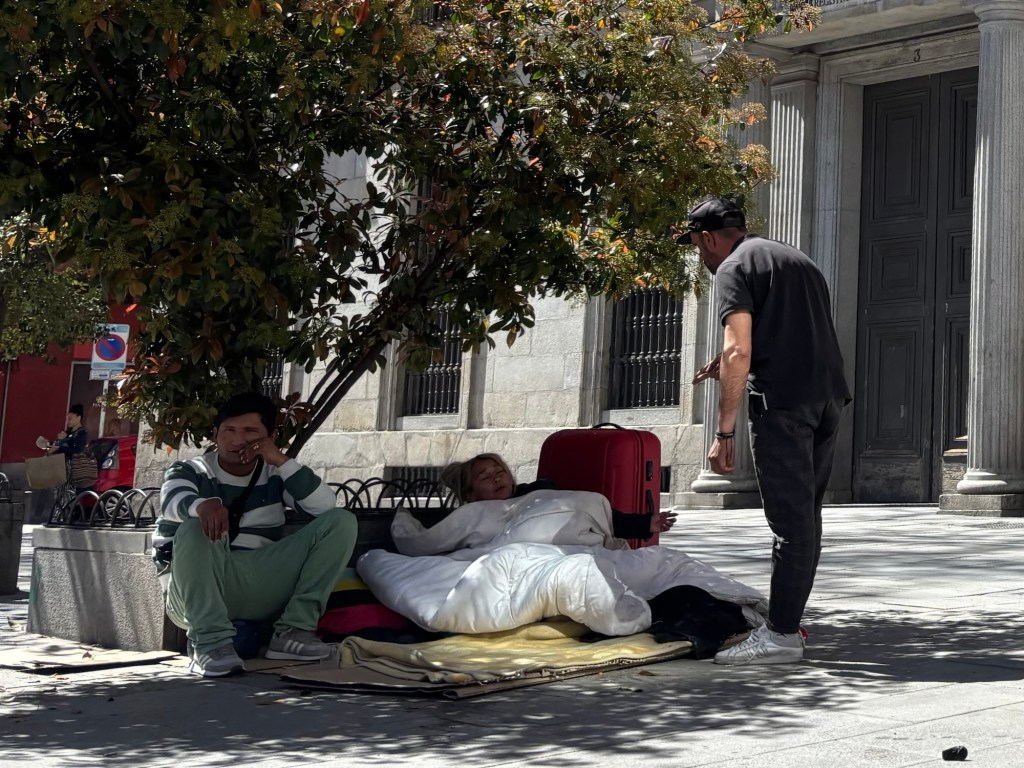
In a side-street, two officers of the municipal police search a couple of North African men, who have their hands on their heads – “Qué hacéis por aquí?”. A carton of box wine lies discarded in the road, ignored by a street sweeper who is watching the scene unfold over his shoulder, sweeping the same dust in circles.


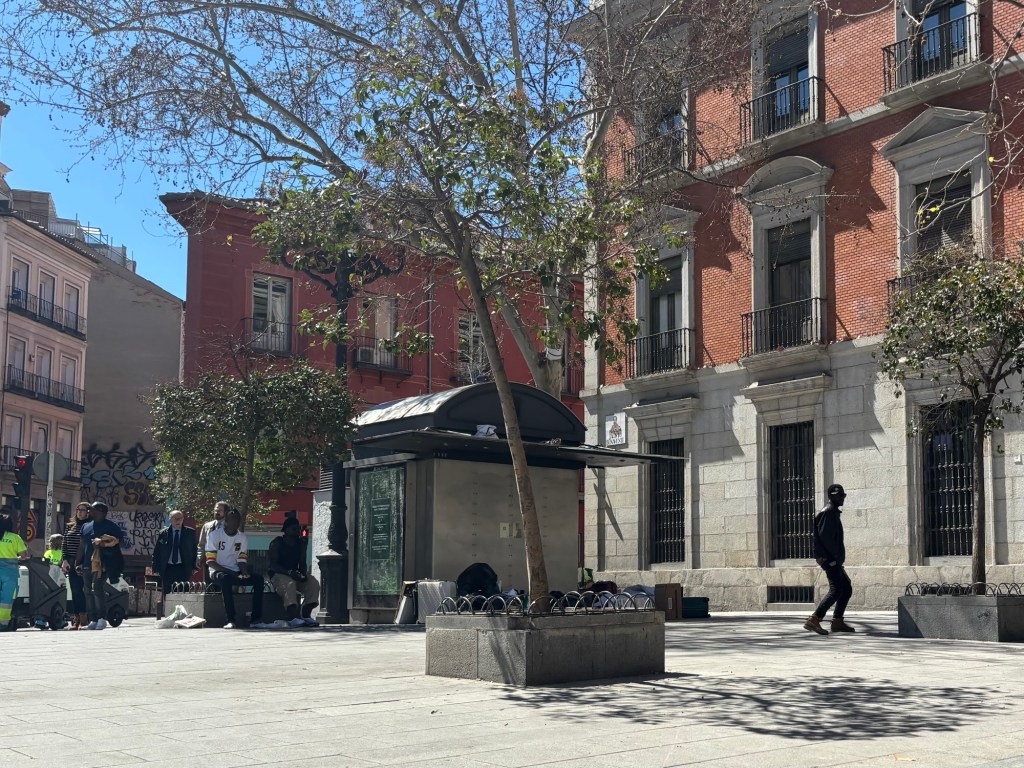
In Plaza Santa Ana, a small group of Africans have laid out their wares on white blankets and try to flog what they can to passers by in reluctant, almost disinterested tones. Clutched in their hands at all times are the ropes fastened to each corner of the blanket, ready to be drawn up in a moment’s notice. These unfortunate hawkers are known in Spain as top manta, and are usually more in evidence in the larger cities along the coast: Barcelona, Valencia, Málaga… wherever careless tourist money can be found.


It crosses my mind, as it has before, to strike up a conversation with one of them. To get their side of things. To hear their story. Something checks me: a sense that unfriendly eyes are watching. I scan the square.

Sure enough, standing in the shade of a plane tree at the edge of the square is their overseer: a surly man in a Cameroonian football shirt. He appears motionless, but his eyes are fixed on the street vendors, who occasionally return his gaze, like nervous shorebirds before a sleeping crocodile.

My speculation becomes flesh when one of the hawkers approaches him with what seems to be a question. The conversation is obviously not an amicable one, and the overseer is on his feet and shouting, followed swiftly by his companion, a big chap with dark shades and a military-style beret. The overseer barks at the hawker and sends him packing. “No eres más que un puto negro.” It’s a loaded insult, but since it’s contained, hurled from one immigrant at another, nobody seems to notice. Madrid’s shoppers continue about their business. Tourists sink half pints of Mahou and Amstel mere yards away. A lost soul staggers to keep his balance, either too drunk or too drugged up to pay the scene any heed. The two Latino vagrants sleeping rough in the shade of a nearby bush hardly bat an eyelid. One stirs slightly, the other draws on his cigarette, casting a gentle orange glow in the shadows.


As I turn down a street toward the city centre, I see a police car slowly crawling toward the square. I turn around, but the top manta touts have already got wind of the impending threat: their bags are slung across their shoulders and they are retreating into the shadows. They will be gone long before the police arrive.


Goya’s Madrid is a dichotomy: a place full of light and consequently of shadows also, of rosy-cheeked beauty and ugly avarice. This is no less true now than it was two hundred years ago: it just wears Adidas trainers now.


Tomorrow I leave the capital behind and make for the windswept coast of Galicia. I have never been much enamoured of cities, being inclined to agree with the author M.M. Kaye, who described them as “the breeding places of the very worst aspects of humanity”. My destination is the Costa da Morte – the Coast of Death – the wrecking place of many a luckless merchant sailor. But its name is deceptive: for me, it is a place of unfiltered light and hope.

The gates of hell are open night and day / Smooth the descent, and easy is the way / But to return, and view the cheerful skies / In this the task and mighty labor lies.

Virgil, The Aeneid

The mighty labour has begun. There are still fragments of my heart in need of healing after last year’s American adventure. Hard work and endless endeavour have been a good palliative, but they are not the solution. Finisterre healed my heart before. It will do so again. I am sure of it. BB x