Memory Lane

AVLO Carriage 4, Loja. 17.40

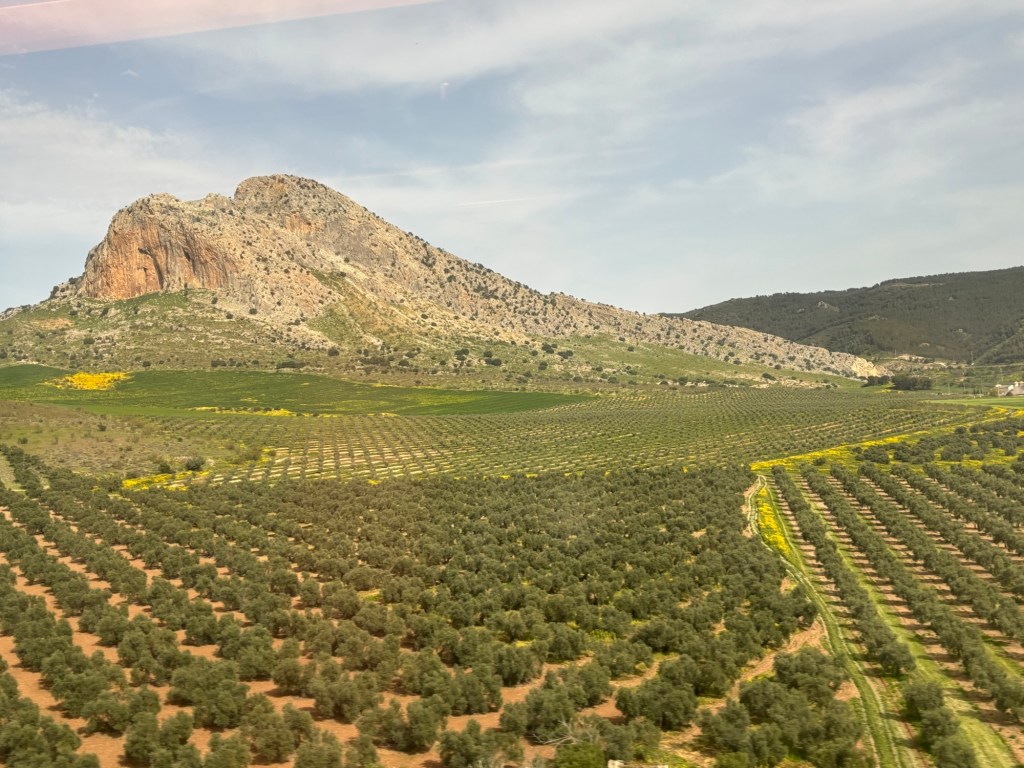
Andalucía hurtles by a in a blur of olive green and marbled brown. I’ve never seen it so green: all that rain Spain must have had last month has completely transformed the place, turning the golden fields of my memory into a paradise on earth. I could hardly ask for a better welcome home to the land of my childhood.

Landmarks sail past the windows like ships with friendly colours. There’s the jagged spires of El Torcal, high above Antequera, the first place that genuinely inspired me to write a book set in Spain. There’s the Peña de los Enamorados, a lonely bluff rising out of the fields where, legends tell, a Christian knight and a Moorish princess hurled themselves to their deaths rather than live divided by their warring faiths. There’s the limestone massif of Loja, crowned with wind turbines, their blades motionless in the afternoon air. And there’s the reason why they’re stood so still, standing in awe: the Sierra Nevada, dwarfing all the other sierras for miles around, covered in a vast blanket of snow. If the sunset is good, I will try to snag a spot at the Mirador de San Nicolas at just the right moment tonight, when the setting set sets the snowy peaks of the Sierra ablaze behind one of the most beautiful buildings in the world: the Alhambra de Granada.

Mirador de San Nicolás, Granada. 21.01.

How should I describe it – coming home? I never lived in Granada itself, but between coming here at least three times before and a year living over the sierras to the west, this place feels… so familiar, compared to the other places I’ve been on this trip, anyway. The accent, the noise, the simple fact that the music playing over car radios as they pass is flamenco and not reggaeton… This is the Spain that captured my heart many years ago, when I was just a boy.

Things have changed since then, but not by much. There’s a lot of anti-tourist graffiti around, but then, perhaps I’m actively looking for it now. Here, in one of the most popular tourist destinations in Spain, that anger is directed at the American corporate AirBnB, an alternative accommodation method for the experience-minded traveler, which is currently being relentlessly advertised on TV with the tagline “don’t end up surrounded by a hotel”.
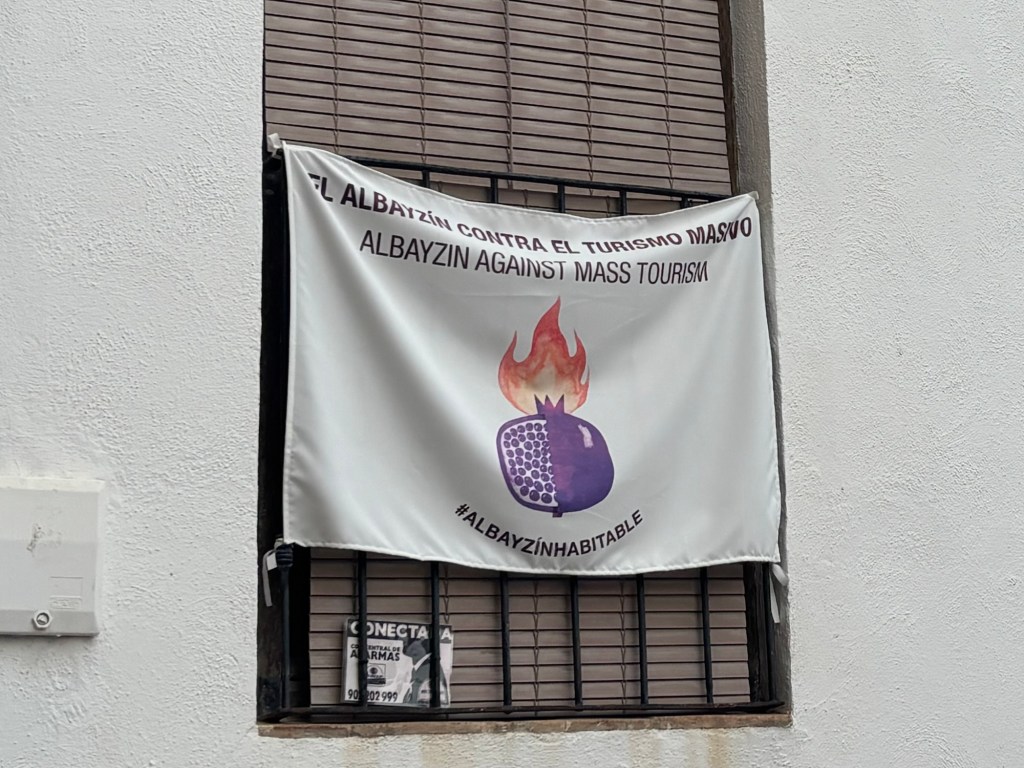

That’s all well and good, but much of Spain relies on the tourist industry to survive. In 2023, tourism accounted for an astonishing 12.3% of the country’s GDP, making it one of the most tourism-oriented countries in the world – and the numbers have only increased since then. Much of Granada, including Sacromonte – the formerly rundown gypsy neighbourhood beyond the city walls – has been given a makeover in the last twenty years to draw in as many tourist dollars as possible, and in its wake, a lot of the former pensiones – Spain’s traditional accommodation option, consisting of spare rooms rented out to travelers – have been replaced by glitzy “experience-oriented” AirBnBs. It’s an economy for the young and enterprising – or the international – and much of Spain simply can’t keep up. Adapt or die. And when the old ways are sacrificed on the altar of progress, some of the identity that made that place so special is lost. Eventually, even the tourists will realise this and stop coming, leaving these areas high and dry.

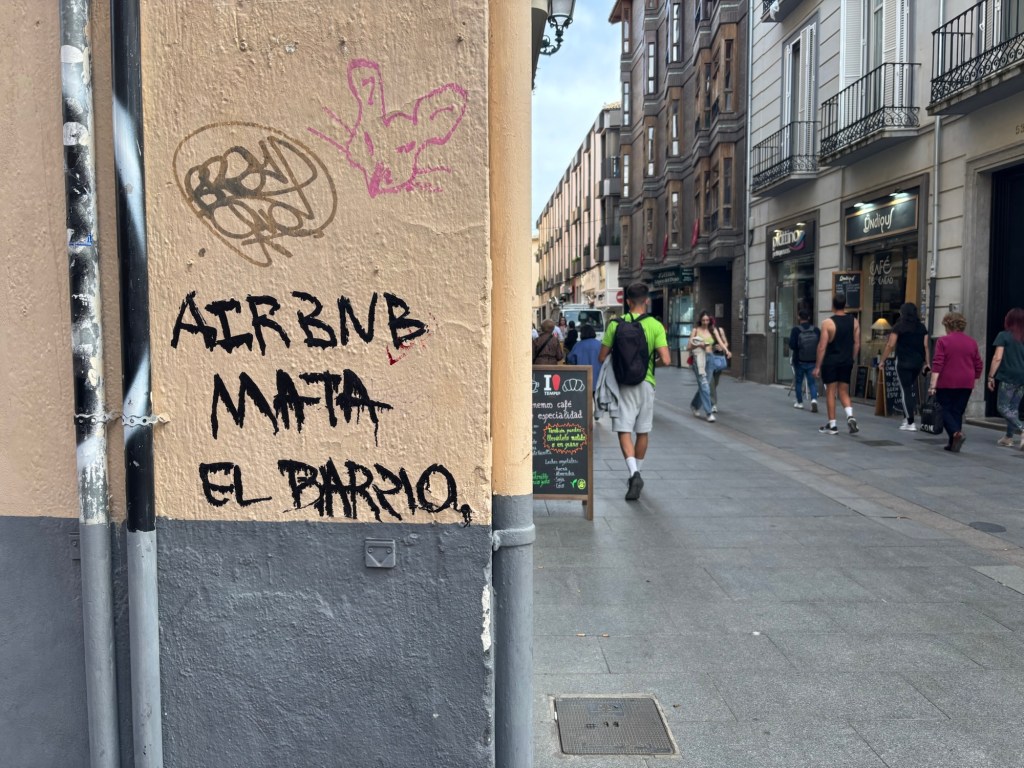
That’s why the phrase “AirBnB mata el barrio” (AirBnB kills the neighbourhood) is scrawled all over the place.

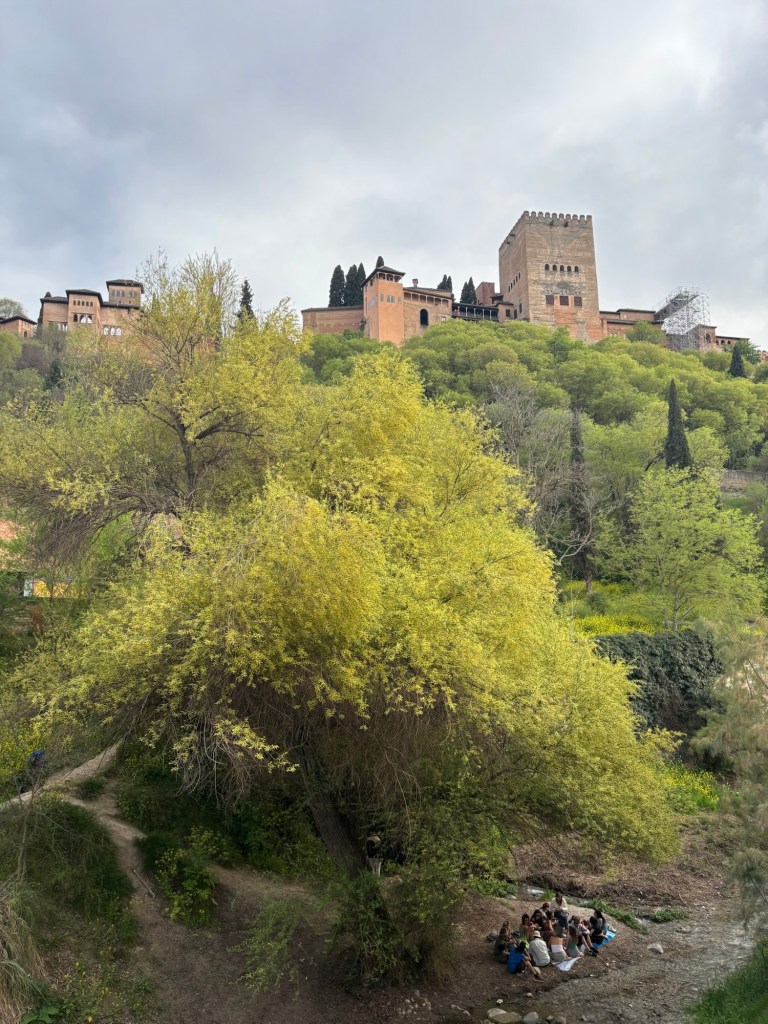
Fortunately, the magic of Granada continues to shine through the crisis. There might be a lot more of the American drawl on the street than there used to be, but it’s shouted down by the happy hubbub of the locals. Wandering along the Darro toward Sacromonte, I came upon a noisy group of youths on its banks, enjoying a picnic in the shadow of the Alhambra as their kind has done for centuries.

They weren’t too happy about a tourist family flying a drone nearby and threw a couple of colourful insults of the verbal and non-verbal kind at the buzzing menace as it passed overhead.

Sacromonte has hurled itself at the tourist trade as never before. Every other house seems to have decked itself out as a “tablao flamenco” where you can catch a live Flamenco show. Marketed as the “home of flamenco” – a title more appropriately applied to Sevilla’s Triana district, though the zambra certainly comes from here – Sacromonte was Granada’s former gypsy quarter, whose inhabitants lived in cave dwellings beyond the city walls since they were not permitted to live inside the city.

The heat of the summer is one reason they retreated into the rocks, and the zealousness of the Spanish is the other: this “pariah district” served to accommodate the unwanted, the unclean and the un-Christian – which amounted to the same thing for much of Spanish history. It even housed some of the city’s Jewish and Muslim population following the fall of Granada in 1492, as they were gradually driven out of the city by the conquering Christian warlords.

When my mother came here in the 1980s, this was not really a district you’d want to find yourself in after dark. Nowadays, that’s precisely the time the locals want you around, as that’s when the flamenco shows take place. I’m still considering whether to check one out. I’m hoping for something authentic, but I feel that star may have descended a long time ago.
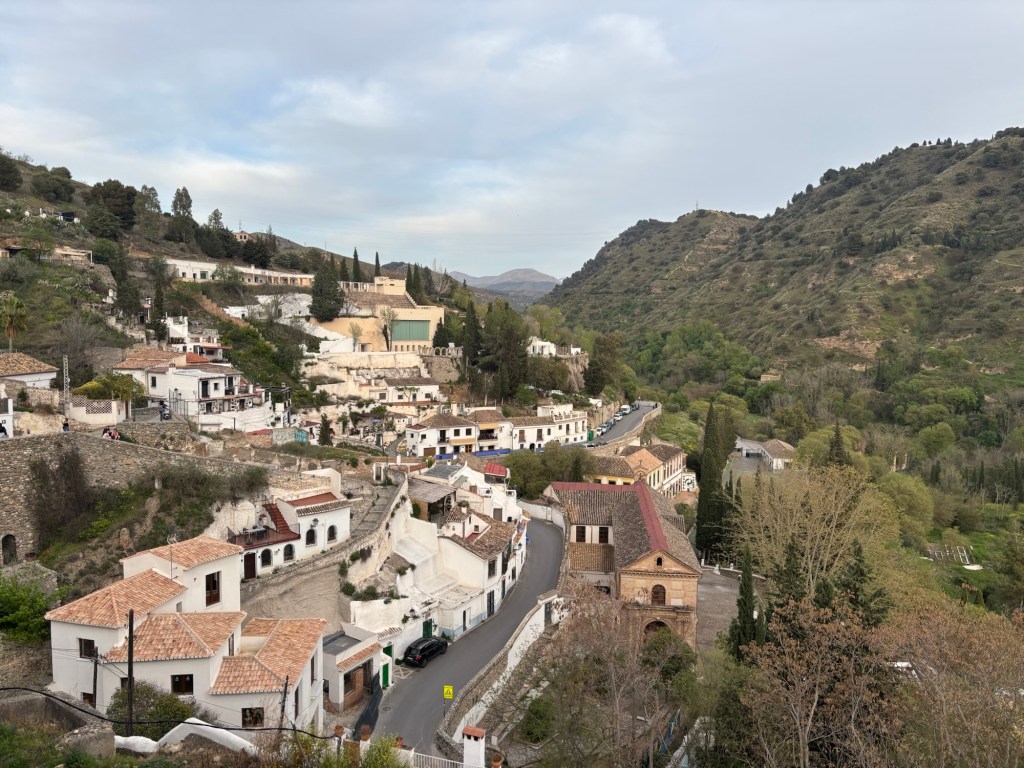

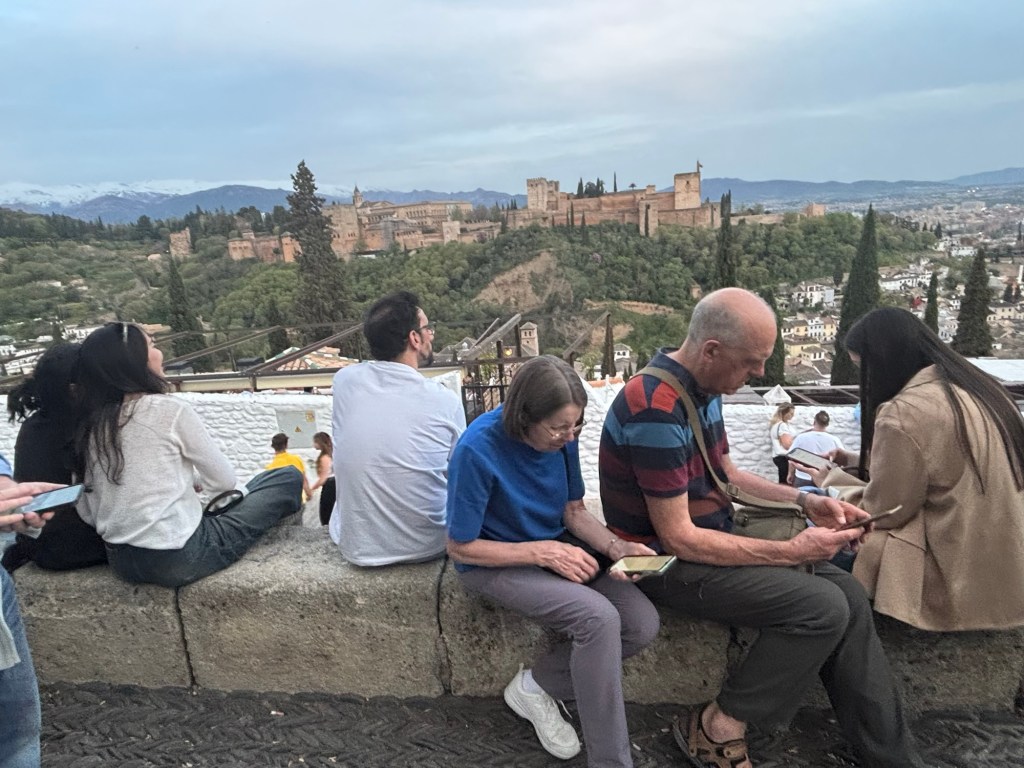
Up above, the Mirador de San Nicolás remains as busy as ever at sunset, with throngs of in-the-know tourists and locals waiting to see the spectacle of the Alhambra and the Sierra Nevada beyond bathed in red light. It was cloudy tonight, so a few of them ambled away disappointed. That at least meant I snagged a spot on the wall to sit and draw the mountains for a while. I didn’t take the camera. No need. I got the “famous” sunset photos years ago, and besides – there’s a fair bit of ugly scaffolding on the Alhambra now that wasn’t there before.


The Mirador de San Nicolás is a funny place. I imagine it’s raved about in all the guidebooks as the secret is most definitely out. There’s still a bunch of musicians here plying their trade as there were ten years ago, asking for “collaborations with the music” on the back of the guitar after every song. They’re not quite as tuneful as I remember. The men had a fair amount of duende but the girls singing along were absolutely tone deaf, which took away from the magic a little.

But not as much as the large number of folks on the wall with their backs to the Alhambra, staring gormlessly at their phones.

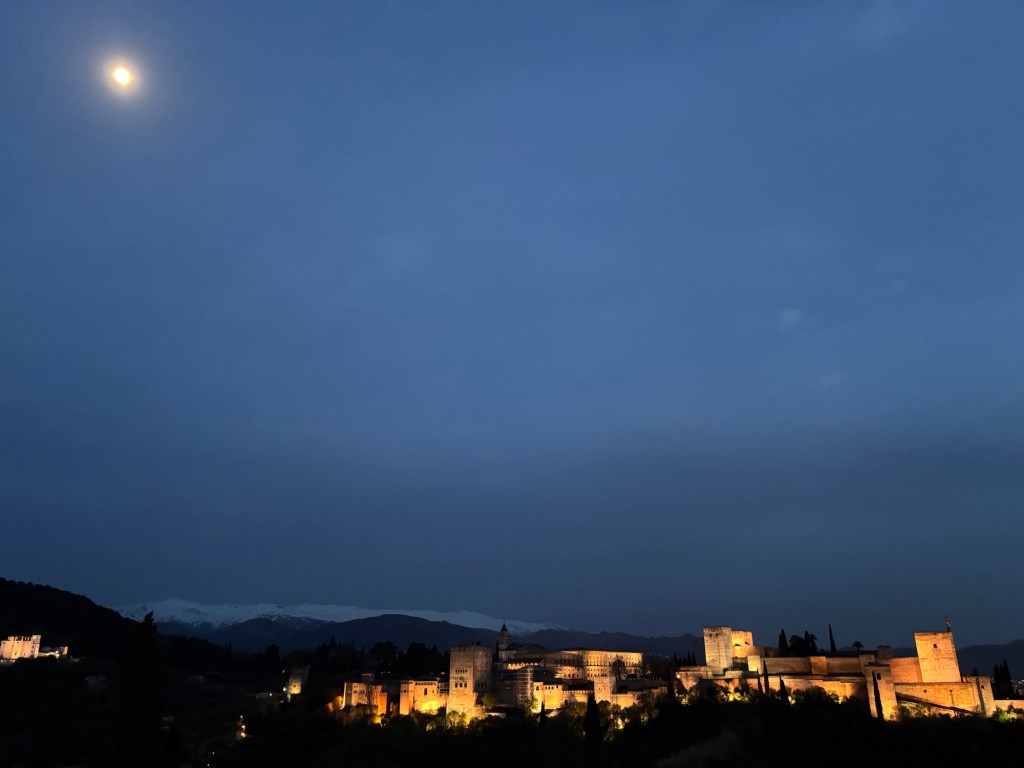
I must have been there for at least half an hour, because when I was finished sketching the moon was up, the Alhambra illuminated and the city lights twinkling away in the gloom of the vega below like velvet. I relinquished my spot on the wall and set off for my pensión.

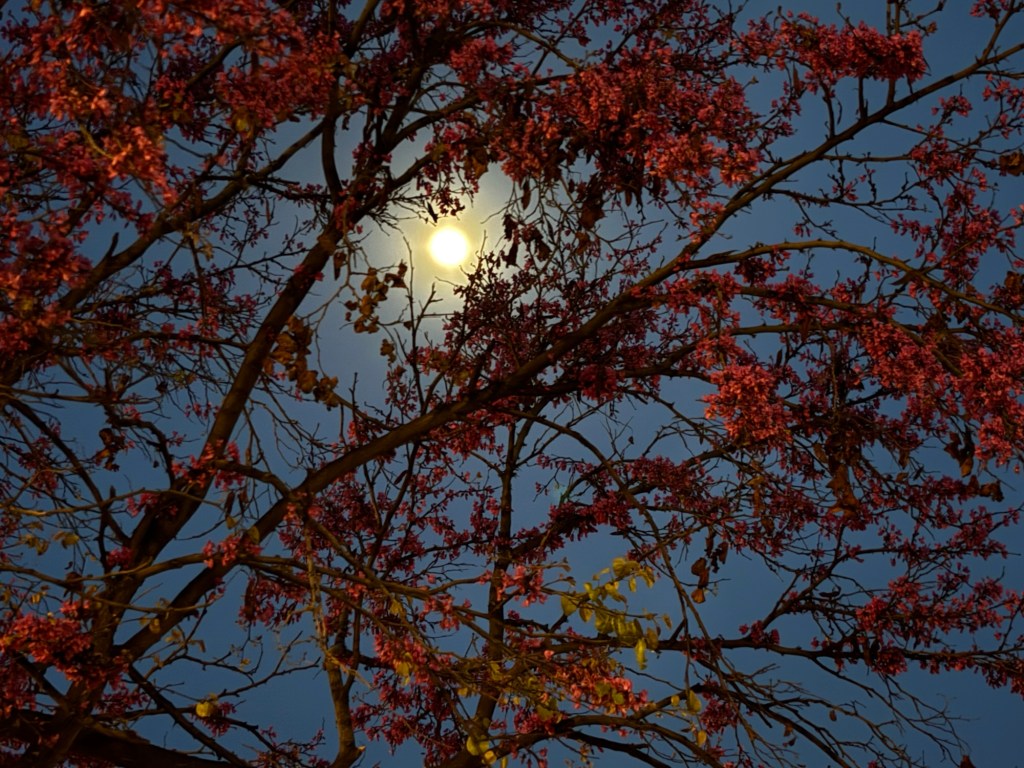
On my way back, I was stopped by the piping call of a scops owl. I haven’t heard one in years, nor seen one even once, for that matter, so I set out to track it down. They’re master ventriloquists, especially in a city of infamously winding streets where their voices seem to come from all directions at once, but I did manage to follow its call to the Placeta Cristo Azucenas, where I spotted the diminutive creature as it took flight as a noisy van hurtled past. Hopefully I’ll see it again before my time here is up.

Well, it’s now 8.23am of the morning after. I’d better head into town, find a laundromat and get some breakfast. I’ve got a lot of things to see and do today – not least of all, the Alhambra herself. BB x
The Quick and the Dead

Pizzería La Toscana, Santa Cruz de Tenerife. 19.55.

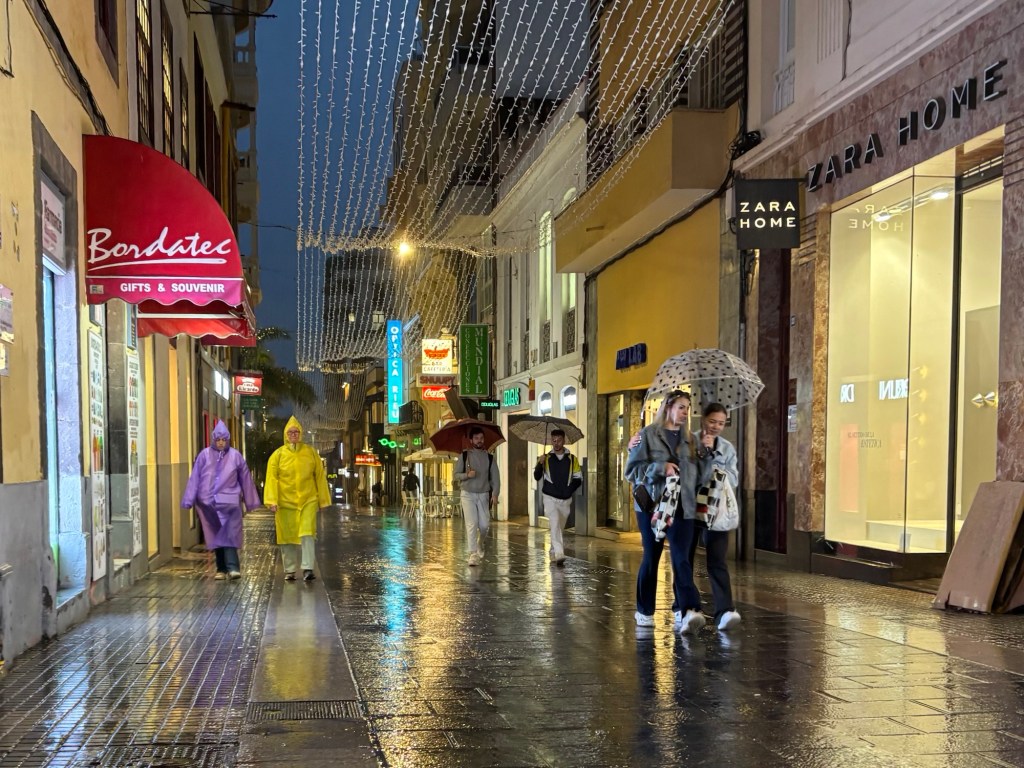
It’s raining here in Santa Cruz. There are quite a few guiris about – they’re the ones wearing shorts and popped-collar polo shirts despite the lowering grey skies – but they’re nowhere near as numerous as I thought they’d be. There are snatches of German, Dutch and Estuary English drifting from restaurants, but Spanish is by far the most common language spoken in the street. I find that encouraging, somehow.


Santa Cruz is a world away from the Elysian bliss of Chinyero. It’s a busy, 24/7 port town sandwiched between Tenerife North Airport and the tourist resorts of the south coast. Its harbour, one of the busiest in Spain, is a major stopover for cruise ships plying the Atlantic, just as it was for the early European voyages to the Americas, riding the Canary Current in a wide arc to the Caribbean. It’s one of the two capitals of the Canary Islands (the other being Las Palmas) and as such commands a sizeable proportion of the island’s population: nearly half, by some estimates. Like the greater part of Granada, the city began as a military camp, built by the Spanish in 1494 during their campaign against the Guanches / invasion of the island, depending on your sympathies.

It can seem like a characterless tourist metropolis at first, but there’s a lot to see once you start to scratch away at the surface.


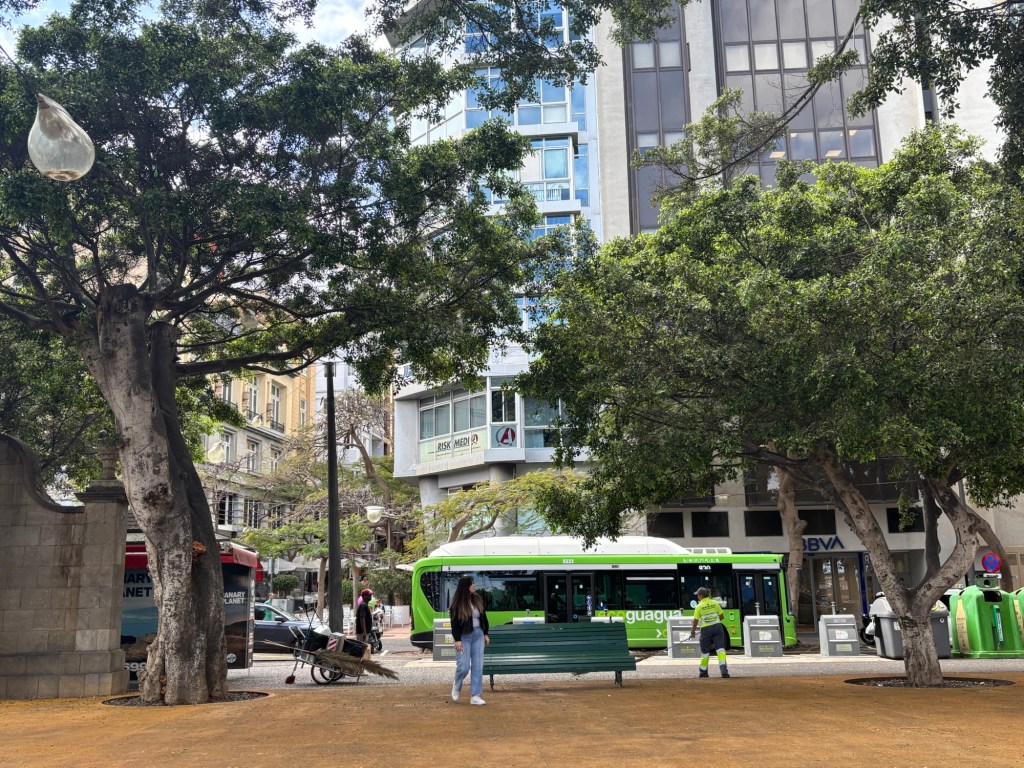
The Plaza de España is a good place to start. In most Spanish cities, a square with the same name is usually right at the heart of the city. Here, it’s on the seafront. A guagua goes by, proudly displaying its green credentials (more than 70% of its fleet are hybrid vehicles). Opposite the bench where I’m sitting, a sanitation worker in a matching shade of green has eschewed conventional tools for a palm branch, a far more traditional (and renewable) method for street-sweeping. Alongside the usual plane trees – an effective biofilter used across Europe – a number of more exotic trees spring up out of the parks and gardens, including a few isolated dragon trees. Santa Cruz is wickedly green, as cities go: more than 80% of its municipal territory is a natural area, largely due to the Anaga Park which shoots up to the heavens from the city’s edge. In ecological terms, here is a city that is punching above its weight.


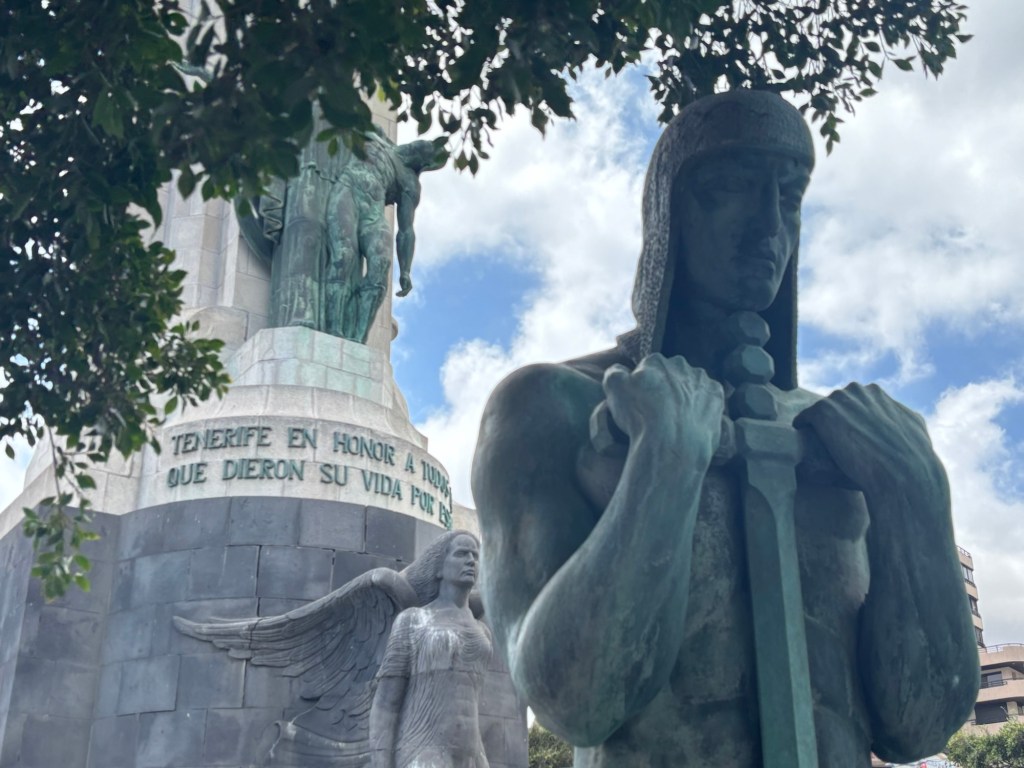
Next to the Plaza de España is an imposing sculpture, flanked by two silent watchmen: el Monumento a los Caídos, one of several Monuments to the Fallen that can be found across Spain. These sprung up under Franco’s dictatorship and many – including this one, if the stories are to be believed – were built using the forced labour of political prisoners. As such, there’s an ongoing campaign to have the monument altered to reflect the changing political landscape as Spaniards come to terms with the legacy of the dictatorship, nearly fifty years after Franco’s death.

It’s worth winding the clock back even further. What of the Guanches? Does this monument also honour those who gave their lives for Spain by taking these islands by the sword? I’m not one for presentism – it’s utterly absurd to judge the actions of those long dead by the quicksilver standards of contemporary ideologies – but I do think their story needs to be remembered.


One place that tells that story is Santa Cruz’s MUNA, the natural and archaeological museum. Don’t be put off by the reviews – it’s an incredible collection, but there are clearly a lot of half-arsed British tourists who visit and expect their monolingualism to be catered for, which is both arrogant and imbecilic. It’s also only 5€, which is a steal compared to some of the rates charged by similar museums in the UK… especially when you see what it contains.

The ground floor has an interesting feature on the formation of the islands, as well as some of its wildlife and how it came to be there. The first floor houses a collection of animals and insects (including a very large collection of butterflies) as well an array of archaeological finds from around the Canary Islands, from prehistory through to the time of the Romans and right up to the Spanish conquest in 1494.

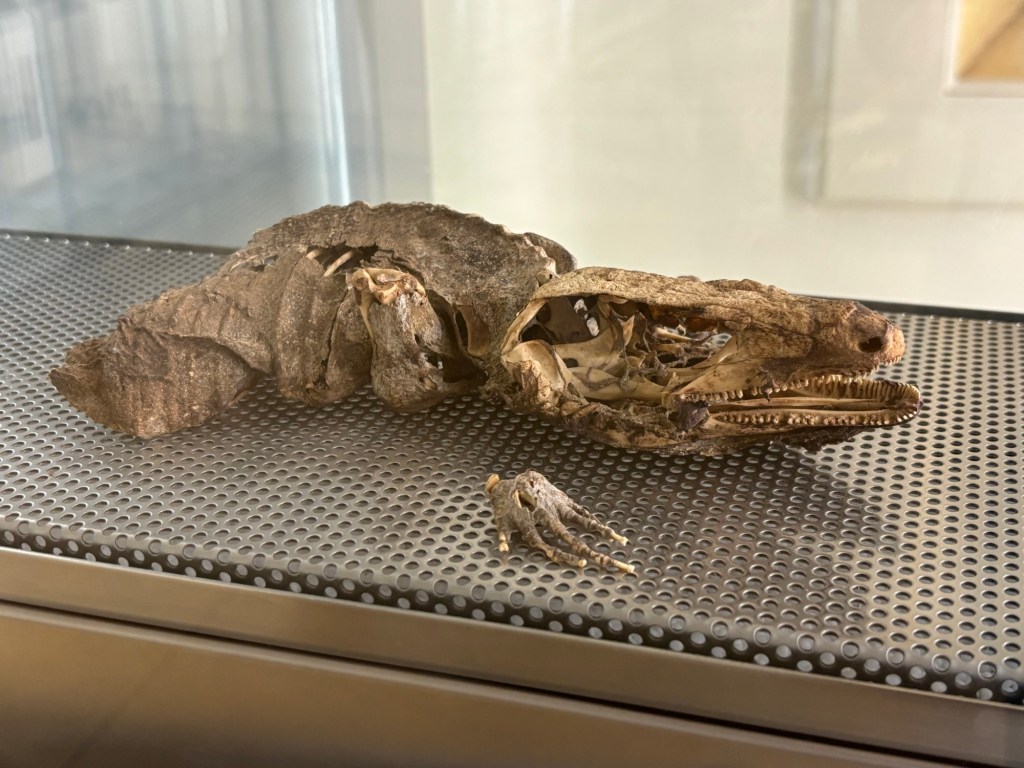
There are a few mysteries still waiting to be solved that the museum nods to: were there once ostriches on the islands? What happened to the giant tortoises? Were the islands named after the seal colonies, or the large dog skulls found on the island? Did the giant lizards disappear, or did they simply shrink over time? And were the Canaries the inspiration for the Hesperides, the islands at the edge of the world where Heracles performed his penultimate labour?


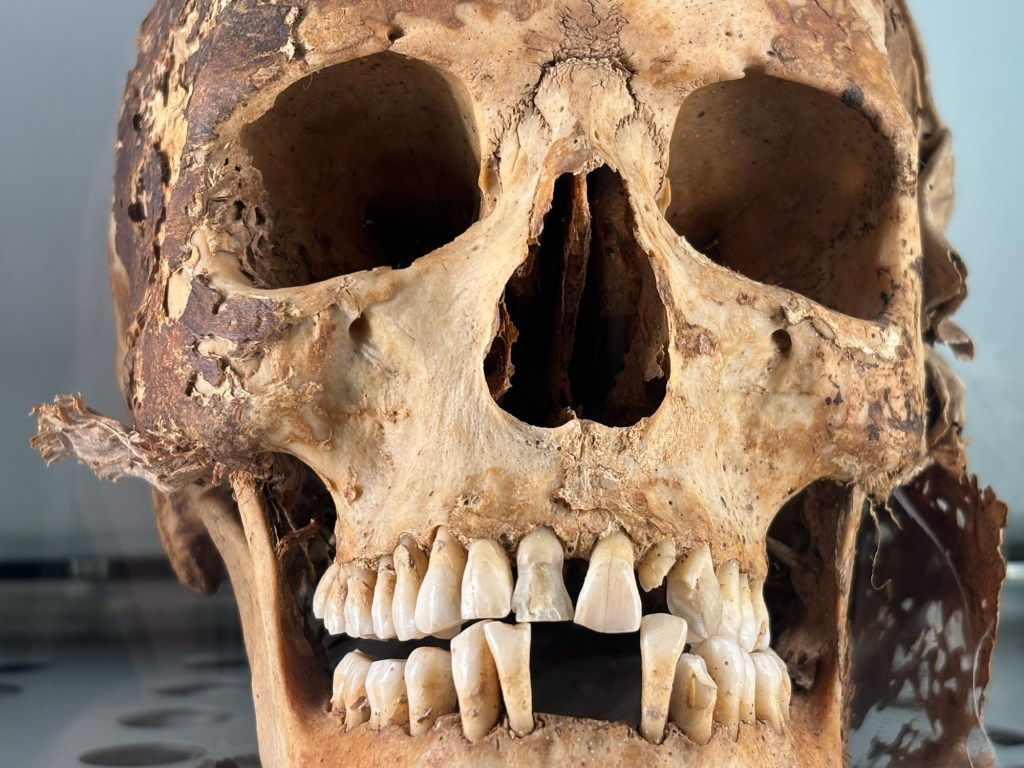
Something more flesh (though perhaps less blood) than these mysteries can be found on the second floor, where the MUNA keeps its most precious artefacts of all: the mummies of the ancient Guanche people.

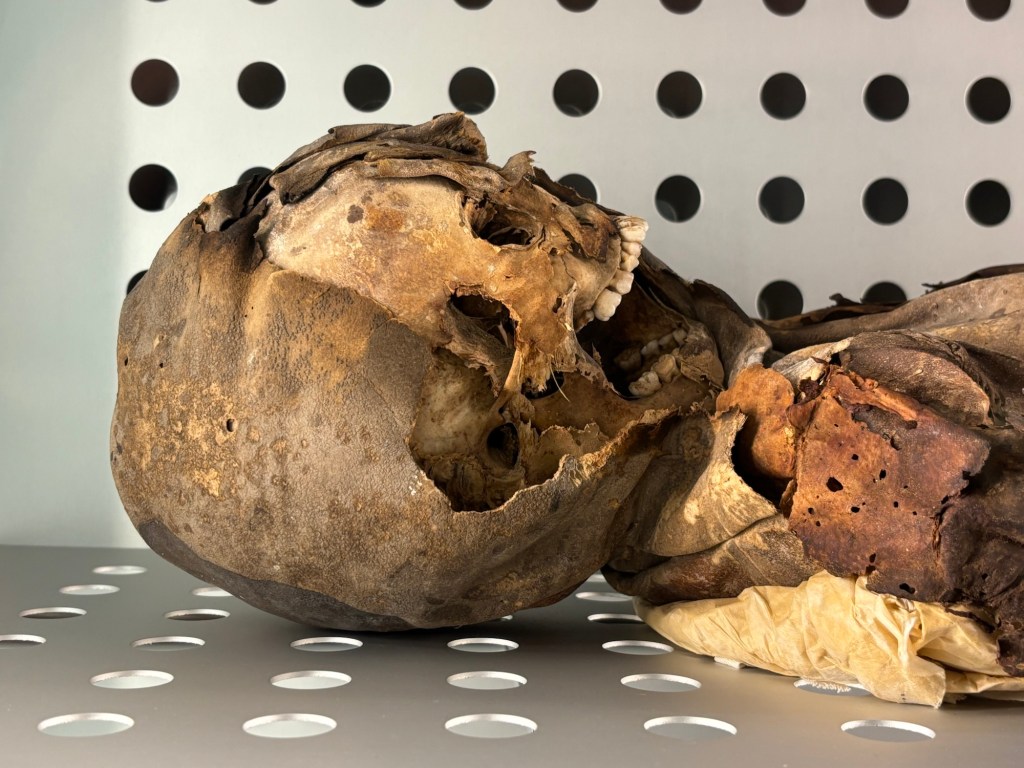
Before the Spanish came, the ancient Guanches of Tenerife had a custom not too dissimilar to the ancient Egyptians of mummifying their dead. Their origins along the Mediterranean coast of North Africa may go some way to explaining this practice, though it does not appear to have been a universal custom across the islands. Some of the mummies are in an incredibly well-preserved state, displaying most of their teeth and a full head of hair after nearly a thousand years. Wrapped in goatskin hides and concealed within caves and necropolises around the island, they have weathered the passage of time remarkably well.


Time, perhaps, but not the passage of man. Napoleon’s invasion of Egypt led to the discovery of many ancient Egyptian tombs and their treasure, which was one of the factors that started the 19th century archaeology boom. Guanche artefacts – including their mummified skeletons – were part of this mania. For hundreds of years before that, mummies found on the island had been dug up and carried off by enterprising scavengers. One tomb, Uchavo, was said to have contained nearly one hundred mummies when it was discovered. Mere days after the news broke out, the public broke in, taking with them – of all things – an enormous number of lower mandibles, which seem to have been the most valuable (and probably transportable) part of the mummies.

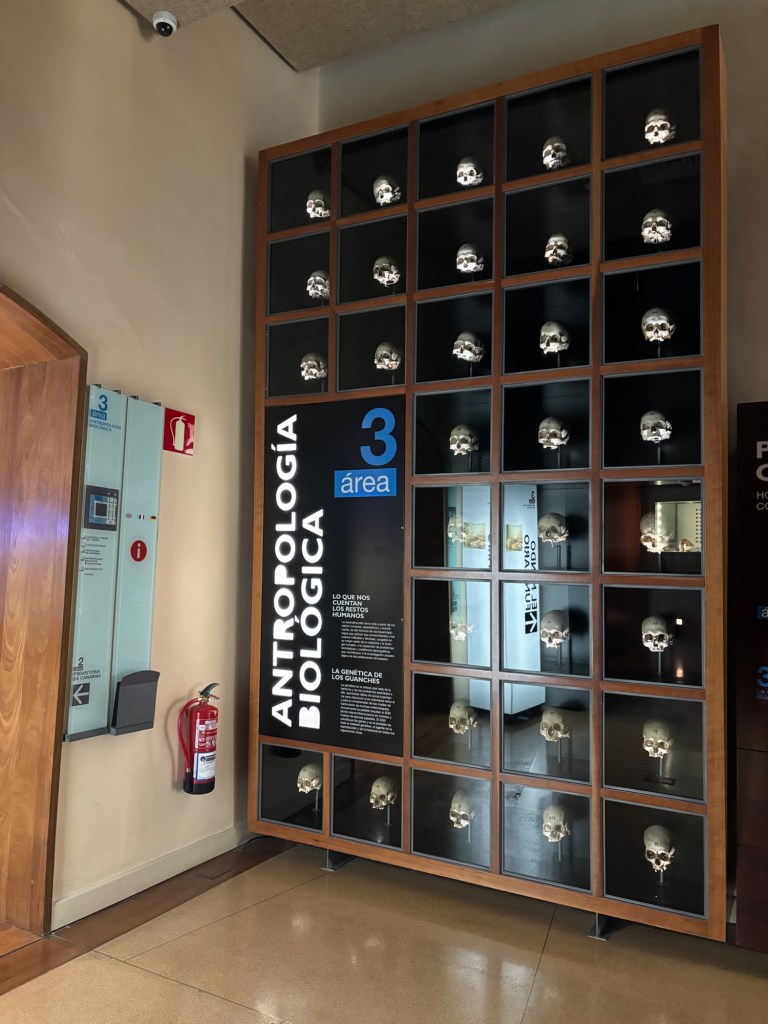
It’s for this reason that so many of the remaining skulls housed within the MUNA are missing their jaws. As to where these ended up, that’s anybody’s guess: doubtless they are now scattered far and wide, not just across the island but around the world.


Who were they? Such care was taken with some of the dead that they must have been menceys or kings of the Guanches. Mummification was a royal prerogative in ancient Egypt, so it stands to reason that the Guanches might have thought along the same lines.

While Tenerife has made some successful overtures for the return of its dead – with two returning from as far as Argentina – at least ten of the Guanche mummies are still held in collections around the world, with six in Paris, and one each in Madrid, Cambridge, Göttingen and Canada.

Nobody knows how many others may be out there, or in what state they may be in, but it is likely to be at least in the double figures. Sadly, most of those transferred to Germany were lost – along with many other relics of the ancient world, including the remains of the enigmatic spinosaurus – during the allied air raids in World War Two, which saw a number of museums razed to the ground. A Viking funeral, then, for a Guanche king or two – though perhaps not what their families had envisioned for their journey to the afterlife.


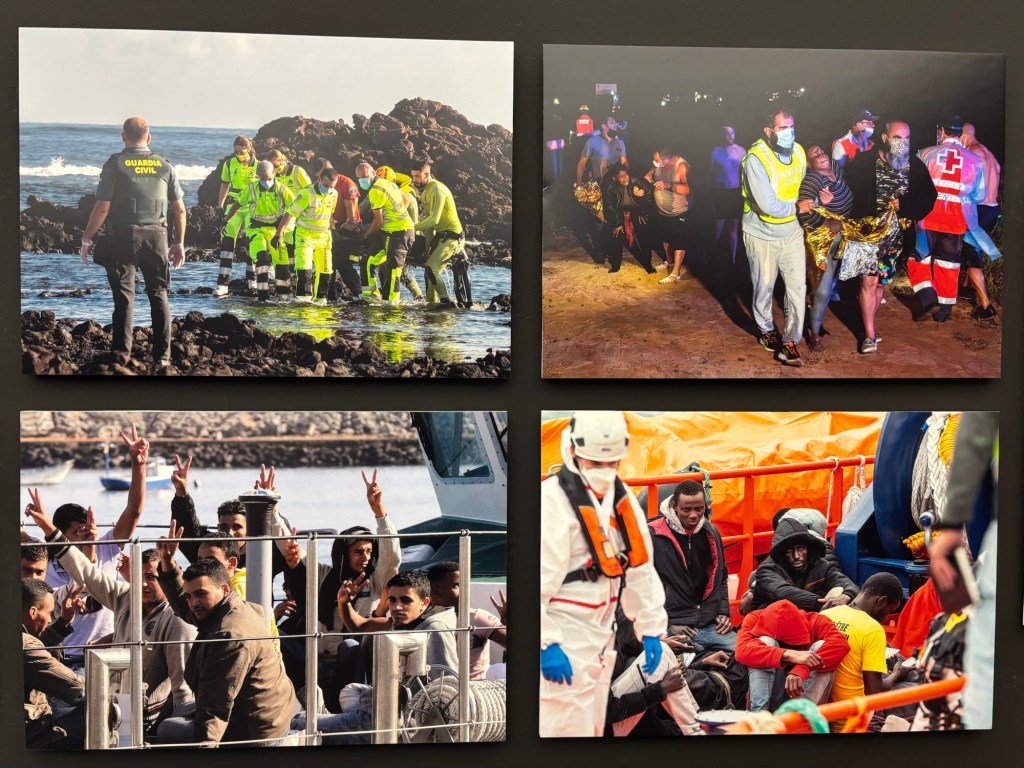
A fitting coda to the fate of the Guanches can be found in a temporary exhibit in the museum’s basement. Here, in a large and well-lit room, is a collection of a more modern tragedy: the African migration to the Canary Islands. Known as the ruta canaria, it is one of the most dangerous immigration routes in the world, since those making the trek in simple dugout canoes are at the whims of both the sun and the Canarian current which, if poorly timed, will carry the little boats out into the merciless wastes of the Atlantic Ocean. Most who make it that far will perish long before their boat washes up on the coast of the Americas.

This is, of course, how the first Canarians arrived in these islands many years ago, but with tighter security around the shorter but in some ways even more treacherous Mediterranean crossing, many African migrants continue to put their lives on the line to reach European soil – even if that soil is closer to Africa than any European territory. It’s also a growing concern: 2024 saw the largest number of migrants yet arriving on the shores of the Canary Islands at 46,843.


Behind each number is a harrowing personal journey, which is just as likely to end in misery or a body bag as it is in success. And even when they get here – what then? Do they find the Europeans any more welcoming than the countries they left behind them? What do they make of the hordes who descend upon these islands in the summer, riding in and out on cheap flights without a care in the world?

In one corner of the room there is a small exhibit, positioned almost exactly three floors below the Guanche mummies. It consists of an empty body bag on a rocky beach, scattered over with photographs like votive offerings. It’s a reminder that the dead who wash up on these shores, though faceless under black polyethylene veils, are not mere numbers, as the politicians would have you believe, but people whose journeys have come to an end. It’s our duty, if not our right, to make sure that their stories go on, so that their sacrifices are never forgotten.

The Guanches might be long gone, along with the giant rats and tortoises who came here before them, but the story of migration in these islands goes on. BB x
Black Sand and Starlight

Caserío los Partidos, Tenerife. 8.19am.

Well, if that wasn’t the best sleep I’ve had in a week, I don’t know what a good sleep is. The four-hundred-year old stone walls of my room might not look like the cosiest setup, but it couldn’t be more enchanting: a log-burning stove in the corner, a skylight above the bed so you can see the stars from the comfort of your bed, and a warm shower… I’d have settled for less, especially after several hours’ hiking around the ash flow of Chinyero, but it was nothing short of heaven on my return.


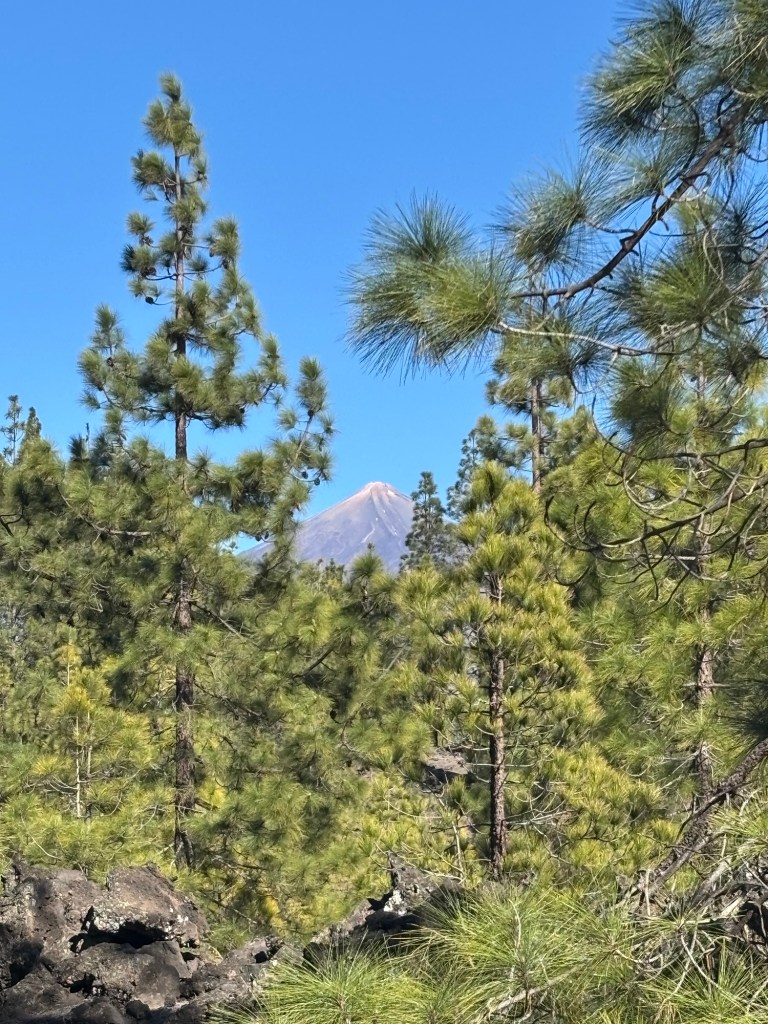
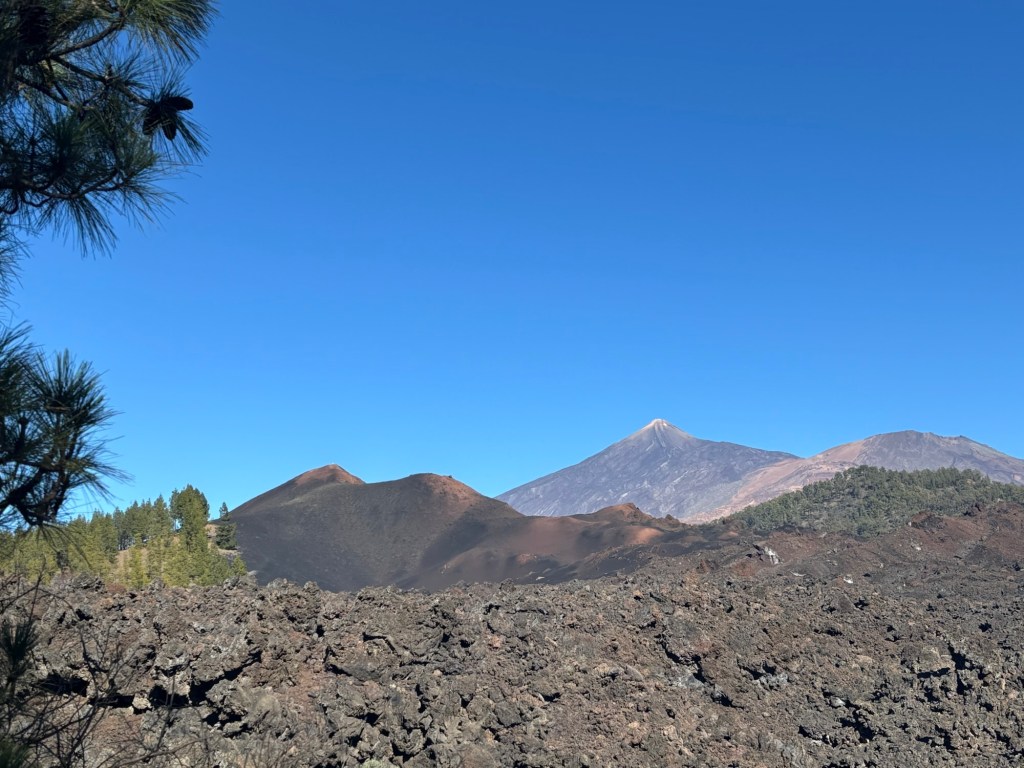
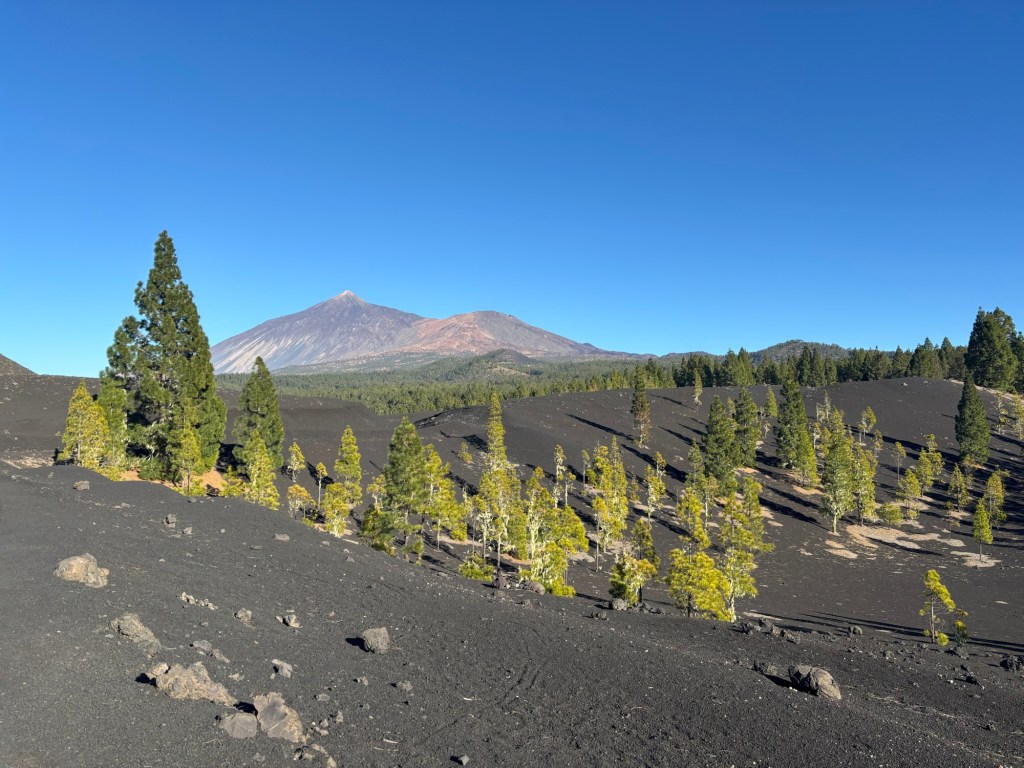
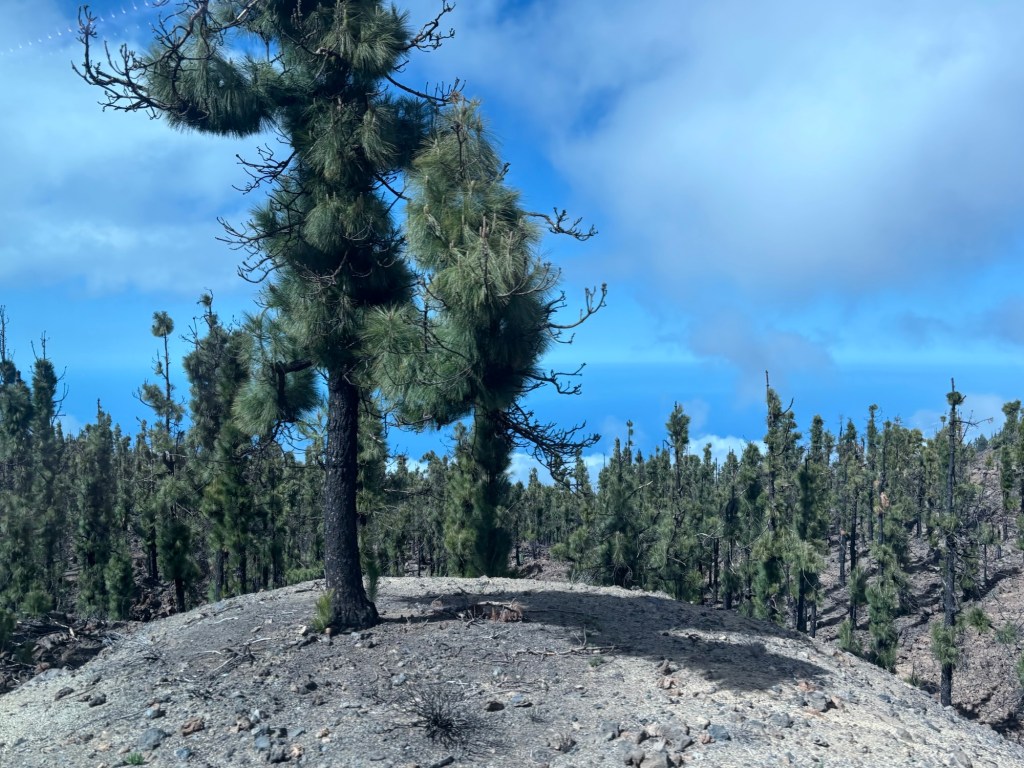
Chinyero is the reason I’m here. This is the site of the last eruption in 1909, Chinyero being one of the vents of Teide, which looms over everything to the west. This is also Teide’s best side: from here, it is perfectly conical, like a child’s drawing of a volcano, and at this time of year you can still see the last traces of snow and ice in the deep gulleys running down its peak. Sure, the Roque Cinchado may have been a worthy candidate for one of the Top Ten sights of this trip, but what I really wanted to see here in Tenerife was the black sand forest: a natural marvel growing out of the destruction wrought by Teide over a hundred years ago. I was not to be disappointed.


It’s a two and a half hour circular hike from Caserío up into the ash fields, most of it very well signposted and all over well-trodden paths, though the hardened basalt and steep climbs make for slow going at times. I saw three or four cyclists and one other hiker far off, but compared to Teide National Park, it’s a much more personal experience of the mountain on this side of the island. Most of the hike takes place in the shade of the Corona Forestal, the crown of pine trees that ring the mountain (but especially its fertile north face). Some of the trees look like they still bear the scars and scorch marks of the fires that raged through here when Chinyero erupted, long ago.


Did you ever see Fantasia 2000 as a kid? This place reminds me of the Firebird sequence, which plays Stravinsky’s masterpiece as the backdrop to the eruption and rebirth of a volcano. It also gives off major Primeval and Walking with Dinosaurs vibes, which is true for at least one of those TV shows, as the final episode of the first season of Primeval was filmed on the almost identical ash fields of Gran Canaria. All three creations draw on an ancient force in an even older setting, and the black sands of Chinyero really do feel like a walk back in time – if not on the surface of another planet.


There are very few mammals native to Tenerife, as is often the case with island fauna, which usually specialises in creatures with fins or wings (or those that had wings, once upon a time). I saw a couple of rabbits during my hike, which accounts for the presence of buzzards in these forests, but besides that, the ash fields seem almost deserted, unless you listen closely. The island’s canaries were singing away in the treetops, along with a few goldcrests, treecreepers, chiffchaffs and the local Canarian race of great tits. I counted at least three woodpeckers drumming at different frequencies on the descent, though I only saw one. Best of all was a brief encounter with a blue chaffinch, a special bird found only on the islands of Tenerife and Gran Canaria and only above the tree line. Tracking it by its call, I tried imitating it to get its attention, and it came to have a look. I got pretty close, but it must have thought me a very strange chaffinch indeed.

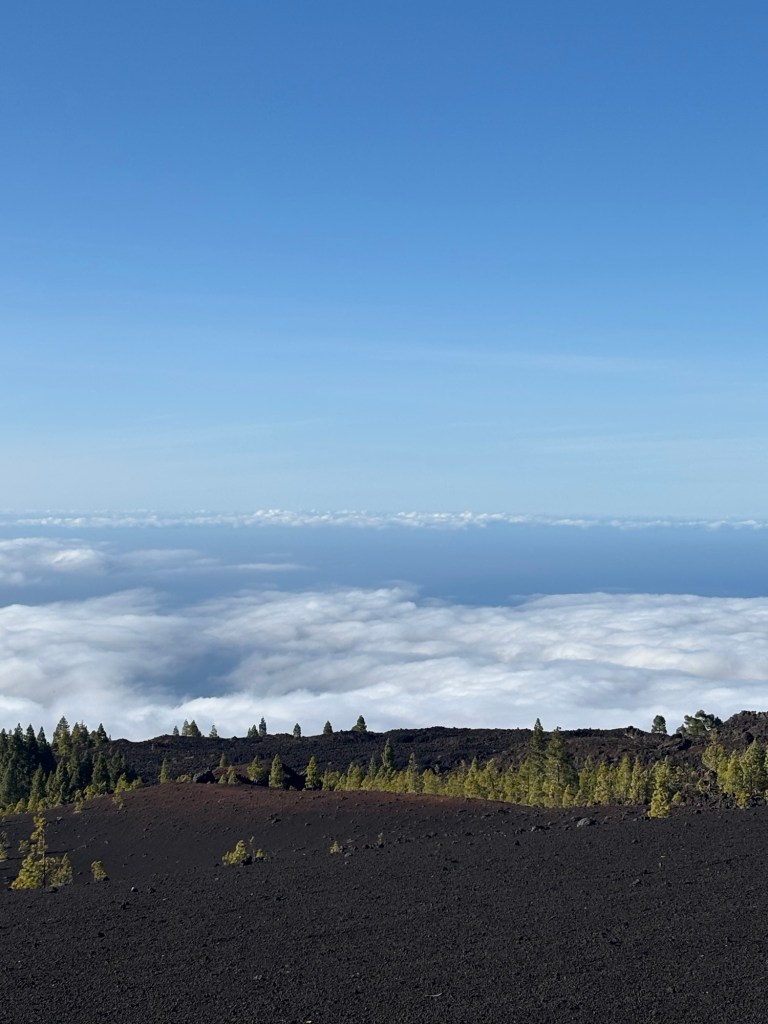
Meanwhile, to the north, the island seems to fall away into the sea, disappearing beneath the clouds. We really are very high up here.


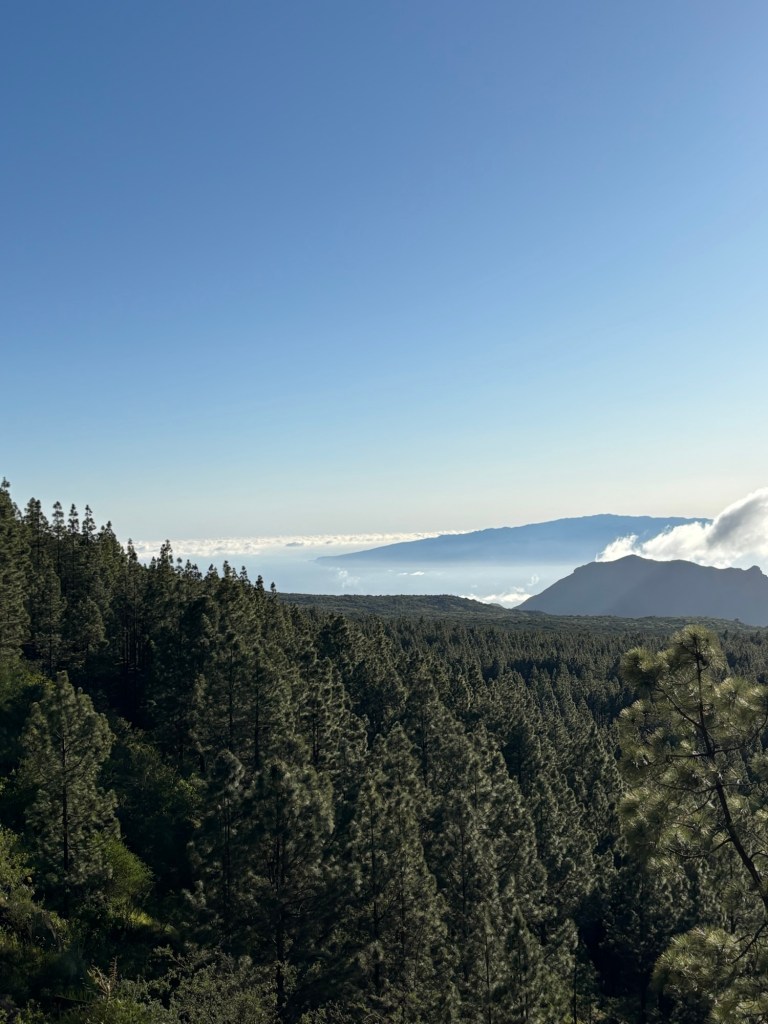
The views on the climb back down to Caserío are breathtaking, especially at the end of the day when the sun is beginning to sink into the Atlantic to the west. Stand at just the right spot and you can see the neighbouring islands of La Gomera and La Palma, flanking the Teno mountains on the westernmost point of Tenerife. I don’t know much about La Palma, but La Gomera harbours an otherworldly rainforest in its centre, the Garajonay National Park, full of gnarled and twisted trees and trailing beards of moss and lichen. If I should return, that would be near the top of my list.


I had a well-earned dinner and a glass of wine back at Caserío, the last of which very nearly knocked me out – perhaps that explains the long sleep. But I did hold on to my senses long enough to properly appreciate the other thing I came all the way out here to see (not just to Chinyero, but the Canaries as a whole): the night sky. The English fixation with security and LED lighting means it’s hard to get an unpolluted view of the stars anywhere in the country (outside of Northumberland, anyway), since we seem to delight in stringing glaring yellow street lamps along our roads like fairy lights, and filling our towns and cities with floodlights.

Out here, however, the lighting is less pervasive and restricted to the larger cities. And up here in the mountains, there’s almost no lighting at all, so the stargazing is spectacular.


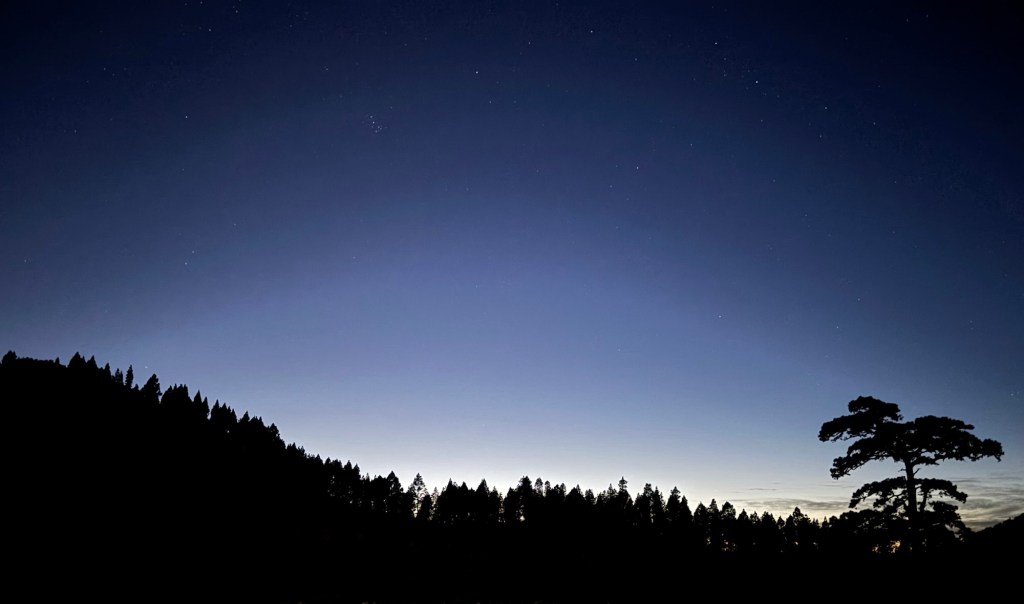
I didn’t see any shooting stars this time, but I’d be willing to bet that this is an incredible place to be at the peak of the Perseid meteor shower in the summer. I did count a number of constellations I haven’t properly seen before, blinking dimly behind the belt of Orion: Leo, Cancer, mighty Hercules and the Corona Borealis. And, of course, the full body of Ursa Major, not just the twinkling torso of the Plough.


My SLR would have struggled, but the iPhone did a remarkable job in the twilight. It may not be able to perform a quality zoom to save its life, but it does handle low light incredibly well.


Tomorrow is another day. Since I made it up to Chinyero a day early, I’ll take it easy. If I can, I’ll try to navigate round the south of the island to Santa Cruz for a change of scenery. I can’t say it’s the side of the island with the most appeal to me, being by far the more resort-heavy side, but that might make for something to write about in itself. But first, I have to find a bus to take me out of here – and that might be easier said than done! BB x

Under the Dragon Tree

Parque de San Marcos, Icod de los Vinos. 12.37.

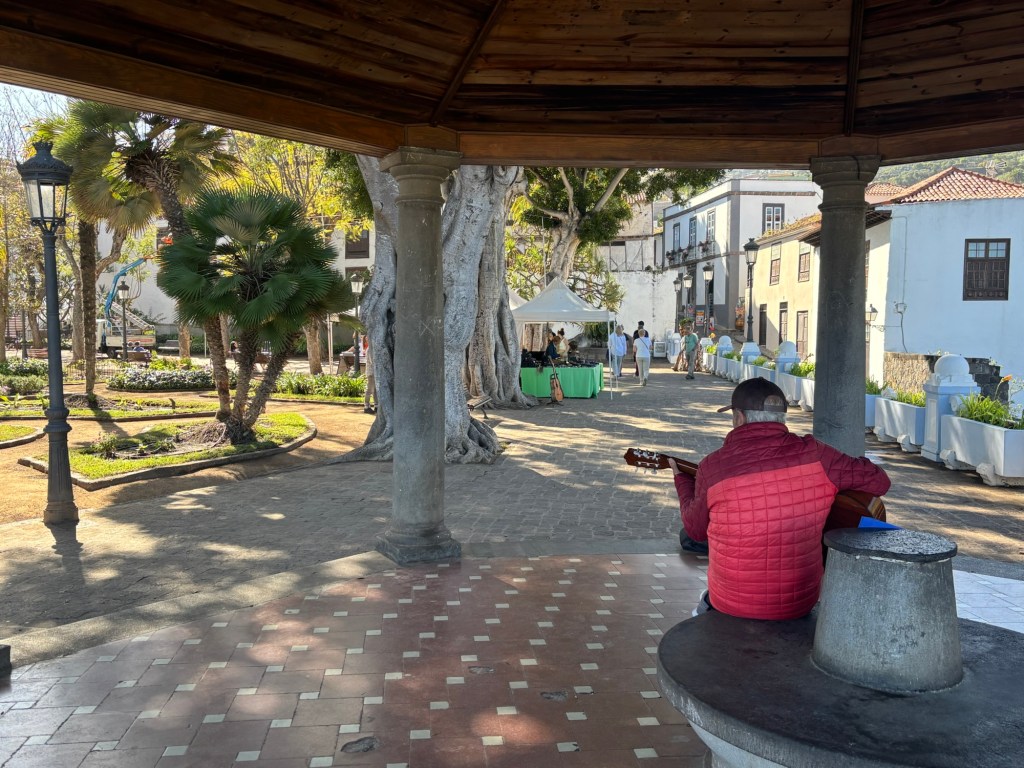
The bells of San Marcos are ringing for midday, a mournful two-tone chime that feels out of step with the rest of the world: the buzz of the artesanal market stalls, the constant roll of tyres over cobblestones, the cooing of collared doves and the merry twitter of Canarian chiffchaffs in the trees overhead. The guitarist sitting in the pagoda that looks out across the Atlantic has stopped his playing and looks on in contemplative silence. Three very trendy French tourists walk by, one wielding an iPhone, the other dragging on a vape. ‘Ouais, t’as raison, hein, on est en Afrique.’ A man walks by with his dog. Around its neck is a metal collar not dissimilar to the kind Cortés’ war dogs used to wear. And still the bells chime.


It’s an hour’s wait until my connecting bus to Erjos, so I’ve come here to sit in the shade and write. I’ve bought some supplies from the nearby Mercadona just in case they’re hard to come by – for the first (and only) time in this trip, there are no shops near my lodgings for the night. The Canarian bananas are riper than the kind we get back home – understandably, as they were grown all of fifty metres from the store itself – and the slice of tortilla I’ve obtained should do nicely for dinner this evening.

The guitarist has started up again: it’s Guantanamera this time. A German boy in dungarees and a white baseball cap and his mother watch as he plays an upbeat Latin tune. The boy was shy at first, but he seems captivated by the rhythm and is swaying along with a big smile. Judging by his mother’s reaction, he appears to have just learned how to clap. Thanks to the guitarist, he also just learned how to strum a chord and blow a kiss to the audience.


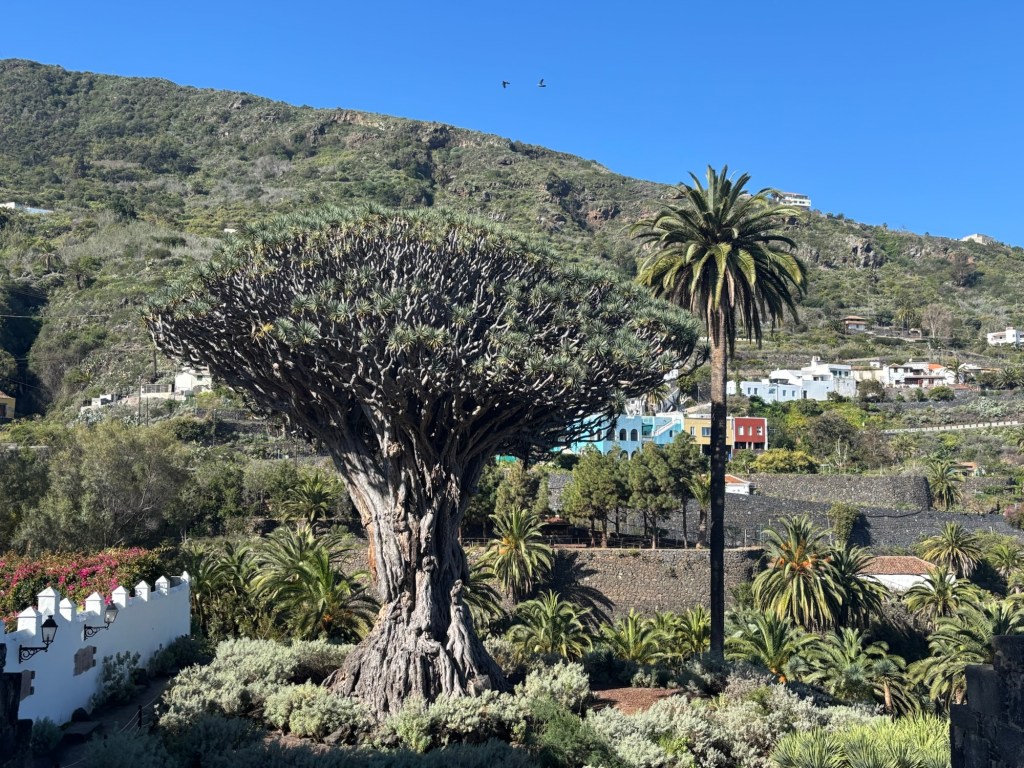
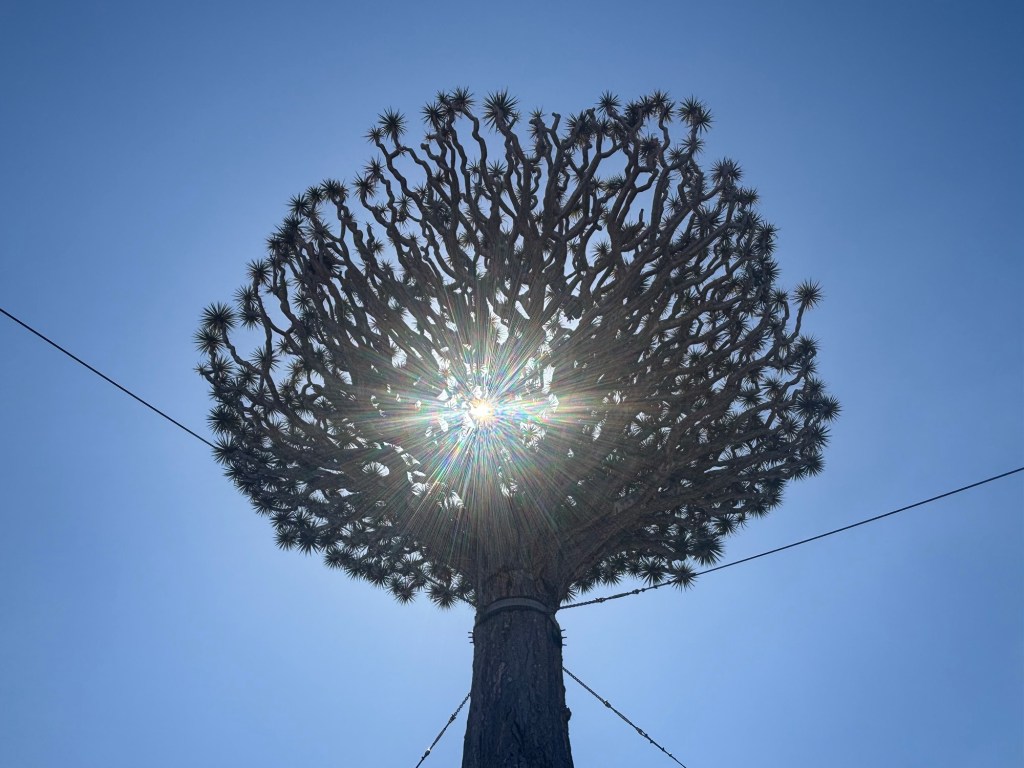
To the east of the park is the famous dragon tree, a bizarre and ancient tree endemic to the Atlantic islands that has supposedly stood in this spot for nearly a thousand years. Its leaves stick out at the ends of its myriad branches like frozen fireworks. The palm tree at its side, usually exotic in its own right, looks almost humdrum next to the dragon tree, which is as rare as it is odd-looking: you’d have to travel all the way to the island of Socotra off the coast of Yemen – the other side of Africa entirely – to find a similar kind of tree.


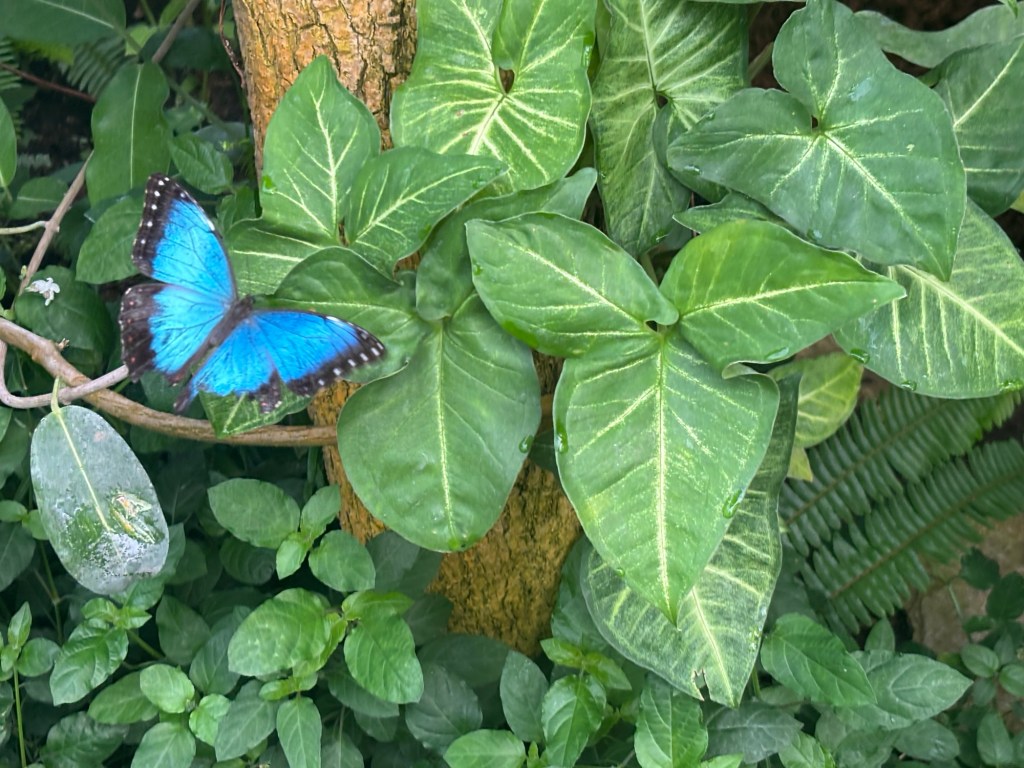
In the shadow of the park is Icod de los Vinos’ mariposario, a butterfly conservation centre. I’m not the biggest fan of zoos, but these sorts of places (where the butterflies are free to roam) are usually geared towards the captive breeding of endangered species, and with butterflies the world over starting to disappear, I fancied learning what I could about those native to the island.

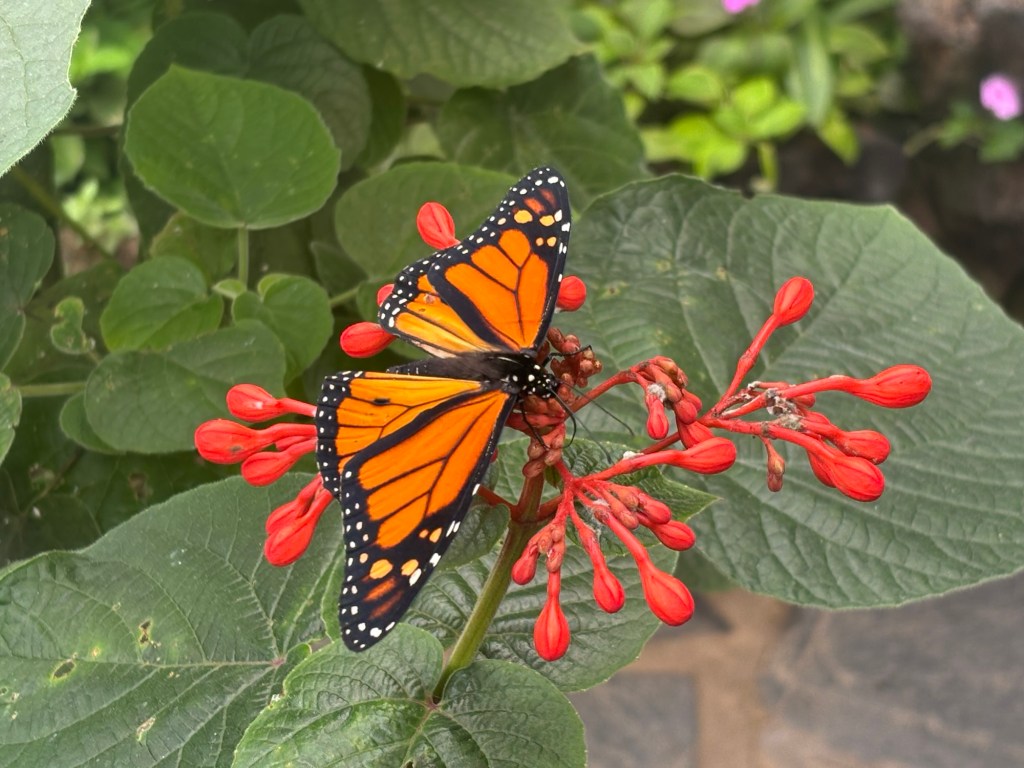
Icod’s mariposario hosts a number of ‘celebrity’ butterflies: the electric-blue morpho, the wandering monarch, and the gigantic Atlas moth. They’re a lot better at drawing in tourists than the endangered Canarian large white, I guess, a species which this local enterprise is working to protect. They’re a long way from home, usually haunting the dense rainforests of the Amazon basin, but they seemed more at home here than they would in a similar butterfly park in the UK.


It was the prospect of seeing the morphos which drew me in, I think, but I stayed for the monarchs. These impressive creatures, with wings the colour of an Atlantic sunset, are a cultural symbol of Central America. If I’d gone to Mexico – my original plan for the Easter holidays – I’d have gone looking for them over there. Not that I’d have had any guarantees of seeing one, of course – but it would have been fun to try.


Higher up the mountainside stands another dragon tree, el Drago de San Antonio. Younger than the drago milenario (but only by a few hundred years), this one is chained in place like a wild beast. It’s also guarded: two security guards in green overalls sat in the shade nearby, smoking a cigarette and watching me as I wandered over to have a look. There’s a motive for their caution: the tree had been ‘attacked’ twice in the last fifty years, first by an ambitious landowner who wanted it cut down and more recently by vandals. To ensure its safety, cameras have been installed in the neighbouring walls and a guard posted during daylight hours – not to mention the chains. I can only imagine these last have been affixed to keep the tree in place should the dormant dragon within decide to take flight someday.


Well, I’ve made it to my digs for the night in Caserio los Partidos, high up in the hills above Erjos. The restaurant is open, but the lady who sorts the lodging isn’t here. I guess she’ll be back at some point this afternoon. I hope she comes soon – I can never truly relax until I’ve got rid of my rucksack. There’s no signal this high up the mountain, but that’s exactly why I came all the way up here – to really get away. I need it after the last two days in touristic Tenerife. It’s a beautiful place, once you get away from the coast and the cities, but this will probably be my only visit. It might be a Spanish territory, and the natives might be Spanish speakers, but it’s not Spain. I’m already nostalgic for the mainland.


Still no sign of the dueña. At least it’s given me time to catch up on my writing and stay out of the worst of the midday sun. See you on the other side. BB x
Devils of Fire and Dust

Capsule 19, Atypicap, Puerto de la Cruz. 19.02.

The last post went off on a tangent about guaguas – so much so that I didn’t even get on to talking about the purpose of my voyage: to hike in the caldera of Spain’s tallest mountain and the symbol of Tenerife itself: Teide National Park.


Ignore the ads plastered across bus stations and billboards: Teide, not the widely advertised Loro Parque, is the true ‘must’ of Tenerife. There is so much about Teide that is worthy of a story. It is an active volcano, erupting most recently in 1909. It was sacred to the Guanche people (the native peoples of the Canaries before the Spanish conquest), who saw it as both a holy mountain and the jail of the fire demon Guayota, interred within the mountain by their supreme deity, Achamán.

What did Guayota do to deserve such a fate? He kidnapped Magec, the Guanche sun god, and trapped them inside the mountain, plunging the world into darkness. Despairing for their future, the islanders prayed to Achamán, who fought a fierce battle with Guayota and imprisoned him within the mountain forever.


Teide itself is a mighty thing indeed. Even from the caldera – which, it must be said, is not the mountain’s most beautiful side – it towers above everything else, dwarfing not just the high cliffs and mountains around Tenerife’s rim but the surrounding islands as well. One can only imagine the terror the islanders must have felt when it caused the earth to roar and spewed fire and fury out of its peak.

It was said that Teide’s eruptions were a sign of Guayota’s fury at his imprisonment, and that his children, in the form of demonic dogs known as tibicenas, haunted the mountainside by night.

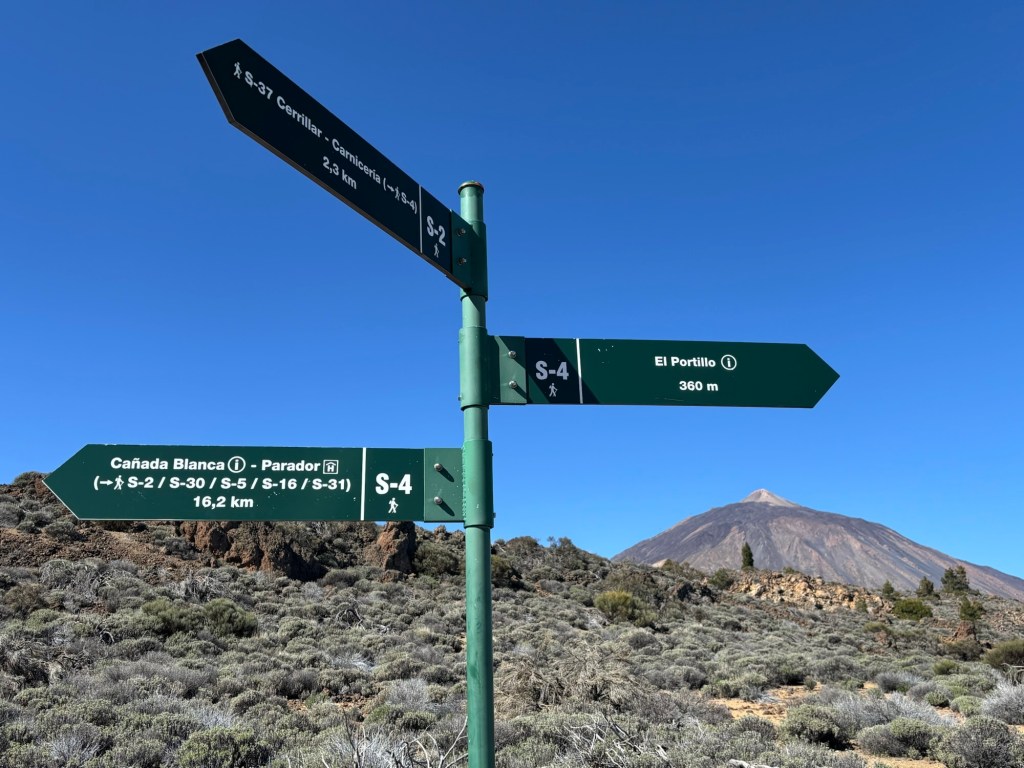
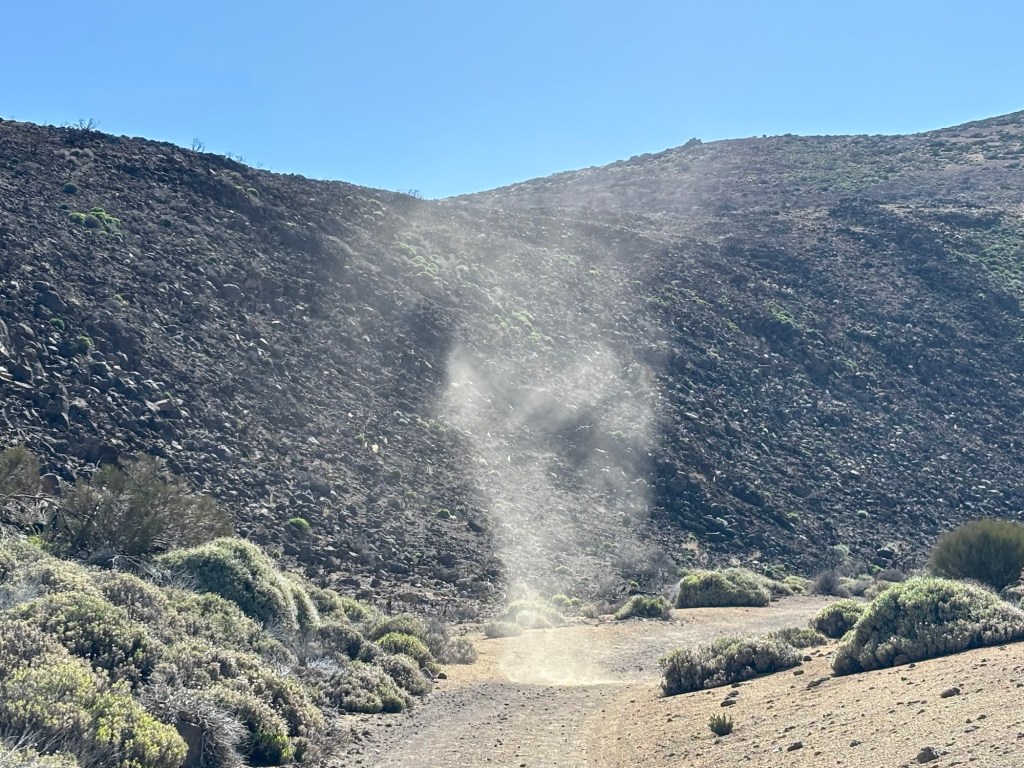
I didn’t see any hellhounds on my lap of the park, but I did see a dust devil as I set out from El Portillo. I used to see these quite frequently when I lived in Jordan, but outside of desert environments they are quite rare.


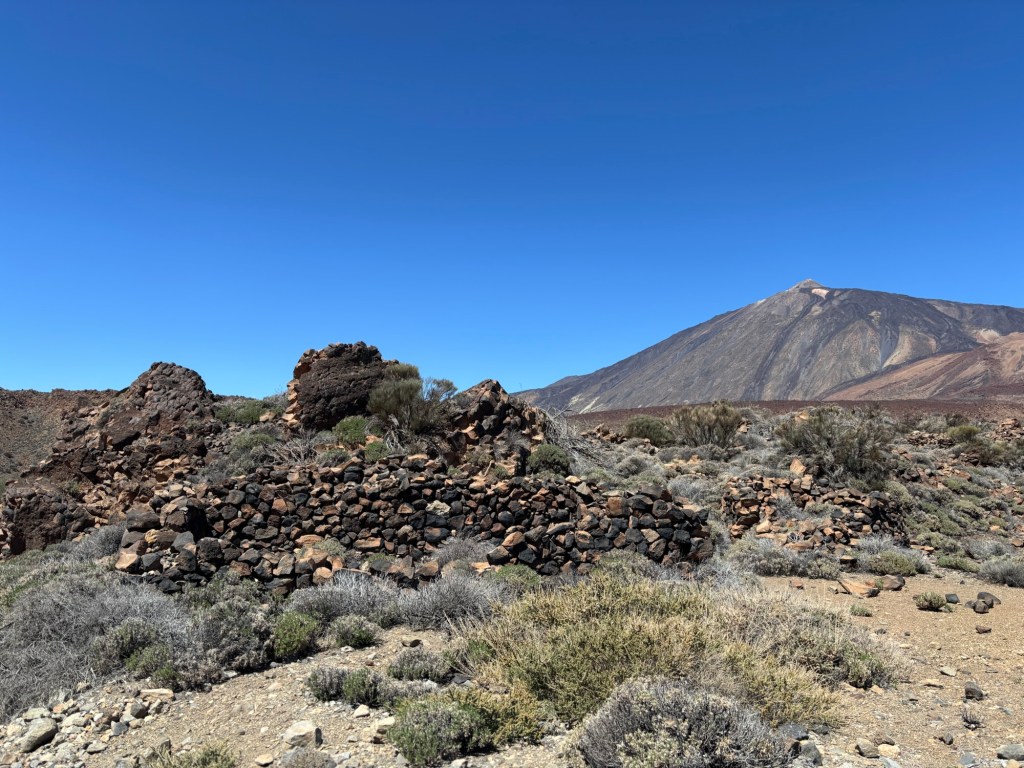
Scattered around the caldera floor are a number of unfinished or ruined dwellings built out of the scattered basalt rocks. These present a mystery to the casual hiker: what were they? The ancient dwellings of the Guanches? An initiative by the park authorities? Hunting refuges? In truth, they are none of these things: the caldera was far too hostile an environment for settlement by the Guanches, construction within the national park is tightly restricted, and hunting – naturally outlawed – would net a poor return, as the largest birds within the park are kestrels and the odd buzzard, and the only native mammals are bats.

No – they are actually the remains of a German attempt to build a sanatorium within the caldera in the early 20th century. A lack of funding, the eventual creation of the National park and, of course, two world wars put a bullet in the head of the project and now all that remains are the foundations of these houses, which now provide shelter for the enigmatic blue-bellied lizards that can only be found here on Tenerife.


These creatures are everywhere in the caldera, darting across the path and into the numerous crevices in the boulder-strewn ash field as you pass. There are two other species endemic reptiles within the park – the Tenerife skink and the Tenerife gecko – but the casual observer is much more likely to cross paths with the Tenerife lizard, especially around the Parador car park where they have become quite fearless.

The Canary Islands – curiously, named not for the species of finch that calls the islands home, but for the large population of monk seals (or sea dogs) that once lived here – are home to a large number of endemic reptiles, some of them textbook cases of island gigantism: that is, where a species has fewer natural predators and can thus grow to a size far greater than its mainland relatives. The largest of these, the El Hierro giant lizard, is a relic of precolonial times, when giant lizards were much more common in these islands, as well as much larger: fossils indicate that some could exceed a metre in length, right up until the arrival of the Spanish in the 1490s.


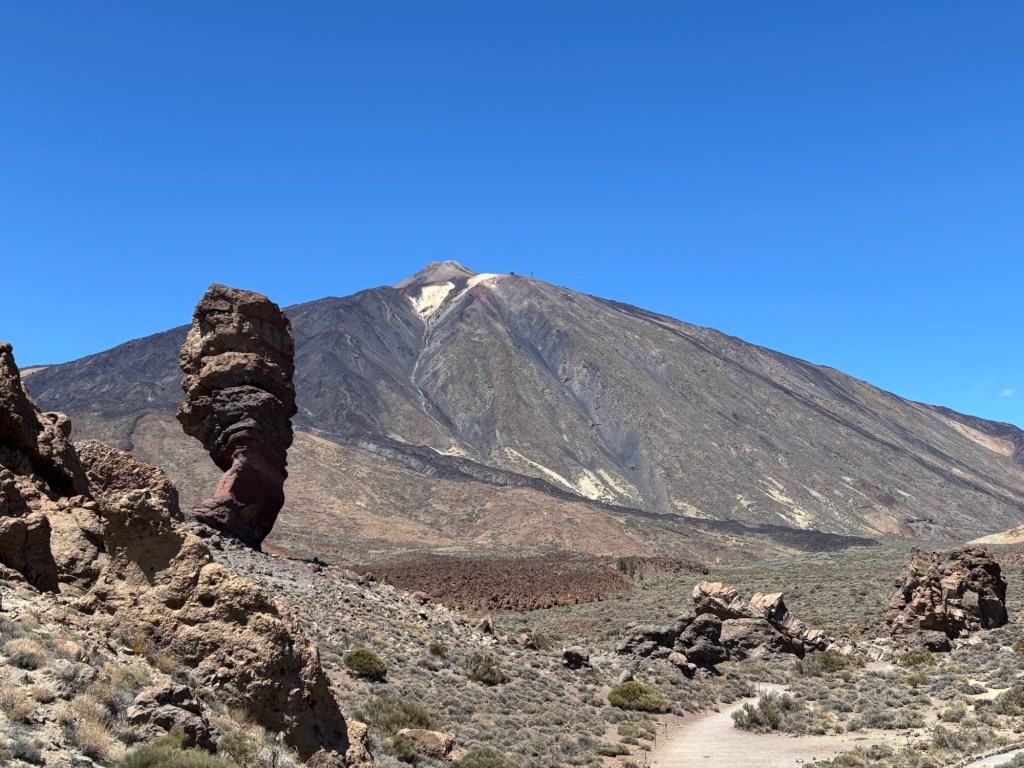
No visit to Teide would be complete without taking in the Roques de García, the roots of an ancient mountain even older than Teide itself. The most well-known of these has to be the Roque Cinchado, also known as ‘el árbol de piedra’ – the stone tree. Standing on the footpath a few paces from the car park provides you with one of the most famous views in all of Spain: the Roque Cinchado with Teide as its backdrop. The old man of the mountain and its son. I had to wait for a family testing out their drone to get a clear shot, but it was worth it.


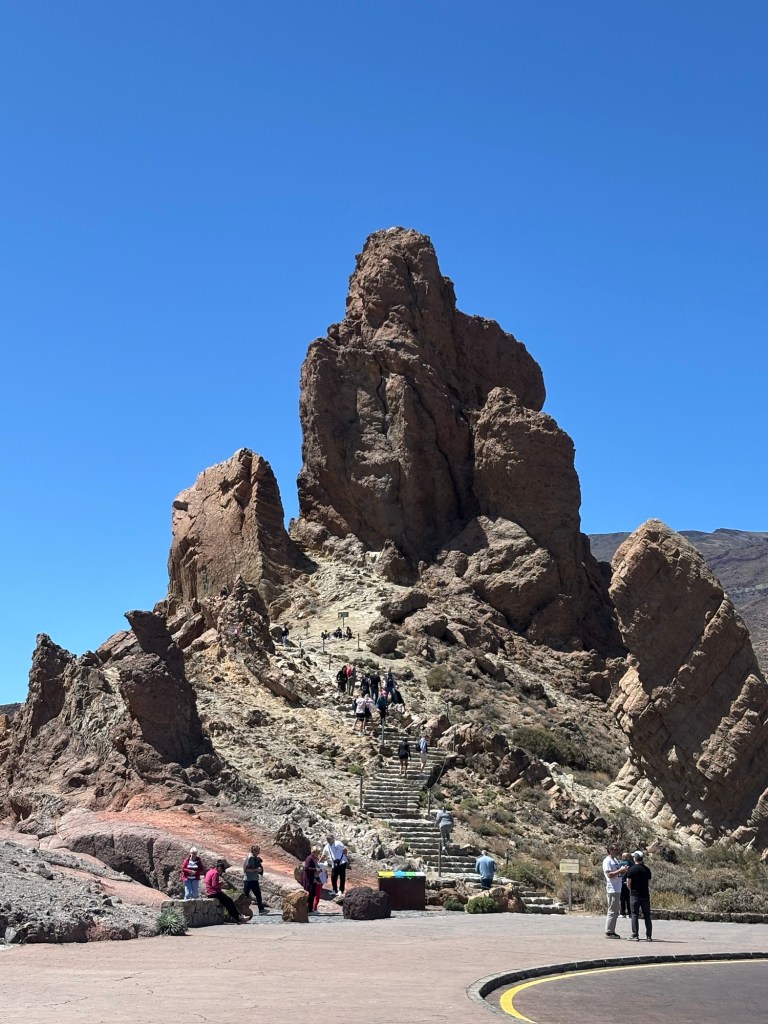
It’s not the only impressive rock formation in the caldera: there’s a mighty organ-like basalt structure down in the valley floor, and the largest of the Roques de García seems to have become – of all things – a beauty spot. Three Italian men sat at the top of the steps, sporting designer sunglasses and expensive shoes. A Ukrainian girl dressed in pink with her hair tied back in a high ponytail occupied one of the lower peaks for the best part of twenty minutes, turning her head this way and that while her friend took photographs. As a matter of fact, I was the odd one out for not wearing my best: it seems whole busloads of well-dressed teens and students come up here for the ultimate profile picture.

I wonder if they spared a thought for the ancient fire demon trapped with the mountain behind them – or whether they thought to learn about the Guanches, the true Canarians, whose fire was extinguished many hundreds of years ago. They were crushed as a mere prelude to the conquest of the Americas, and I don’t remember their story featuring much in my history classes in Spain. If there are any left, their bloodline had long since mingled with the Spanish to the point where it has all but faded away. Perhaps it is fate that they too, like the fire demon Guayota, now lie buried deep within the mountain.


Tomorrow I strike out west for the peace and quiet of Chinyero. It’s been a long time coming. BB x
Ga-ga for Guaguas

La Corona Forestal, Tenerife. 16.34.

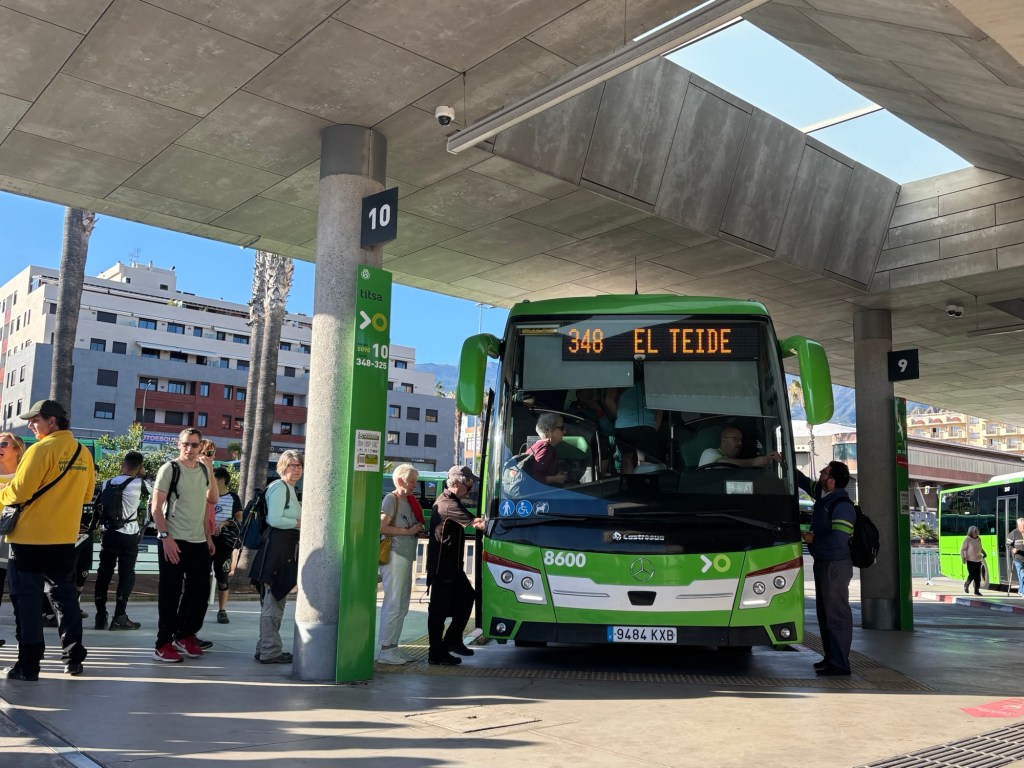
If there’s a hard mode for learning to drive, at least one of the levels must be the permit to drive the 348 from Puerto de la Cruz to Teide National Park. It’s utterly ridiculous. The vertiginous indifference required behind the wheel as the bus makes the sixteen sharp turns necessary to climb the two thousand metres from the city to the rim of the caldera – while negotiating said turns with the many tour buses that ply that route – is nothing short of medal-worthy. Truly, if you can drive here, you can probably drive anywhere.

And that’s as good a lead-in as any to the nub of today’s story: the legendary guaguas, the bus network of the Canary Islands.


Where did I leave things yesterday? In Santiago airport? Well, I made it safe and sound to Tenerife, some one thousand miles to the south. I was on high alert for most of the flight, as this is the one leg of the grand tour that I don’t know inside out. The plane took off a leisurely twenty minutes late, and I was so concerned that we’d miss the last bus to Puerto de la Cruz that I completely forgot to factor in the time difference… because the Canary Islands operate on British time! 

Using every second of the additional hour, I set out to find the bus lane. It wasn’t all that easy to find, and when I did, it was to learn that Google had got the times wrong: the last guagua for Puerto de la Cruz from Tenerife North leaves at 20.30 on Saturdays. So I’d missed it.

But, where there’s a will (and a stubborn won’t concerning the 75€ taxi alternative) there’s a way, so I gathered my belongings and set out into the night for the bus stop over the road from the airport.


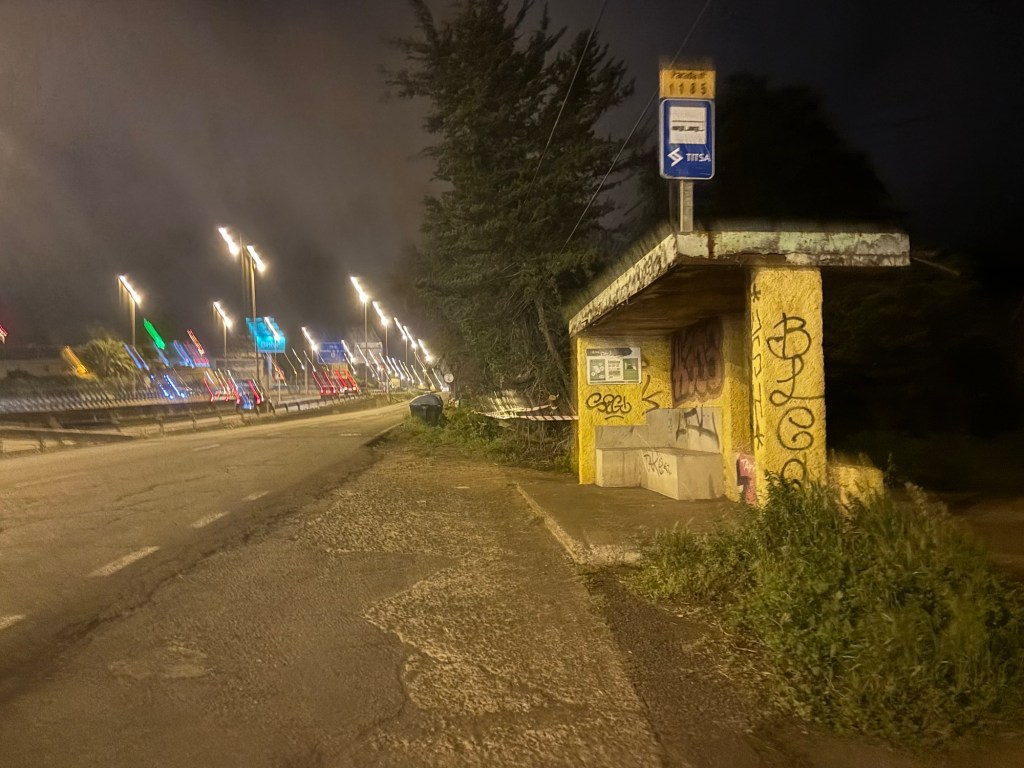
I struck out over the road – well, more like along it, as Tenerife North isn’t very walkable. Still, I wasn’t hassled or beeped at en route (always a good sign), and I did manage to track down the bus stop outside a rather seedy establishment called Eclipse de Sol. Google assured me there was a bus on its way, which is just as well, as none of the QR codes on any of the signs around Tenerife seem to work – helpful, when they’ve decided to save on printing the timetables. But, somebody up there was watching over me, because the bus for La Orotava eventually turned up.

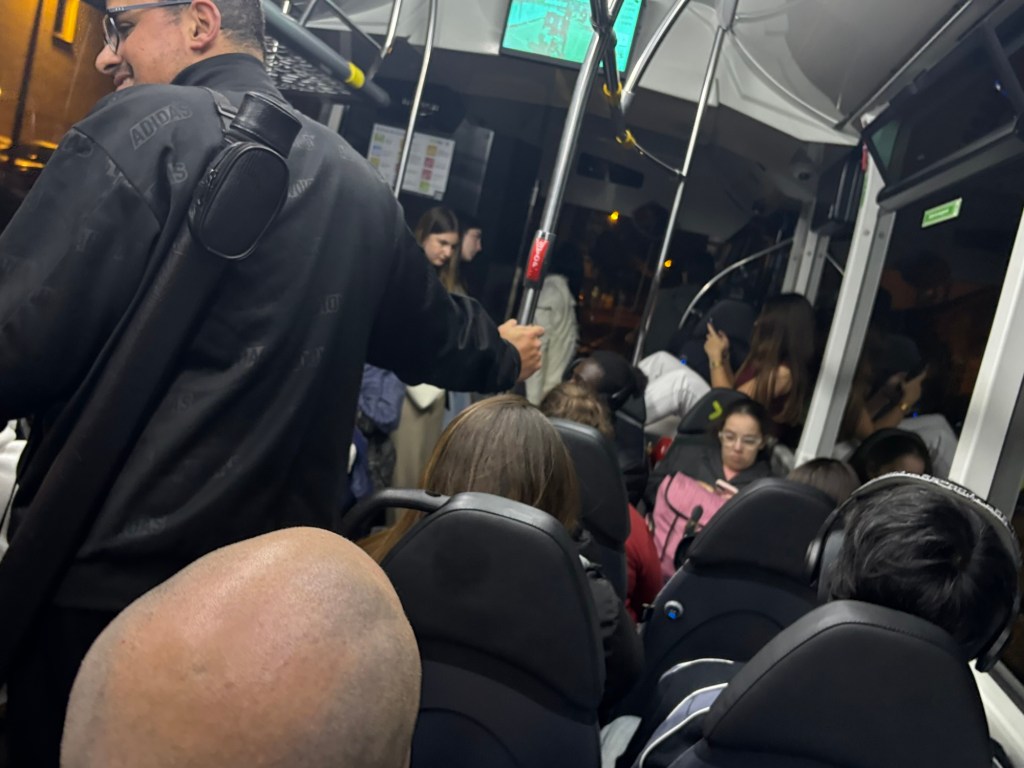
Let me tell you something for free: traveling by guagua is the perfect blend of European and African/South American public transport: all the bells and whistles and all of the noise that comes with it. It was packed to the gills: students sitting in each other’s laps, others crowded into the luggage racks, passengers stood two abreast in the aisle from the back of the bus all the way to the steps leading up to the driver. I was lucky to get on at all.


The sardine tin I managed to catch wasn’t even the right one, as it terminated in La Orotava – still a good five kilometres from my destination (and 360m up). I considered taking a chance on catching the right bus, which was on its way but twenty minutes late, but the prospect of it not being real and getting stuck at the junction in the middle of nowhere did not appeal. I thought about jumping into a taxi at La Orotava instead, but even as I thought that over, another bus arrived with “Puerto de la Cruz” emblazoned across its screen. I haven’t been so relieved to see a bus in years.

A similar story unfolded today en route to Teide National Park. There are only two buses per day: one there, one back. No exceptions. Given what I’ve already told you about the logistics, that’s not entirely surprising. But you’ve got to get there early, as it’s a very popular ride and the queue is always huge. I just about made it, despite being late due to my shopping quest for Factor 50 sunscreen on a Sunday morning (they’re all locked away behind a glass cabinet so I had to get a clerk to open it first). The travel card I bought was next to useless, so I paid in cash. I still don’t quite know how they work – there isn’t a flat rate for a single journey, as the website implies, as it’s 6,30€ to get to Teide from Puerto de la Cruz, and the driver wasn’t the friendliest – though when you’re having to deal with hapless guiris on the most popular bus in town, and then drive said bus up one of the steepest bus routes in Europe, I can’t say I blame the man.


Tomorrow, I’m braving the guaguas once again to get to Icod de los Vinos, partly to see the famous dragon tree, and partly to stock up on supplies for another hike around the ash flow of Chinyero, where I have booked a casa rural so that I can see the other thing that has brought me to Tenerife, besides the need to tick this last autonomous community off the list: the stars. Tenerife has some of the best stargazing in the world, once you get away from its coastline. I plan to make the most of that. BB x
Smoke Signals

Aeropuerto De Santiago – Rosalía De Castro. 14.40.

I’m back at Santiago’s very small, very civilised airport. It’s another five hours until my flight, but Galician weather is highly unpredictable and I didn’t fancy making the three-hour hike to the airport under a belt of rain clouds, so I forked out a euro and caught the bus instead. On the plus side, it gives me plenty of time to read and rest – tomorrow will involve no small amount of walking, so it’s best I don’t wear out my feet just yet.

There’s a WHSmith in the departures lounge. I wonder how much longer that outpost is for this world, and others scattered in airports across the world, now that the dependable newsagents is going under, just like Woolworths before it.


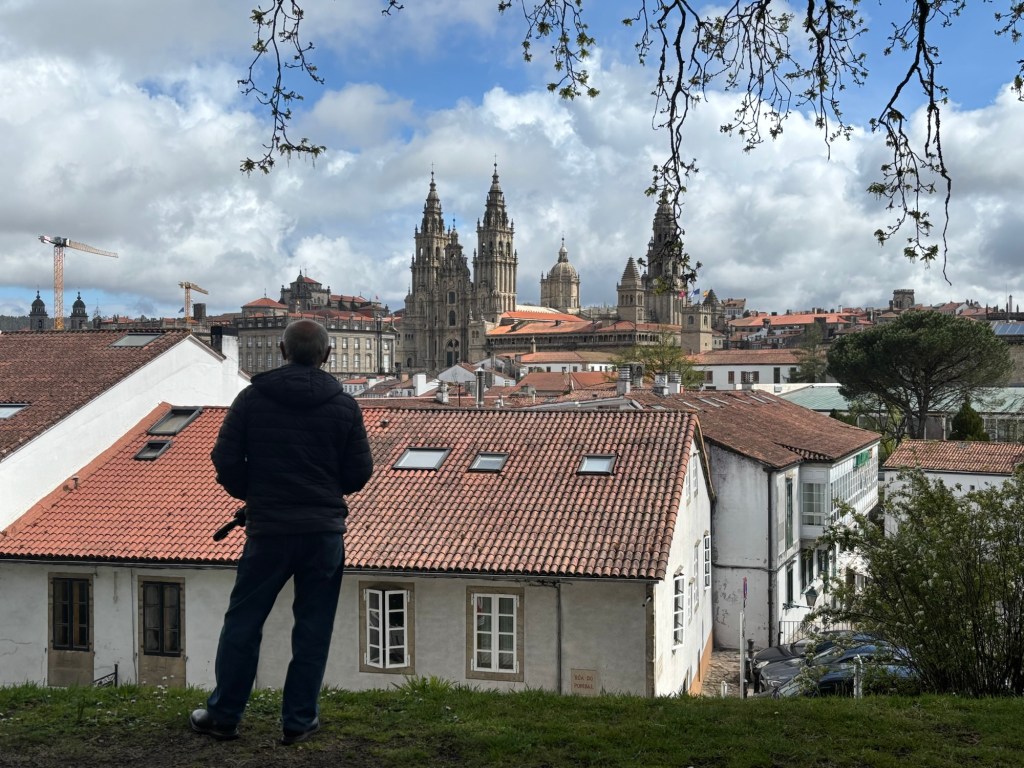
I only just made it to the 19.30 pilgrim Mass in the cathedral of Santiago last night – it took me a little longer than I anticipated to track down the books I was looking for. There was a queue outside the door, and when I was a few metres from the great doors, an attendant in a high-vis orange jacket announced that visits were now over for the day – unless, of course, we were queuing for the Mass. That thinned some of the line, but even so, it was standing room only this time… not the front row seats I enjoyed at the end of the Camino in 2023.

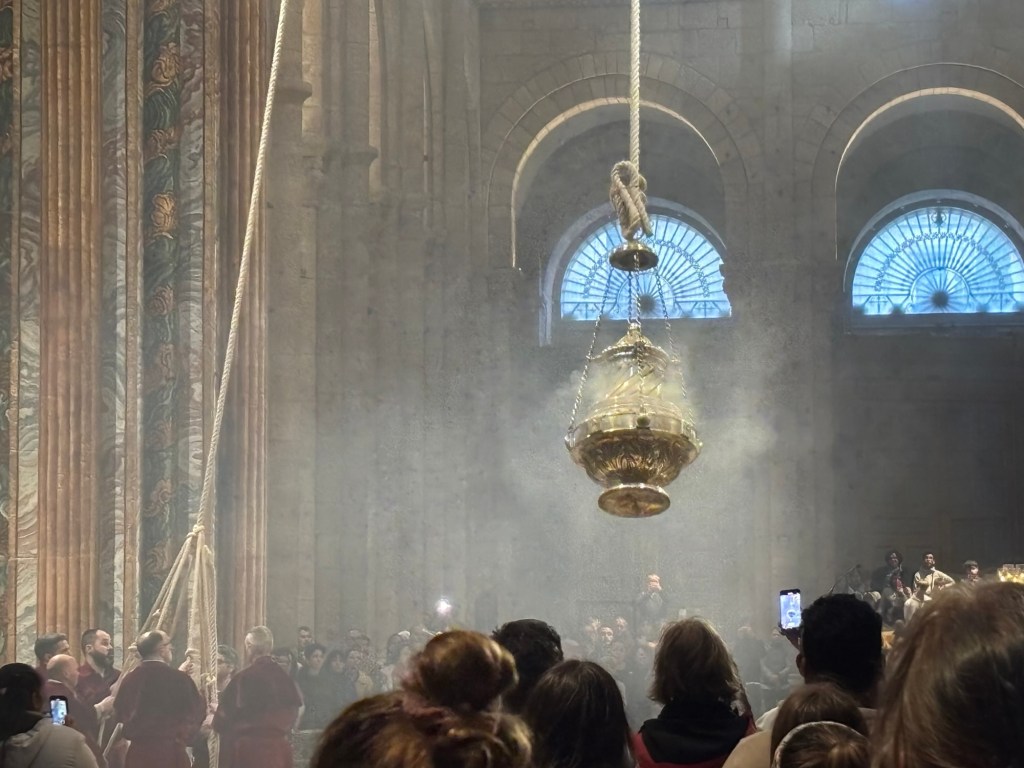
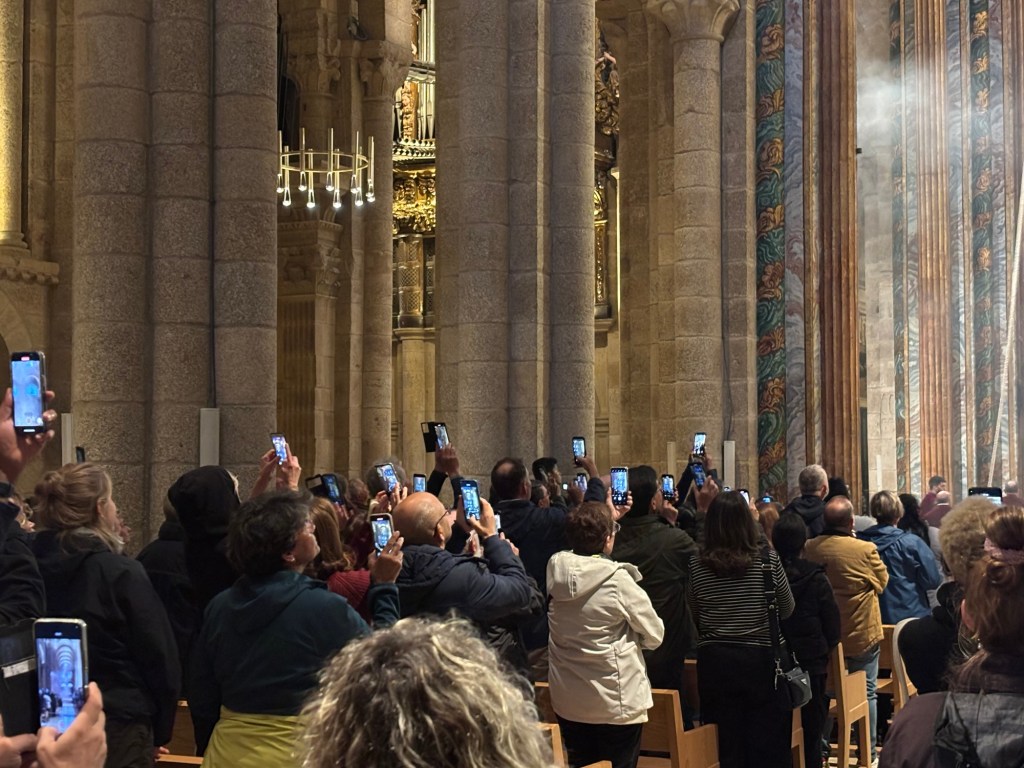
The reason for the crush became apparent in the last few minutes of the Mass, when a group of eight priests in burgundy cassocks approached the enormous knotted rope securing the botafumeiro, Santiago’s famously huge incense burner and, with one collective tug, began to hoist the thing into the air.


Weighing in at 80kg and measuring an impressive 1.93m in height, the botafumeiro of Santiago is one of the largest in the world, outsized only by the Christendom College censer in Virginia (because of course the Americans, not satisfied with an imitation, had to have a bigger one). Unlike its American cousin, however, the botafumeiro is more than just a showpiece. The reason for its size was to purify the air within the cathedral and thus cover up the smell of the pilgrims, who must have stunk to high heaven in the centuries before Jacotrans, Booking.com and Compede blister plasters.

The botafumeiro you see today has been in use since 1851. The original, a 15th century thurible of solid silver, was stolen by French troops in the Spanish War of Independence and supposedly melted down for coinage. This and other acts of vandalism marked the French occupation, which saw many monasteries and Roman bridges destroyed in the name of military strategy. A local legend holds that the Alhambra was nearly blown to pieces on Napoleon’s orders as the French lost their grip on Spain, spared only by the efforts of a single French soldier who had a change of heart and stayed behind to defuse the charges, saving the last remaining medieval Islamic palace in the world from being lost forever.


The botafumeiro swings alarmingly low over the heads of the faithful, reaching a top speed of 68km per hour, though never low enough to catch the heads of even the tallest German pilgrims. It’s quite a special sight, because its presence isn’t guaranteed: it’s usually only brought out on holy days, such as Easter Sunday or the Feast of Santiago on the 25th July. I missed it last time as I set out for the coast on the 25th, hoping to beat the crowds that would follow.

There is a small chance, however, that your visit may coincide with the whim of this or that religious order (or wealthy pilgrim), who can pay a certain amount of money to have the censer brought out especially for their arrival. This time I got lucky: a confraternity had traveled all the way from Goa to celebrate Mass in Santiago, so the botafumeiro was brought out. Lucky me!


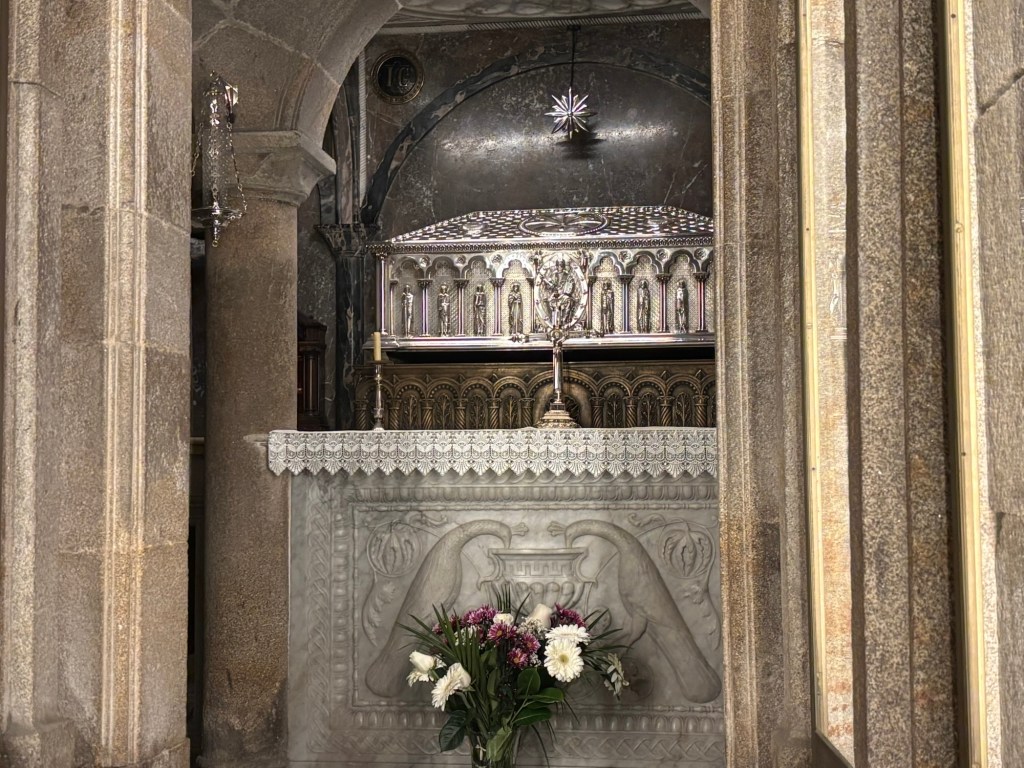
After three visits to the cathedral without paying my respects to the true purpose of the Camino, I decided to make one last trip to see the tomb of Santiago himself. The first of Christ’s apostles to be martyred for his faith, Santiago el Mayor (or Saint James the Greater, if you prefer) was beheaded on the orders of Herod Agrippa. His head was buried near the spot where he was killed (now beneath the Armenian Cathedral of Saint James in Jerusalem) but his body is believed to have been transported to the Galician coast, where his remains were discovered – as they so often are – by a hermit in the woods, who saw a great light shining upon a forgotten Roman tomb.

The veracity of the legend is irrelevant: word got around and soon the final resting place of Santiago had become the most important pilgrimage site in all of Christendom. That it just so happened to coincide with a time when the Christian kingdoms in the north were desperately seeking a rallying flag to counter the Muslim forces who had taken the Iberian peninsula by storm (and the angels believe to aid them in battle) is curious, to say the least.

Santiago’s tomb is a small silver coffin, located in a crypt beneath the central altar. The eighty-strong Portuguese school trip group that I had fallen behind weren’t all that interested in the bones of Jesus’ most faithful apostle, busying themselves repeating lines from Portuguese trap songs and stealing kisses from their girlfriends in the shadows, so I had plenty of time to stop and admire the coffin undisturbed.


I was lucky to get in when I did: by the time I left via the north door, the queue to get in stretched for nearly two hundred metres around the side of the cathedral. Pro tip: get in early, or just after Mass, when the queues are at their thinnest!


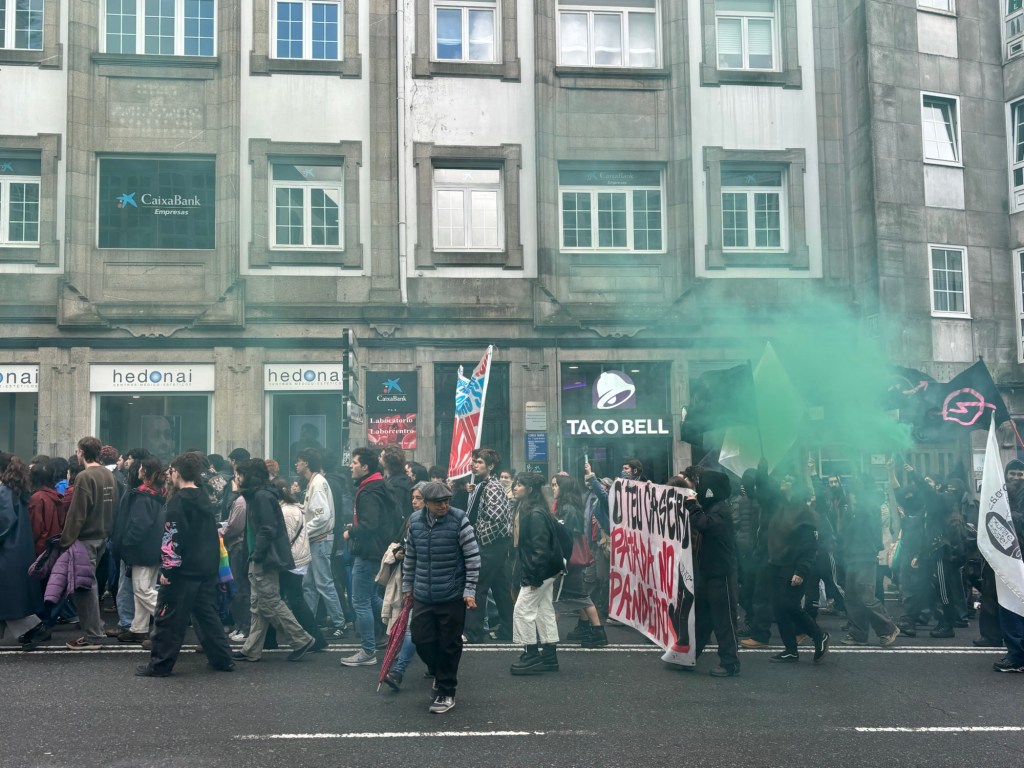
I had a quick bocadillo lunch in the old town and packed my things, thinking to spend a few sunny hours in the Parque de Alameda, but I was distracted en route by the sound of shouts and firecrackers. Doubling back, I found an advance guard of local police cordoning off the Avenida de Xoán Carlos I, and behind them, an enormous crowd of youths dressed mostly in black, carrying flags, placards and loudhalers.

I could have guessed what they were going to be protesting about, and my guess would have been on the money – after all, it’s a sore tooth Spain has been nursing for several years now: the housing crisis.


The short explanation? Spain’s housing market is a shambles. By some estimates, the cost of renting a property has gone up by 78% in the last decade, driven by rampant speculation and unrestricted vulture funds. Put simply, the average Spaniard now finds it very difficult (if not impossible) to find an affordable place to live, especially in the areas most popular with tourists. This is a country where flat-sharing websites like Idealista and Easypiso hold sway: AirBnB and its kin have made Spain a tough place to buy.

This has been most keenly felt in Barcelona and the Balearics, where many properties are vacant for large parts of the year, occupied only during the summer months by foreign investors. It’s one of a number of factors forcing Spaniards to live at home with their parents well into their twenties (or even thirties), and driving others to seek their fortune elsewhere. It’s also why I’m making a point of staying in pensiones wherever I go – a far older and more sustainable method of supporting the local economy as I travel.


There’s an even more sinister side-effect of the housing crisis in cities like Barcelona. I’m referring to the okupas, or the occupation of properties by gangs and other drug-related agencies who turn vacant holiday homes into drug dens, known here as narcopisos. The shady legal status of squatters in Spain, which makes it very hard to evict without the proper authority, doesn’t help matters at all.

Yes, A Place in the Sun and your kind – this is partly your fault. By encouraging the buying and selling (and re-selling) of property along the coast, you are driving the locals out of town faster than the local wildlife was displaced before them.


Naturally, it’s Spain’s youth who are taking the brunt of this crisis – and so, quite naturally, they’re the ones taking to the streets in large numbers to complain about it. Pedro Sánchez, Spain’s Prime Minister, has attempted to address the problem by proposing a ban or even a supertax on foreign buyers, but in the regions that depend the most on tourist dollars like Andalucía and the Costa Brava, that will be a very bitter pill to swallow. So, for now, Spain will have to muddle through these murky waters until a more universal solution can be found.


The protesters marched on up the avenue, followed closely by the police and their van, carrying their riot helmets at their hips. Some of the protesters threw petards into the road as they passed. Others lit flares. I watched them go and returned to the park.

Similar protests are taking place all across Spain today. I wonder if it will come to a head? It’s hard to say, but it is fascinating to be here on the ground while it’s all going down. It isn’t often that you get to live through history in the making, especially when it’s something you teach (manifestaciones is one of the tried-and-true A Level Spanish topics).

This. This is why I travel.


The smoking incense of Santiago’s botafumeiro was meant to cover up the stink of something rotten. Seeing the smoking flares of the protesters as the police escort them through the city, I can’t help but note the connection.

I’ll keep you posted if I hear or see anything else. I trust this isn’t the last we’ll hear of it. BB x

F*ck U(sted)

“Con el arroz con leche… Seventeen pounds. Cash or card?”

“Bueno, con tarjeta, si se puede.”

“Uy, perdón. No sabía. Vi tu cara y…”

“Bueno si, es verdad que tengo la cara guiri, y que soy inglis, pero hay que esforzarse un poco al viajar, no?”

“Bien dicho. Pues, la tarjeta aquí… gracias.”

“A usted.”

“Otra vez, perdón. Y por favor, no me vuelvas a llamar ese usted.”

Exchange at the Air Food One, Santiago Airport

When I teach the verb forms in class, I sometimes get asked by my students about usted. Etymologically, I’ve always found it something of a doozy. While I’ve always been rather fond the Arabic origin theory via the phonetically similar “ustaadh” (meaning doctor or teacher), the general consensus (backed up by the RAE) is that it comes from an abbreviation of ‘vuestra merced’, an old honorific meaning “your mercy” or “your worship”. The old way of writing the letter U as V, paired with the increasingly shorter abbreviation to “Vd”, gradually distilled the honorific into a single world, usted, which is now used around the Spanish-speaking world as a polite term of address.

Except in Spain, in my experience, where it’s usually regarded as an affront.


Until this week, I’ve used usted just once in my life, and it was wrong. I’ll admit, I avoided it for years purely out of laziness. Like the French vous, usted requires a different person when addressing somebody: where vous takes the second person plural, usted takes the third person singular. Think of it like a waiter in a very fancy restaurant (“would sir like a bottle of the house wine?”). When you’re learning a language, it’s hard enough to get the tenses right, never mind the societal conditions dictating whether one should use formal or informal speech.

The one time I did experiment with usted, I got laughed out of court. After spending years trying to locate my Spanish family and finally tracking them down to a pueblo de La Mancha (you can read that saga here), I spent a long evening being introduced to my kin. One of my uncles, the venerable Don Augusto, worked in the local bank and seemed to command some sway as one of the family patriarchs. Here, I thought, was a textbook case for usted: a term reserved “for older people and those to whom you want to show more respect”, to quote the oft-used student resource, BBC Bitesize.

Augusto’s response? “Usted? Pero, ¿por qué usted? Somos familia.” Augusto isn’t a blood relation, but that means little in Spain where family is still everything. We had a little laugh about it and I never used usted again.

Until this week, where for whatever reason I’ve been using it daily in my interactions in shops, restaurants and pensiones. I can only assume it’s the subtle influence of my increased use of French, where the polite form is not only more common, but mandatory in certain contexts. The French even have two verbs to distinguish the point when you must use formal speech (vouvoyer) and relax into informal speech (tutoyer).

Latin Americans love their formality. They held onto the deferential vos (a close relation of the French vous) in lieu of long after the Spanish gave it up as a lower class symbol, and usted is used all over. Using outside of close-knit circles of family and friends is actually considered overly familiar to the point of being vulgar.

But in speech, as in other ways, Latin Americans and Spaniards must not be conflated. The Spaniard’s innate love of familiarity and hostility toward authority make for infertile soil for formal speech. It may have been more common in the last century under the dictatorship, but like much that was once sacred, it is sliding steadily into the void. And is that such a bad thing? Why hold someone at arm’s length when there is a potential friend to be made? Warmer climes make for warmer people, and the Spanish are no exception to that rule whatsoever.

My brief exchange with the tiller at the airport café is a classic example: Spaniards may consider the uninvited use of usted to be an affront, a way of saying “you and I are doing business only, nothing more”. A short soujourn in Morocco, Spain’s southern neighbour and the ancestral home of many of its people, will show you the paramount importance attached to friendly, familiar interactions in even the briefest of dealings: no item can be bought or sold without engaging in witty banter over family and friends over a glass of mint tea. It’s a habit the Spanish have never quite been able to shake, and one that would have been a worthy addition to my EPQ on Spain’s Islamic heritage, had I known about it at the time.

Well, I’ve had my slice of humble pie (or tortilla). It’s back to the books for now. I’ll bow out gracefully, and informally. They seem to prefer things that way here! BB x

When the Whales Came

As Escaselas. 12.01pm.

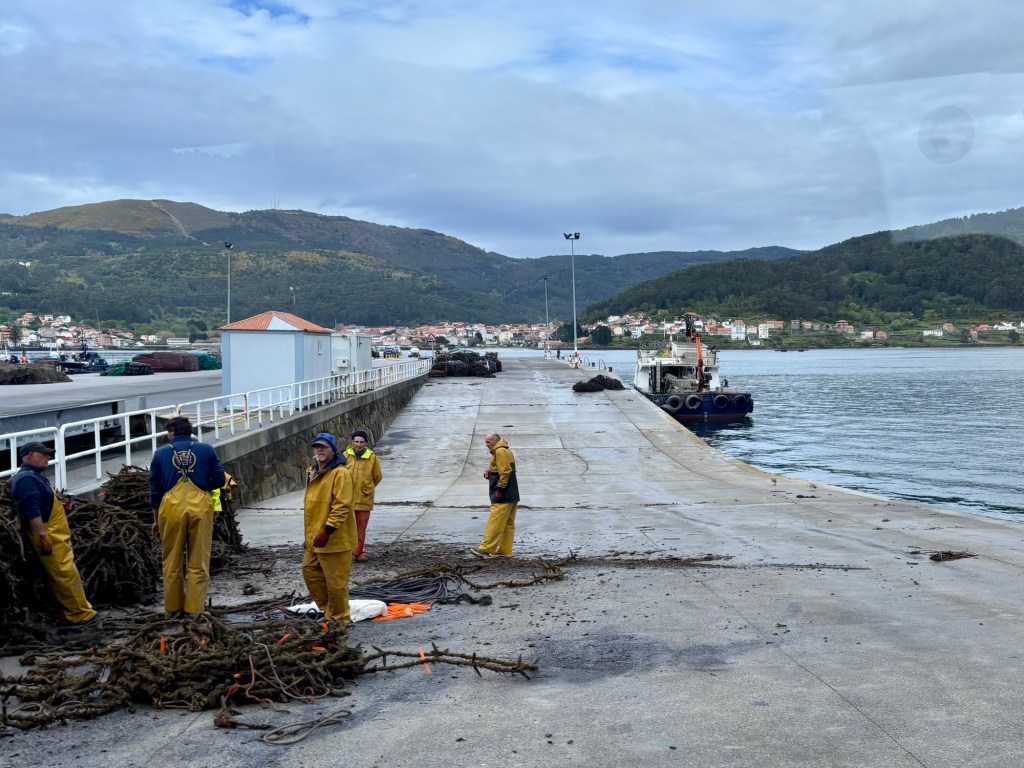
Rain. It started early this morning, while I was still fast asleep, but it’s coming down quite hard now. The bus has just climbed the hill north of As Escaselas and is rolling towards Sardiñeiro, its windscreen wipers working overtime. Lichen-coated hórreos, a symbol of the Galician countryside, stand shoulder to shoulder with new-build white houses with wide garages. That strange mix of ancient and modern is ubiquitous along the pilgrim road: here is a wizened fisherman in blue overalls mending his lobster creels in the shelter of an awning, above which a sign advertises (in English only) “hippie/chill-out/goa fashion”. The lady on the bus behind me talks down the phone in a Galician accent so thick it could be Portuguese, while a couple of free-spirited Germans discuss their next steps. My German is rudimentary at best, but I catch the words “Mallorca”, “Sontag” and “yogi”.

Now and then I recognise a patch of road from that summer two years ago, when Simas and I pushed on together for the Cape, in warmer days when the wind blew west and America still seemed like a land full of hope. Now, the news is full of fury as Trump’s tariffs threaten a global trade war, and the US government tells its citizens to “trust in Trump”. Americans, it should be noted, have been notably absent from the pilgrim trail over the last few days.

Three pilgrims return home on foot in coats that cover their backpacks, and one pilgrim comes back the other way, striking out for the last stage of her journey. The Camino is eternal.


Spooky by Dusty Springfield plays over my earphones as the bus pulls into the former whaling town of Cee. A crude iron sculpture on the seafront is all that remains of that heritage, besides its name, though there are honorary clues all over the place: Restaurante As Balenas, a number of whale-themed hotels, a couple of whale-shaped hobby horses in the play park and even a friendly mural on a wall near the bus station, offering a whimsical nod to that monstrous practice.

Whaling has been outlawed here since 1986. Spain was slow to adopt the ban and Galicia was one of the regions hit hardest, though by that point most of the whales had long since been driven to local extinction. Lately, however, these majestic creatures have been sighted off the coast again, after an absence of nearly forty years, including the greatest of them all, the blue whale – the largest creature ever to grace this planet.

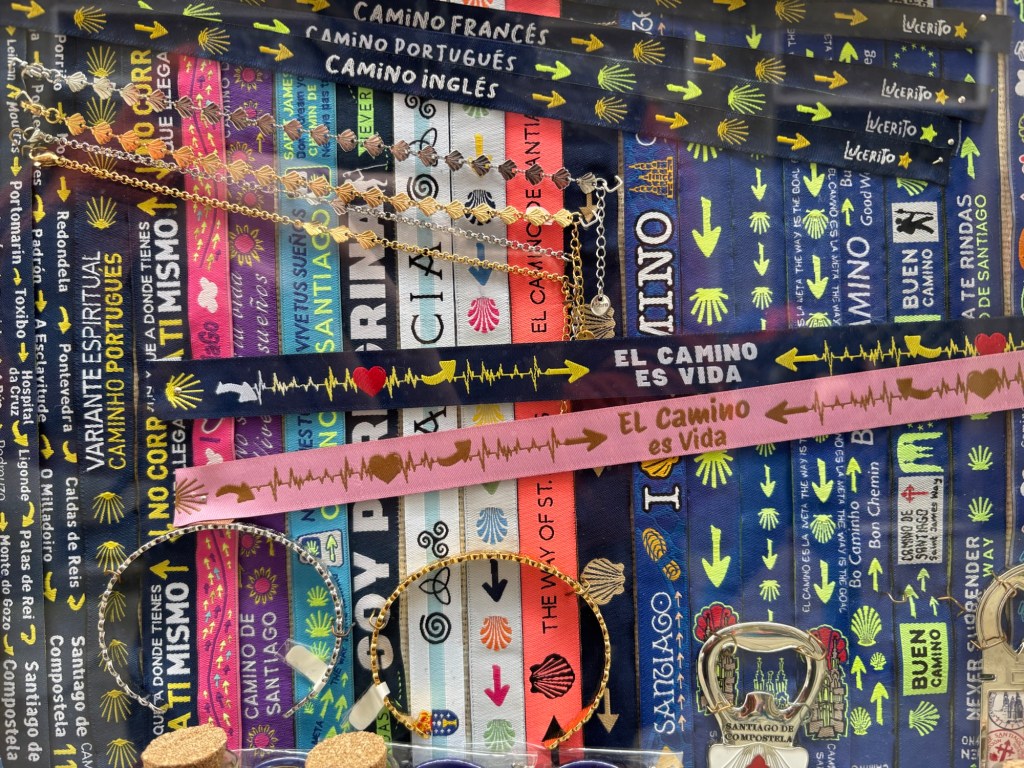
Perhaps they’ve been driven here by the depleting of their feeding grounds further south. Or perhaps – and this is what some scientists believe – it is an ancestral memory that has brought them home, in spite of the knowledge they must have of their kind’s slaughter at the hands of man. Something stronger than fear has called them back, the same compulsion that makes the tiny swallow travel around the half world twice a year. The same compulsion, perhaps, that leads pilgrims of all stripes to seek the end of the world here, as they had done long before the legend of Santiago washed up on these shores over a thousand years ago.


There’s a small bust-up in Muros, where the bus stops for a change of drivers. The two German pilgrims get off for a smoke and return with their rucksacks. The driver tells them they’ll have to leave their bags underneath if they’re headed for Santiago, as the bus will fill up when we reach Noia. One of the two – the one who speaks Spanish – argues the toss, asking if they can keep them at their feet. This annoys the driver, who points out that other passengers will need the seats more than their bags. Keeping my rucksack on me nearly got me out of a nasty scrape when I was backpacking around Morocco, but here in Spain, there’s no need to be quite so defensive. ALSA, Spain’s largest bus company, actually gives you the option to buy up the seat next to you, which seems a bit selfish. Monbus – a smaller corporate creature by far – is a lot more democratic.


There’s an enormous queue for the bus when it reaches Santiago, almost all of them under the age of thirty. It only dawns on me then that the only young people I saw out and about in Fisterra were pilgrims, and few of them under thirty at that. Spain is much like the rest of the world in that regard: its youth abandon the towns and villages for the bright lights of the city in pursuit of opportunities in work or love, returning home only to see friends and family, or once they have a family of their own.

My digs for the night are within a stone’s throw of the cathedral – quite literally. I can hear the bells chime every half hour from my room. I made a flying visit to some of the local bookstores, but wound up returning to my old haunt in Casa del libro in search of a couple of histories on Tartessos, a current fixation of mine. So far, my specialist areas include:

  • Bandit legends and narratives
  • Spain’s founding myths (esp. Pedro del Corral’s Crónica sarracina)
  • El Cid & Frontier Epics
  • Al-Andalus & Spain’s Islamic heritage
  • Extremadura
  • 17th Century Spain (Under Felipe IV)
  • Gypsy culture and narratives
  • Spanish wildlife (esp. concerning Doñana)

Once I’ve consumed these two new acquisitions, hopefully I can add Tartessos to that list!

I did make it to Mass this evening, but that’s worth a separate blog post, I think. So keep your eyes peeled! BB x

Elemental

Praia do Mar de Fóra, Fisterra. 12.31.

An enormous storm is moving in off the Atlantic. That’s what it says on the El País headlines on my phone. The signs were clear this morning: the wind was up and the waves were agitated, as though some supernatural force were stirring beneath the water out beyond the cape. Or maybe that’s just because I finished reading The Leviathan today and I have sea monsters on the brain.

That and the old English saying about red skies in the morning being a sailor’s warning.


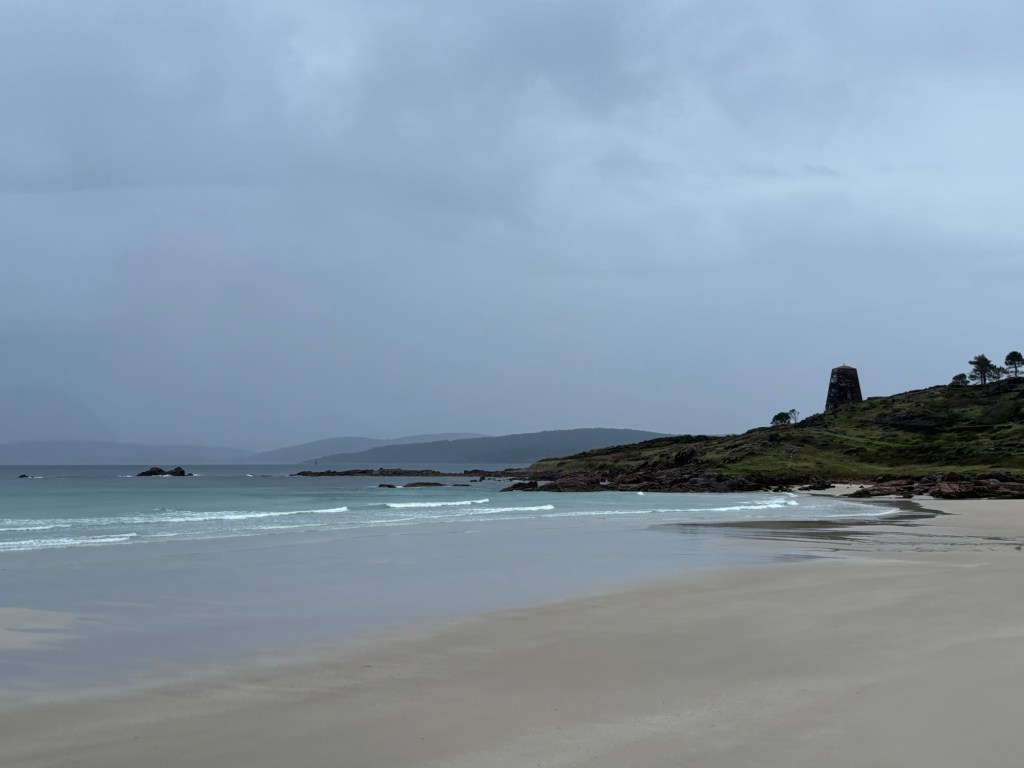
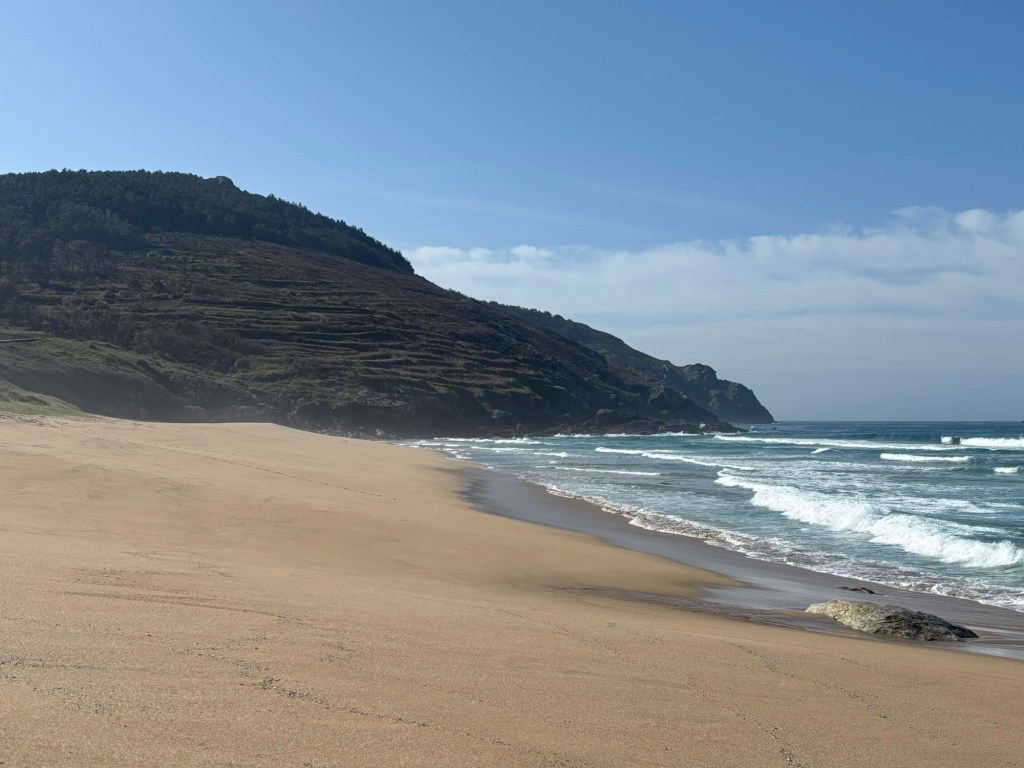
I didn’t come all the way out here to hide away from the elements, so once the worst of the morning’s rain was over, I nipped into town, grabbed an empanada and made for the Praia do Mar de Fóra on the west side of the cape. There were still a few clouds stretched across the sky, but none so ominous as those that were splashed across the news from the Canaries this morning. I sat on a boulder with my feet in a small stream and ate my lunch in peace, having the entire beach to myself for the second day in a row.


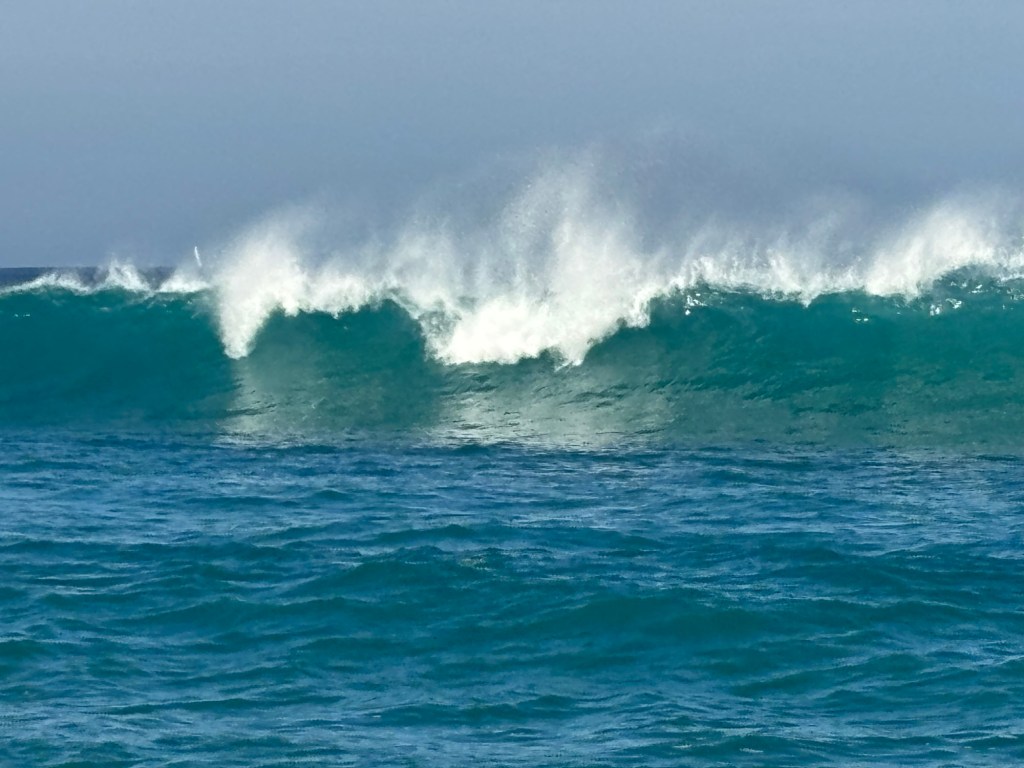
It’s easy to forget that there aren’t that many places in England where you can appreciate the full force of the Atlantic. Most of the English coastline looks out across the North and Irish Seas or the British Channel, and none of those are in the same league as the Great Western Ocean. From my post at the edge of the beach, I can see the sea mist rolling in with each crashing wave. Some of the waves collapse before they hit the shore; others swell while they’re still far off, hulking and dark and full of threatening force.

The ancients believed that Poseidon, God of the sea, was the ultimate force behind the power of the ocean. As well as the deity responsible for waves and quakes both terrestrial and marine, he was also the lord of horses, perhaps stemming from an even older association between horses and the sea. Poseidon is believed to have fashioned the first horse from the waves in an attempt to win over the people of Athens, who ultimately spurned his gift in favour of the olive tree offered by Athena, a far more practical gift for a seafaring folk for the myriad properties of its wood and fruit. And then there’s the parallel between the nature of horse and ocean, both extremely volatile – at one moment calm and beautiful, at another restless and powerful, stirred into action by some powerful emotion.

It’s thought that some of these beliefs come from seeing the shapes of horses’ heads as the foaming crests of the largest waves catch the wind before they break upon the shore. Before the unfettered force of the Atlantic bearing down on this little bay like a besieging army, it’s not hard to see the likeness to an elemental cavalry charge in the surf.


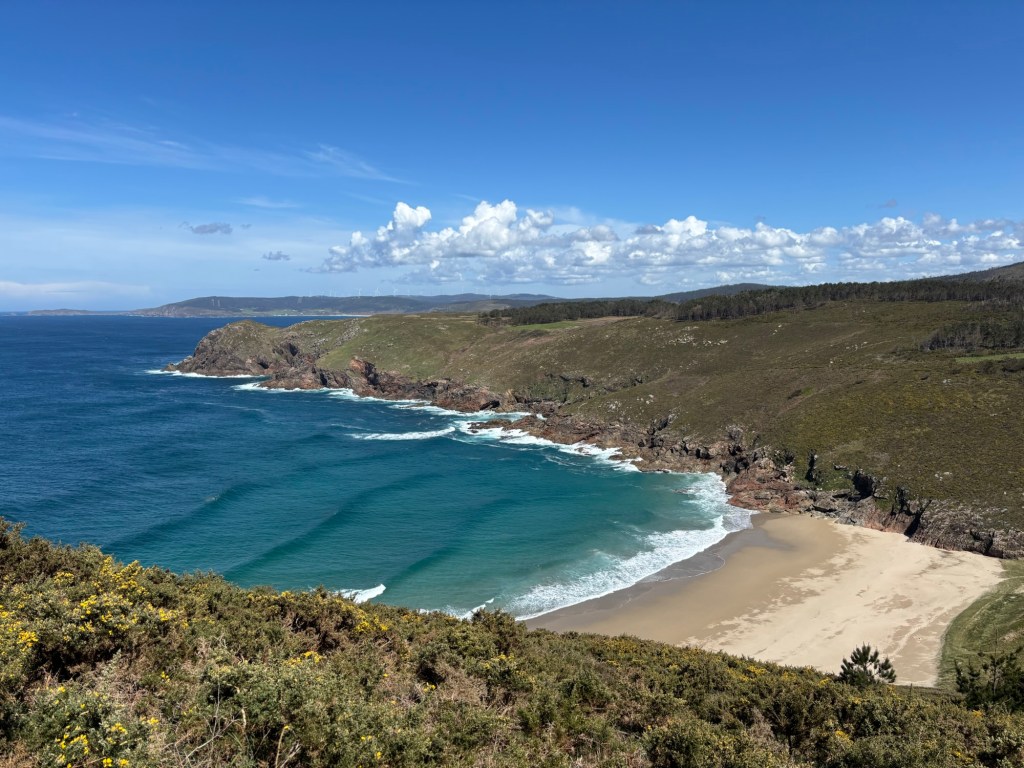
I had most of my lunch and readied to scale the cliffs. A half-beaten track snakes its way up the slope – a snake with a sadistic habit for traveling in a straight line, that is. The cliff climbs 200m in less than a kilometre, so I had plenty of opportunities to stop and take in the beauty of the bay (or, alternatively, a breather).

As I began my ascent, a couple of waxbills saw me off, a bizarre African immigrant in this Celtic corner of the world. I found the half-eaten corpse of a guillemot a little way up, the only one of its kind I saw, though they do still breed here at the westernmost corner of their range. For the rest of the climb, I was followed by a pair of red-billed choughs, an incredibly acrobatic bird which seems to delight in its ability to fly like few others. Now hanging in the wind, now plummeting into the abyss before unfolding their wings and climbing back out of their death-defying dives, they appear to perform these feats of gravitational defiance for the sheer thrill of it, since they serve no practical purpose whatsoever. The peregrine falcon employs a similar tactic to strike its prey out of the sky, but while I did spot one wheeling overhead, it wasn’t hunting today.

Far out to sea, the occasional gannet soared by, its wings just above touching the crests of the waves. They were shadowed now and then by the squat-bodied shags leaving their crude nests to fish; beautiful creatures in their own right, but ugly, misshapen imitations before the slender, powerful wings of the gannet. Down below, just metres beneath their colony, the Atlantic roiled in aquamarine anger between the cliffs.

It was a dizzying spectacle with both my feet (and my hands) firmly planted on the ground. Goodness knows how the choughs see such a sight and feel compelled to hurl themselves at it, as though defying the gods themselves. But then, I was never much fond of rollercoasters either.


The cliff path works its way up to the watchtower of Veladoiro, where the wind howls through the bars of its iron-framed mast, before skirting the edge of a pine forest so perfectly arranged it must have been planted here as a windbreak for the villages in the valley below. The lithe shapes of lizards and at least one snake dart across the path ahead of me, and I find the snapped-off tail of a slow worm that obviously wasn’t fast enough, though by the wearing at the severance point it seems to have been there for at least a day.

At the edge of the forest I come across a hidden bay: Praia da Arnela. It’s hard to tell from Google Maps why this pristine beach isn’t more of a magnet, but the answer is obvious to the naked eye: it can only be reached by a steep descent from an offshoot of the nearby hamlet of Vilar de Duio. I haven’t brought a towel, and I don’t think I’d fancy climbing back up the cliffs even if I had, so I content myself with watching the waves roll in from the clifftop instead.


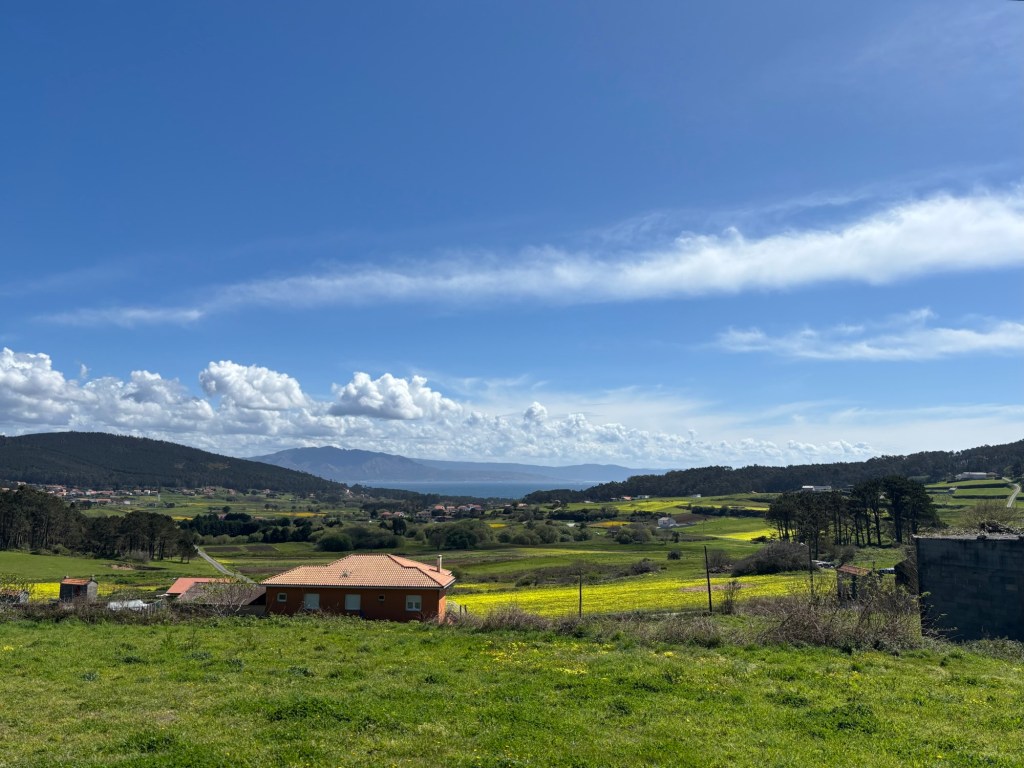
Turning my back on the sea, I start to descend into the interior. The fields of buttercups nestled between the forests on either side of the cape shine in two distinct shades of yellow: one a warm gold, the other a brighter, almost greener yellow. American and European, perhaps, though I’m not sure which way round. A single swallowtail butterfly dances into the field, its own golden wings lost in the shining petal sea.

The last time there was a great Atlantic storm, some of the mighty monarch butterflies were blown across the sea to our shores. I think that was in 2016, as I recall seeing one or two in Morocco and then, even more bizarrely, in Kent within that same summer.

Sometimes I wonder if esoteric anecdotes like these are worth recording. But perhaps it serves a greater purpose, as naturalists the world over try to understand the forces of the world around us by drawing together tiny threads such as these.


Back at Langosteira, I remove my sandals and continue along the beach barefoot. The relief as the waters rush over my tired feet is like nothing else. There are no swimmers out – it’s much too early in the year – but I’m happy to have my feet in the water again.

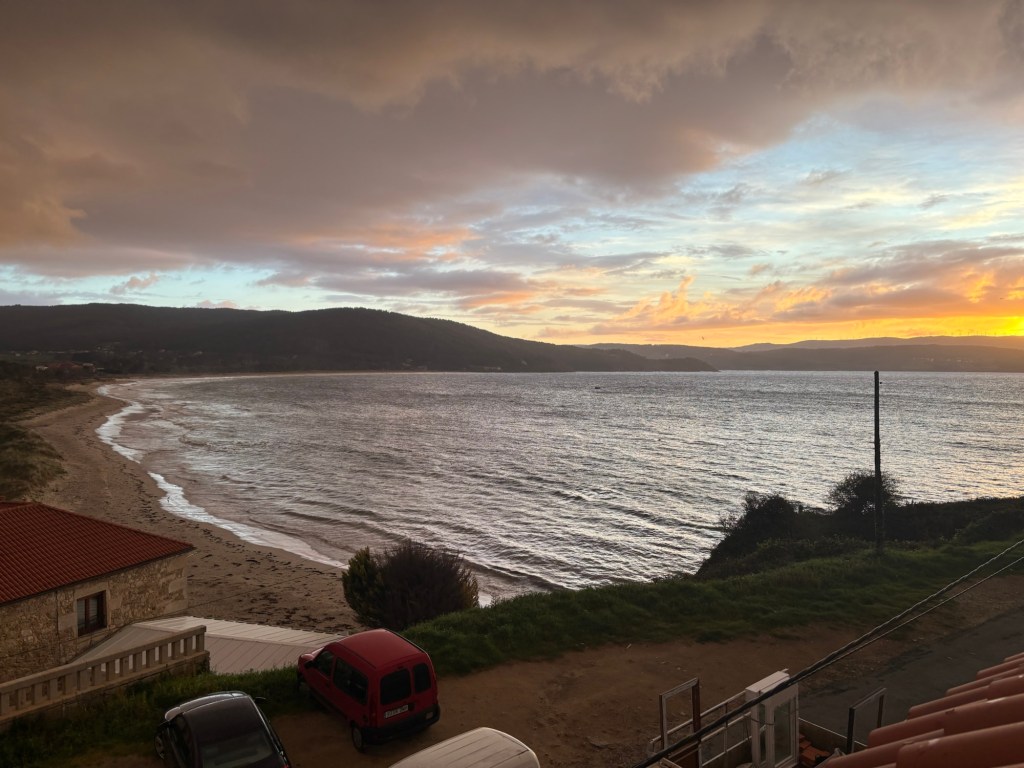
A single dunlin races ahead of me along the shore, a straggler from the traveling group of five that I saw from my window yesterday, perhaps. It will soon be on its way north to its breeding grounds in the Arctic circle. Much like the swallows who sing merrily from the telegraph wires in the fields here, you have to marvel at the courage and strength of these little wanderers who travel many thousands of miles each year, defying the elements to answer a call beyond their understanding: the call to come home, wherever that may be.

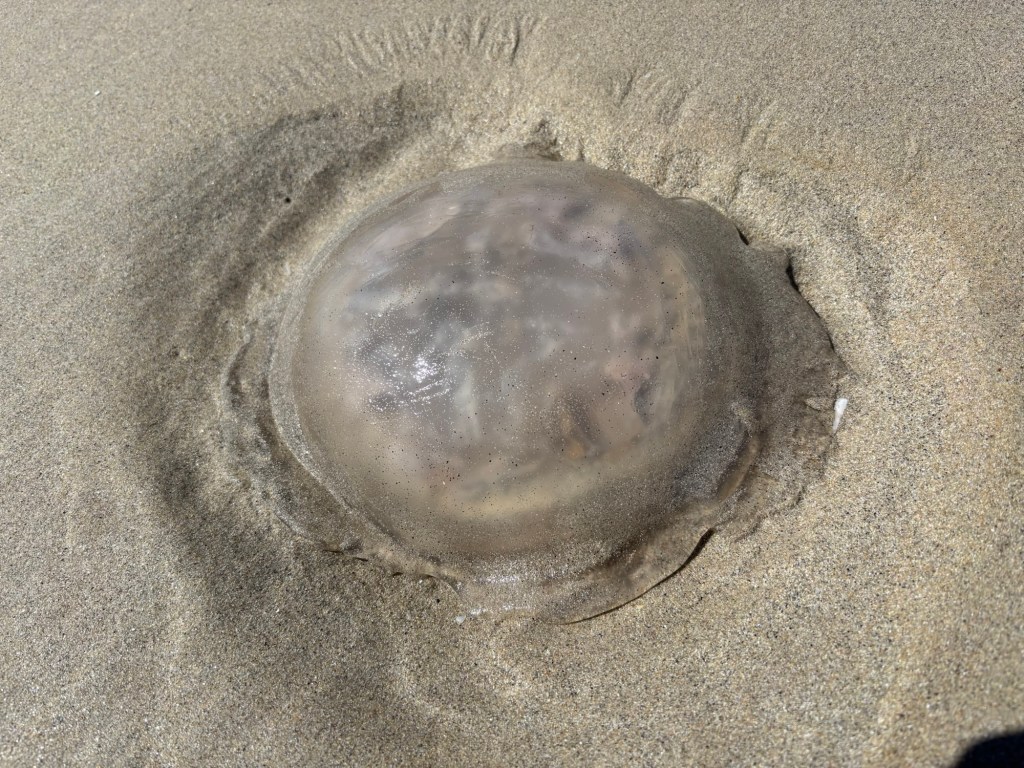
A less fortunate wanderer lies stranded in the sand, glistening in the sunlight: an enormous jellyfish. Not a false jelly like a man-o’-war, nor even a lion’s mane by the colour of it, though it’s hard to say with any degree of certainty, as some marine predator has already devoured its trailing tentacles, leaving the flabby and presumably inedible bell behind. A hollow has pooled about it where the waves have dug it a grave, after a fashion. On the off chance that it might still be alive, I carry it back to the tideline and lower it back into the water. The tide spits it back up again and it lands on its head, motionless. An ancient creature, practically unchanged since a time before life moved over the land, humbled by a force older than the world itself.


I’m back at the pensión now and taking a well-earned rest. There is Wi-Fi here, but it doesn’t reach quite as far as the last room in the corridor (which happens to be mine) so I’ve been using data to patch up the gaps. Quite a lot, by the looks of things, as it takes my app a long time to do the maths – longer than me, and that’s saying something. I’m feeling like it might be a good excuse to get an early night tonight, as I’ve got a few late ones coming up, so I’ll make the most of it while I can. BB x