Casa Los Tres Aires, El Rocío. 14.01.
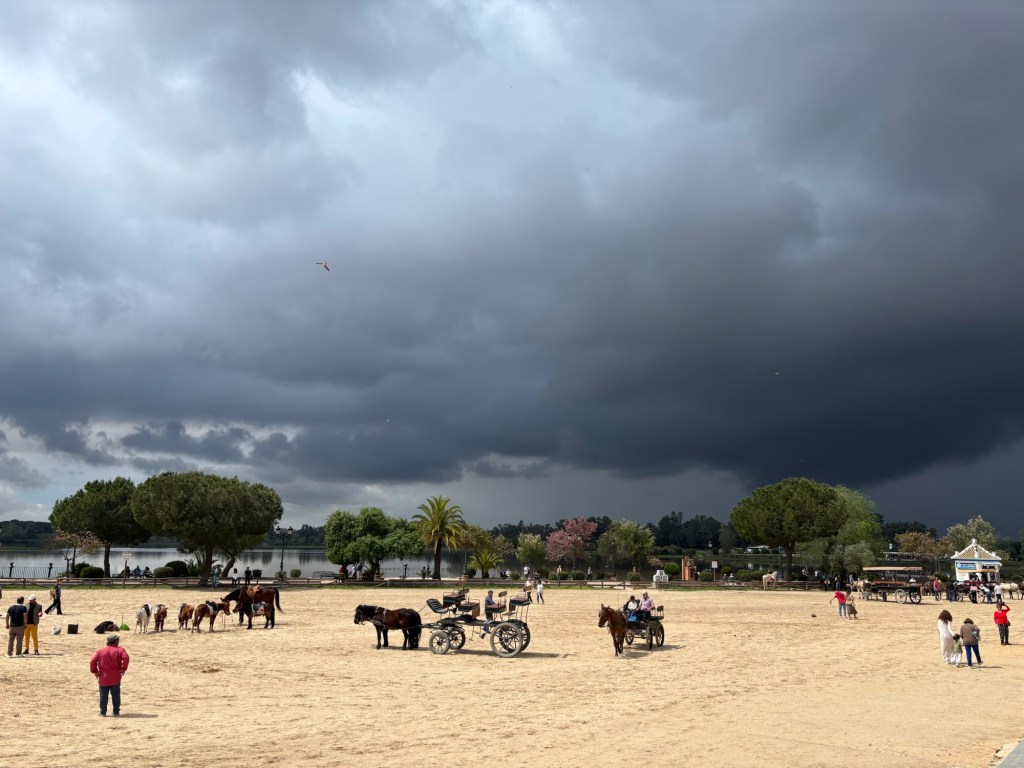
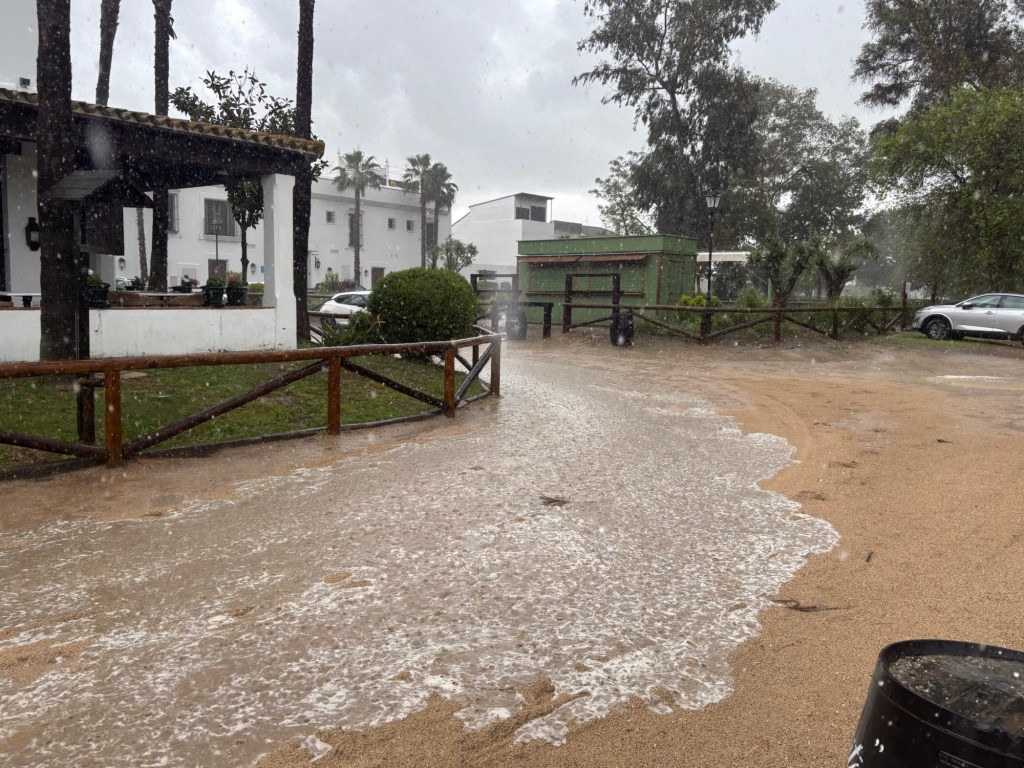
The long-promised rains have arrived. Buckets of it. It began with a sudden gust of wind in the palm trees and a ripple over the lagoon, turning the mirrored surface of the water into a sea of silvery sand dunes. Some of the locals wandering in the square turned to the west and pulled their jackets about them. The savvier ones pointed and moved toward the shelter of the church. Then the darkening sky turned a pale grey, and the trees beyond the road disappeared behind an advancing sheet of rain. Just as the church bell chimed for half past, an almighty drumroll of thunder sounded in response and the heavens opened, and down it came: sheet rain, a wall of water, turning the sandy streets of El Rocío into rivers in a matter of minutes. By the time I made it back to my casa rural I was soaked to the skin – and more alive than I’ve ever been.
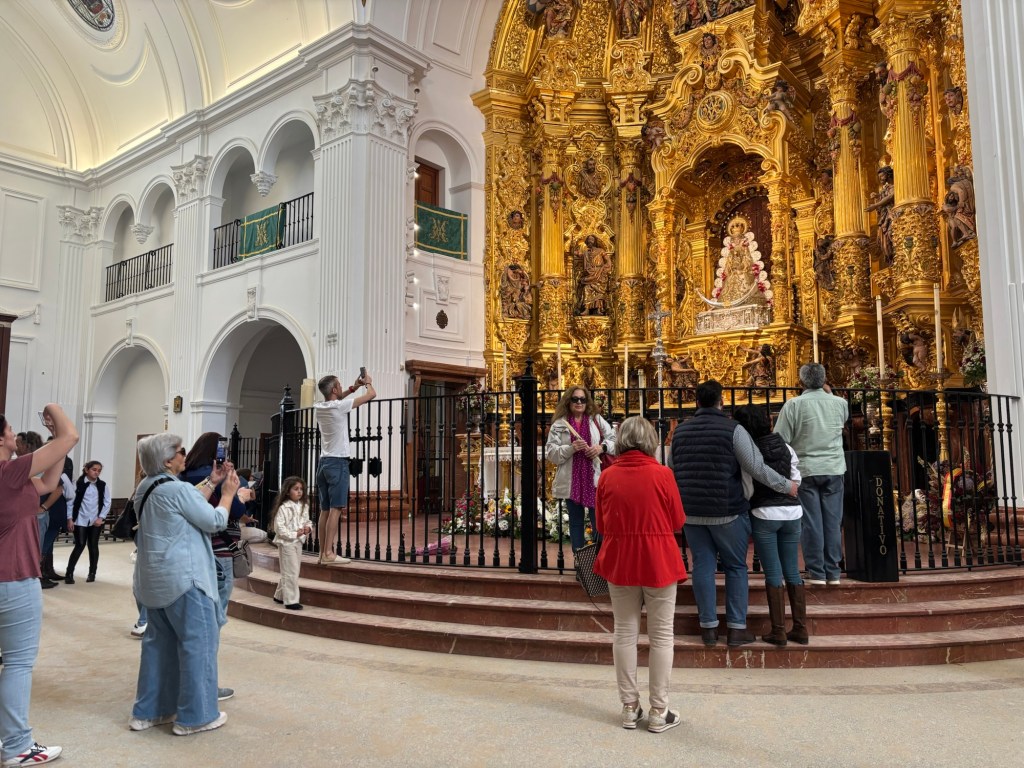
Some devotees of La Blanca Paloma – the White Dove, the nickname of the Virgen del Rocío – believe that her sudden appearance in the branches of an olive tree in the marshes of Almonte was a manifestation of the divine. More sceptical minds might be persuaded that the image was simply one of many hidden away from the conquering Moors and scattered across the countryside, forgotten until their chance discovery by bewildered countryfolk. Whatever you choose to believe, the Virgen del Rocío exerts a powerful influence over the town and its surroundings, bringing more than a million pilgrims to her shrine every year.
One legend has it that the townsfolk prayed for her intercession during the Napoleonic invasion, hearing that a raiding force of French soldiers was heading for the town. For whatever reason, they never made it as far as El Rocío, turning back at Pilas, just shy of thirty kilometres away. Maybe it was the unforgiving terrain of the marshes – or maybe it was the watchful power of the Virgen. Who knows? The fact remains that the village of El Rocío was untouched by both the Napoleonic War and the Civil War in the following century, a conflict which tore almost every town in Spain apart. It’s easy to see how many have come to believe that some great force watches over these marshes, shielding them from harm.
It hasn’t been able to protect them from everything. While it’s incredible to see Doñana restored to life, it’s important to bear in mind how it got into the state it was in: this time last year, the news were all full of woe, decrying the death of one of Europe’s last great wetlands as its life was slowly sucked out of it. Why, you ask? Climate change may be part of it, but the blame lies almost entirely at the feet of the monstrous theft of the land’s water by the agropiratas.
These mercenary industries have set up shop in the outskirts of Doñana and, over the last two decades, they’ve been draining its aquifers to grow strawberries on an industrial scale. Strawberries are a very water-hungry fruit, and the results have been catastrophic, causing the water supply to cascade, lakes to dry up and the local extinction of a number of species that can be found almost nowhere else, including the white-headed and marbled ducks, the salinete (a fish found only in Doñana) and the eel – formerly abundant and now almost completely eradicated from these marshes.
I could do a lot more for charity’s sake, but there are two causes I will not budge from. I will never visit Malta, on account of their refusal to abide by European laws concerning the protection of migrating birds (they still practise the vile tradition of bird-liming), and I will never buy strawberries from Spain, knowing what damage they are causing here. If only we could go back to a time before globalisation, when people were more patient, and prepared to wait for strawberries to be in season, for a short time each year…

It’s still raining out there. It cleared up for a few hours, and then the storm clouds came back with a vengeance. March 2025 has been one of the wettest months in Spain since records began, putting an end to four years of minimal rainfall. It hasn’t been unprecedented: the flash floods that swept through Valencia in October and claimed 232 lives are still a very recent memory. Even so, taken as a whole, the average rainfall over the last five years is still well below the average. Spain will need more consistent rain if places like Doñana are to survive in the long run.
That, and decisive action from the government on the villainous agropiratas and their strawberry farms.
I wanted to make the most of the park’s rebirth, so I went for a long walk in the pine woods of La Rocina to the south of El Rocío. A boardwalk trails stretches for five kilometres along the side of the river that feeds into the Madre de las Marismas, the lagoon that sits under the eye of the Virgen del Rocío. Like the Raya Real, this place is very dear to me: I used to come here as a boy and look for bee-eaters, hoopoes and scarab beetles in the scrubland at the trail’s northern edge.
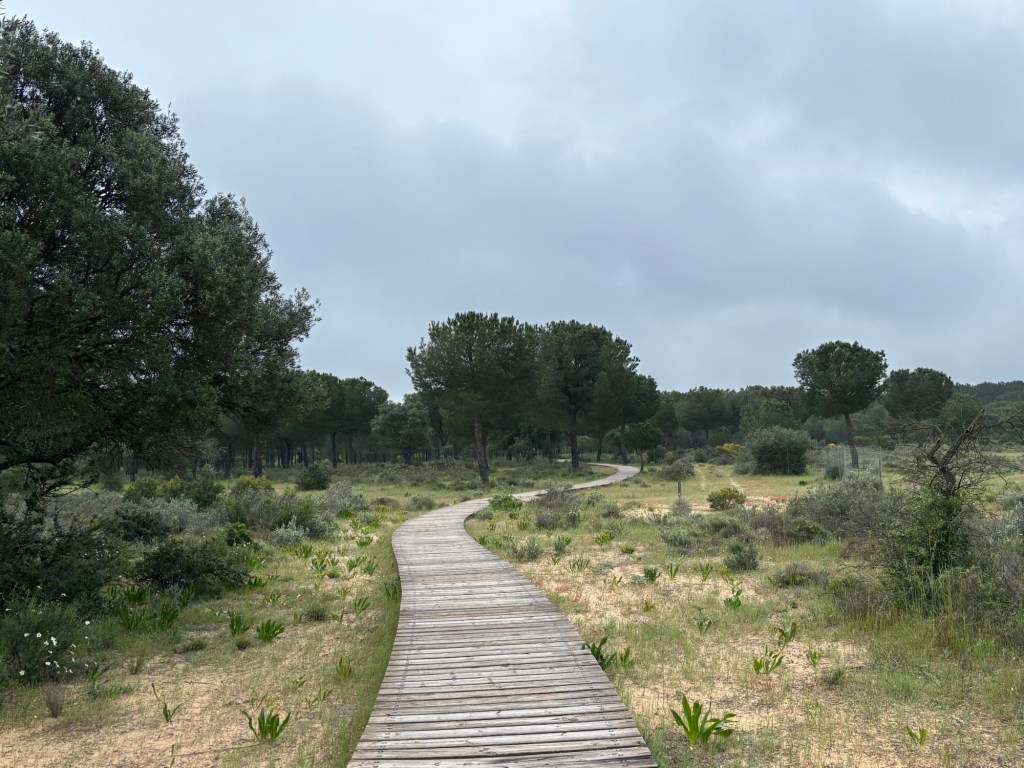
My sense of smell – mercifully restored after a debilitating cold had me in its grip at the start of my travels – was assailed on all sides by Spanish lavender and curry plant, and every bush seemed to harbour a nightingale. I even saw one, singing high in the branches of one of the pines – a fairly impressive feat, since these master ventriloquists have the uncanny ability to seek out the most acoustic spots in the forest, whilst also remaining invisible to the naked eye as they perform their vast repertoire. I’ve included a recording I took below – have a listen and you’ll see what I mean.

I spent my last evening in El Rocío enjoying boquerones fritos and an incredible torrija – a Semana Santa speciality – in Restaurante La Canaliega, watching the sun set over the Madre de las Marismas. The town’s drains were working overtime to deal with the rivers that had formed in the streets, but there was still enough water in the main square to form a second lagoon, reflecting the Ermita’s unique shell-shaped doorway.
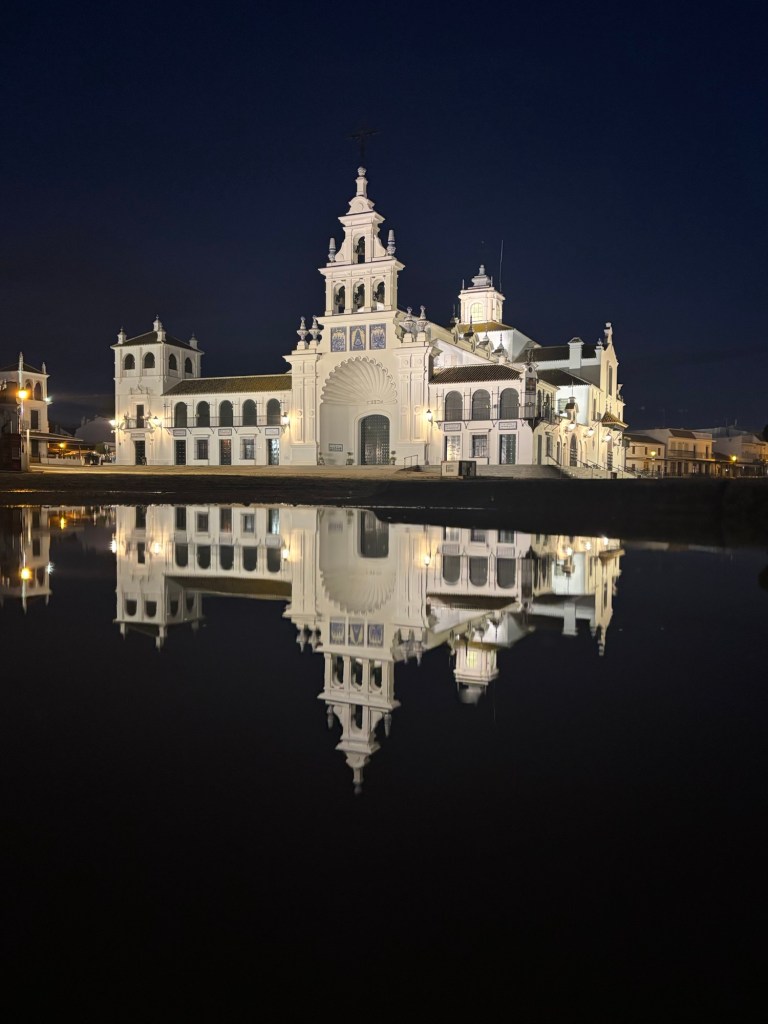
I would have traveled a thousand miles to see just this view, but the Virgen del Rocío saw fit to show me her rarest treasure of all on the day I arrived. I have come away with a new rosary of hers, so that I can offer my thanks wherever I am, and so that there will be some piece of her influence wherever I go.
I used to get the stuffing knocked proverbially out of me at school for defending my stance on faith, in spite of being a “rational thinker”. I stand by my beliefs to this day: I do think the world is a better place with a little more love and little more mystery. On the one hand, I adore the pursuit of knowledge for its own sake: the ability to look up at the stars and know their names.
But I also think it’s important to value the wisdom of the ancients. I may not be able to see the shape of a lion up there, but somebody must have done once to call a constellation Leo. And though it took me a long time to find Lynx, it’s taken me a lot longer to find the animal in the flesh. This year, Doñana – and whatever mystical force presides over these marshes – saw fit to show me a glimpse. You can call me credulous if you like, but that’s enough to make a man like me believe.
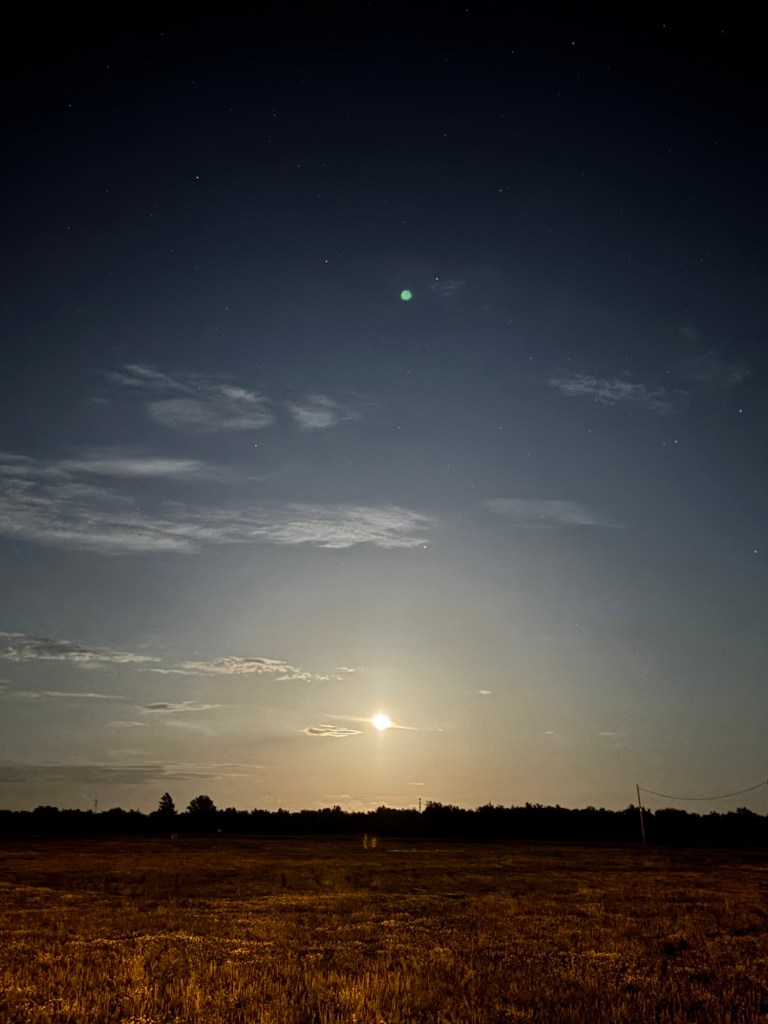
Not for nothing is the lake named the Madre de las Marismas: the Mother of Marshes. Doñana is feminine in every way, from its name to its essence: a provider, a life-giver, faithful, fickle and generous in turn. I have always said that Spain is my greatest love – but it’s probably fair to say that Doñana is that love crystallised into one place.
I have been gone too long. I must return someday. The fight to save these precious marshes goes on. BB x
 The Book of Barnabas