Caserío los Partidos, Tenerife. 8.19am.
Well, if that wasn’t the best sleep I’ve had in a week, I don’t know what a good sleep is. The four-hundred-year old stone walls of my room might not look like the cosiest setup, but it couldn’t be more enchanting: a log-burning stove in the corner, a skylight above the bed so you can see the stars from the comfort of your bed, and a warm shower… I’d have settled for less, especially after several hours’ hiking around the ash flow of Chinyero, but it was nothing short of heaven on my return.
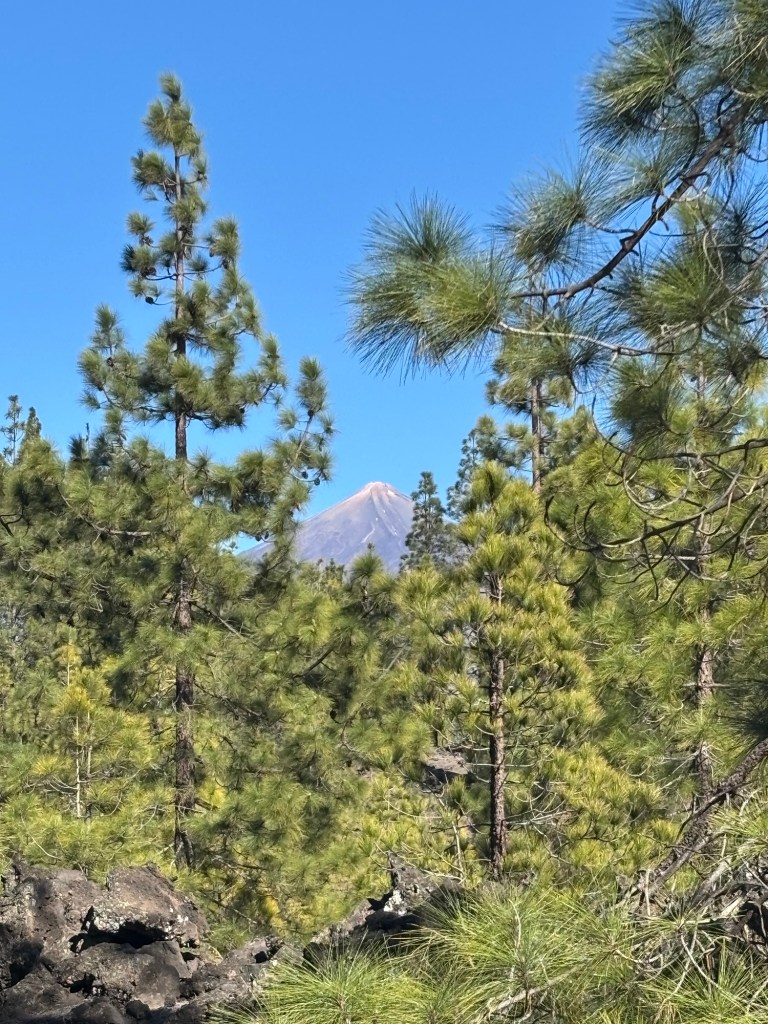
Chinyero is the reason I’m here. This is the site of the last eruption in 1909, Chinyero being one of the vents of Teide, which looms over everything to the west. This is also Teide’s best side: from here, it is perfectly conical, like a child’s drawing of a volcano, and at this time of year you can still see the last traces of snow and ice in the deep gulleys running down its peak. Sure, the Roque Cinchado may have been a worthy candidate for one of the Top Ten sights of this trip, but what I really wanted to see here in Tenerife was the black sand forest: a natural marvel growing out of the destruction wrought by Teide over a hundred years ago. I was not to be disappointed.
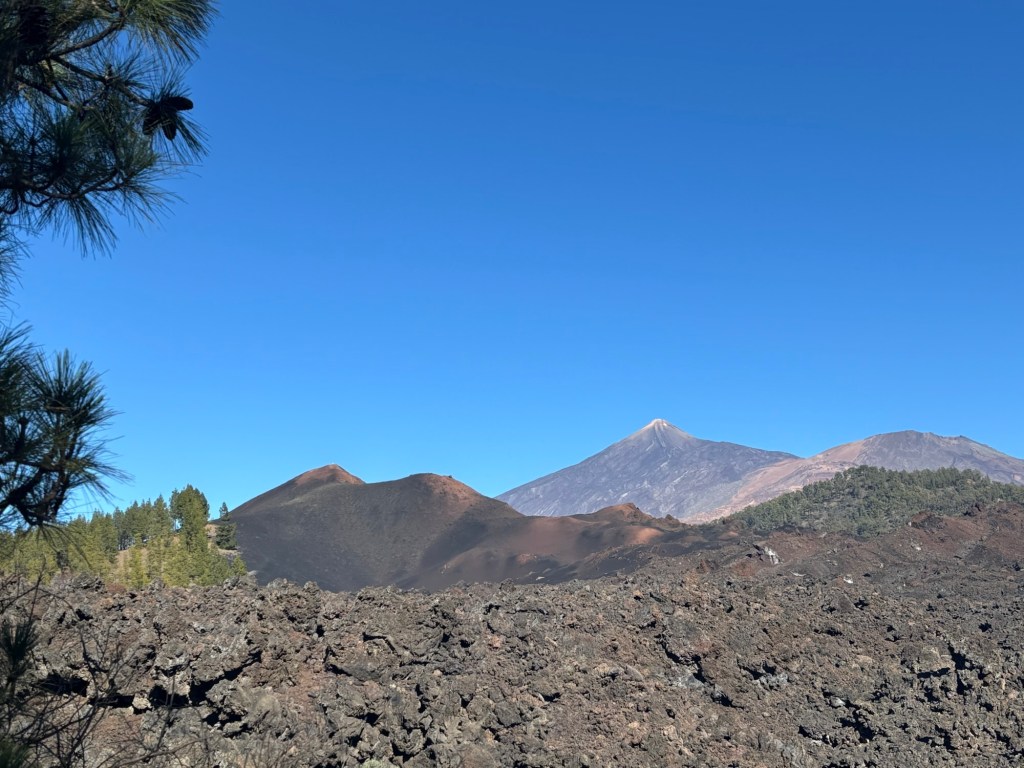
It’s a two and a half hour circular hike from Caserío up into the ash fields, most of it very well signposted and all over well-trodden paths, though the hardened basalt and steep climbs make for slow going at times. I saw three or four cyclists and one other hiker far off, but compared to Teide National Park, it’s a much more personal experience of the mountain on this side of the island. Most of the hike takes place in the shade of the Corona Forestal, the crown of pine trees that ring the mountain (but especially its fertile north face). Some of the trees look like they still bear the scars and scorch marks of the fires that raged through here when Chinyero erupted, long ago.

Did you ever see Fantasia 2000 as a kid? This place reminds me of the Firebird sequence, which plays Stravinsky’s masterpiece as the backdrop to the eruption and rebirth of a volcano. It also gives off major Primeval and Walking with Dinosaurs vibes, which is true for at least one of those TV shows, as the final episode of the first season of Primeval was filmed on the almost identical ash fields of Gran Canaria. All three creations draw on an ancient force in an even older setting, and the black sands of Chinyero really do feel like a walk back in time – if not on the surface of another planet.
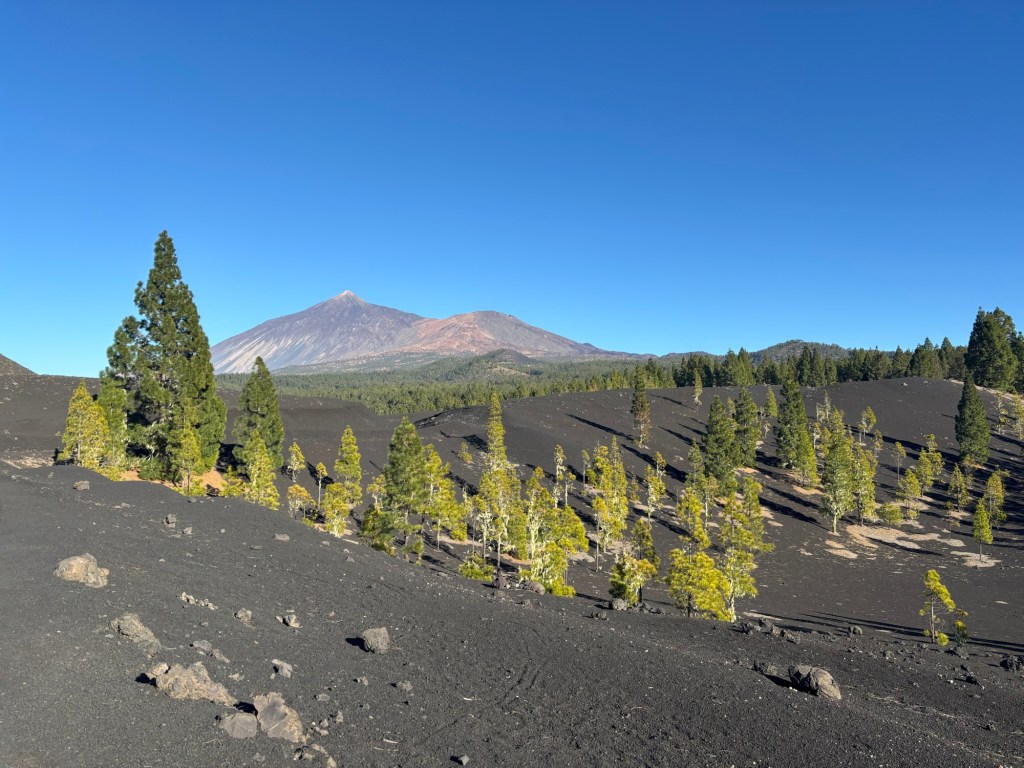
There are very few mammals native to Tenerife, as is often the case with island fauna, which usually specialises in creatures with fins or wings (or those that had wings, once upon a time). I saw a couple of rabbits during my hike, which accounts for the presence of buzzards in these forests, but besides that, the ash fields seem almost deserted, unless you listen closely. The island’s canaries were singing away in the treetops, along with a few goldcrests, treecreepers, chiffchaffs and the local Canarian race of great tits. I counted at least three woodpeckers drumming at different frequencies on the descent, though I only saw one. Best of all was a brief encounter with a blue chaffinch, a special bird found only on the islands of Tenerife and Gran Canaria and only above the tree line. Tracking it by its call, I tried imitating it to get its attention, and it came to have a look. I got pretty close, but it must have thought me a very strange chaffinch indeed.
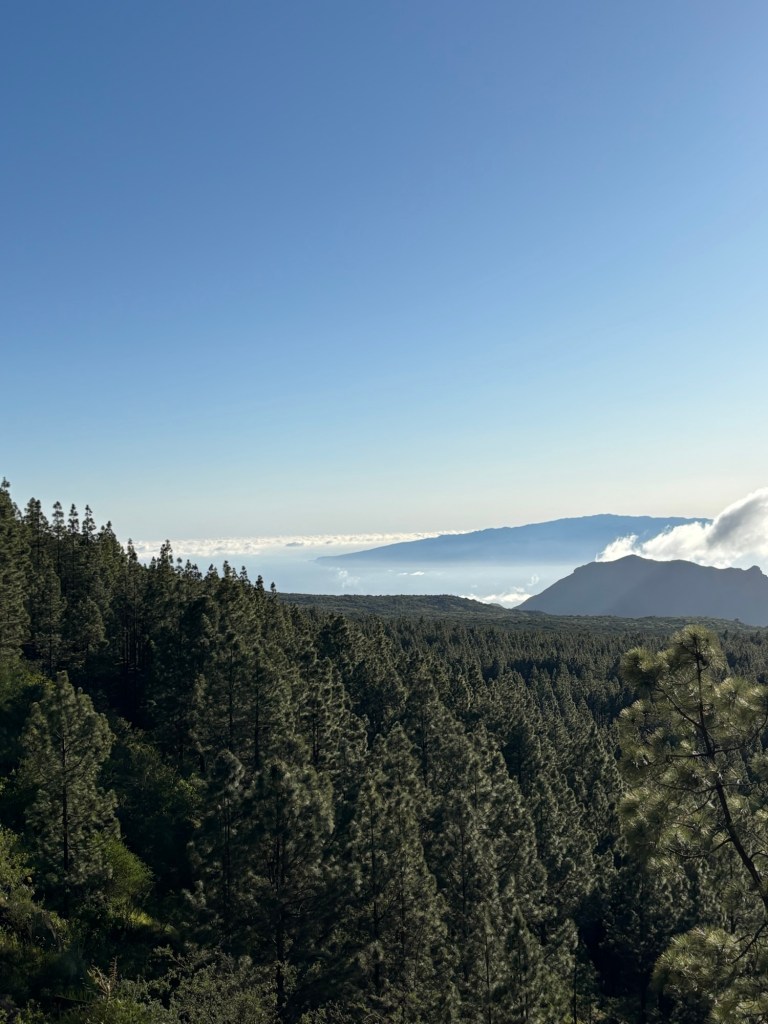
Meanwhile, to the north, the island seems to fall away into the sea, disappearing beneath the clouds. We really are very high up here.
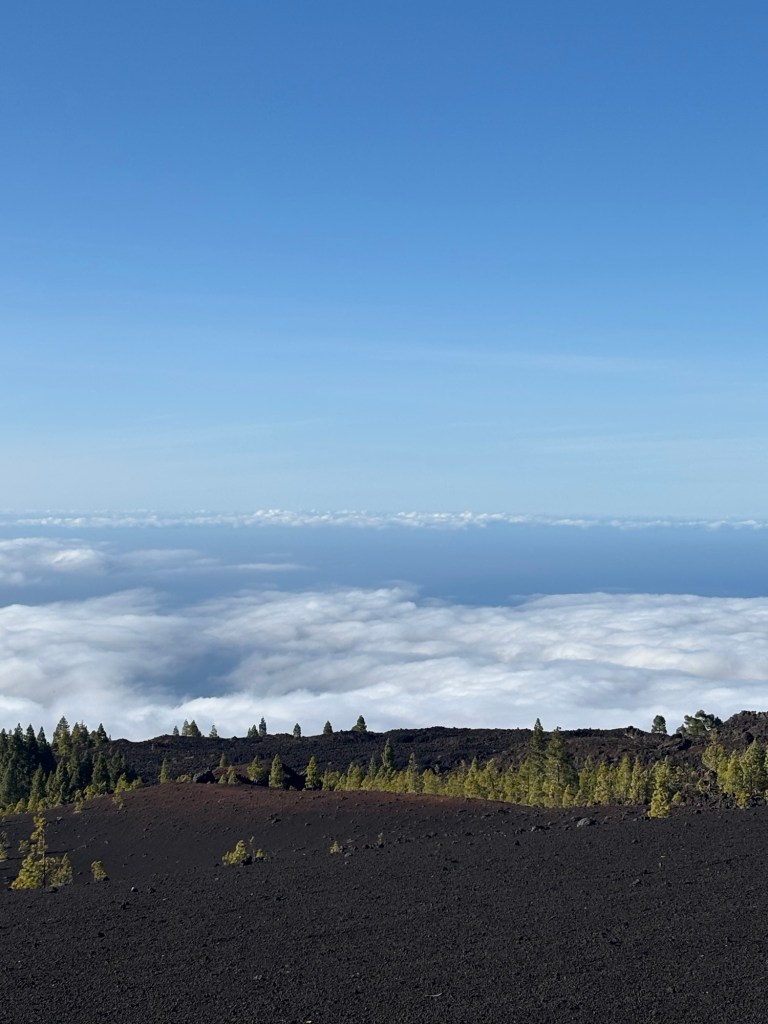
The views on the climb back down to Caserío are breathtaking, especially at the end of the day when the sun is beginning to sink into the Atlantic to the west. Stand at just the right spot and you can see the neighbouring islands of La Gomera and La Palma, flanking the Teno mountains on the westernmost point of Tenerife. I don’t know much about La Palma, but La Gomera harbours an otherworldly rainforest in its centre, the Garajonay National Park, full of gnarled and twisted trees and trailing beards of moss and lichen. If I should return, that would be near the top of my list.
I had a well-earned dinner and a glass of wine back at Caserío, the last of which very nearly knocked me out – perhaps that explains the long sleep. But I did hold on to my senses long enough to properly appreciate the other thing I came all the way out here to see (not just to Chinyero, but the Canaries as a whole): the night sky. The English fixation with security and LED lighting means it’s hard to get an unpolluted view of the stars anywhere in the country (outside of Northumberland, anyway), since we seem to delight in stringing glaring yellow street lamps along our roads like fairy lights, and filling our towns and cities with floodlights.
Out here, however, the lighting is less pervasive and restricted to the larger cities. And up here in the mountains, there’s almost no lighting at all, so the stargazing is spectacular.

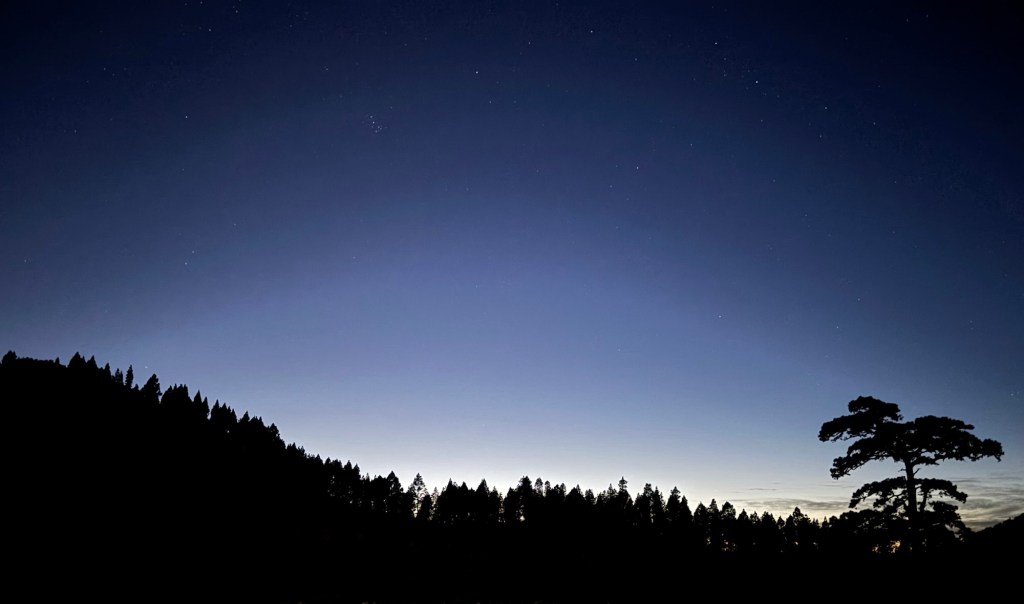
I didn’t see any shooting stars this time, but I’d be willing to bet that this is an incredible place to be at the peak of the Perseid meteor shower in the summer. I did count a number of constellations I haven’t properly seen before, blinking dimly behind the belt of Orion: Leo, Cancer, mighty Hercules and the Corona Borealis. And, of course, the full body of Ursa Major, not just the twinkling torso of the Plough.

My SLR would have struggled, but the iPhone did a remarkable job in the twilight. It may not be able to perform a quality zoom to save its life, but it does handle low light incredibly well.
Tomorrow is another day. Since I made it up to Chinyero a day early, I’ll take it easy. If I can, I’ll try to navigate round the south of the island to Santa Cruz for a change of scenery. I can’t say it’s the side of the island with the most appeal to me, being by far the more resort-heavy side, but that might make for something to write about in itself. But first, I have to find a bus to take me out of here – and that might be easier said than done! BB x

 The Book of Barnabas