In Burgos, the journey comes to an end. One leaves for home, two pack for their flight tomorrow and one more digs in to stay, leaving four of the gang to push on toward Santiago tomorrow. Perhaps mine is the hardest, watching the others move on or away, knowing that if it weren’t for my flight (and my beleaguered feet) I’d have long since decided to chuck in my plans and make for Leon with them. But life is full of farewells, and I could never have gone with them all the way to Santiago in the week of holiday that remains. So here I am, at the end of this run at the Camino, putting my thoughts into words.
Today’s leg was a special one. Impatient after a crush in Bar El Alquimista over breakfast – I’m still not especially good at dealing with loud and crowded spaces – I set out ahead of the others this morning, nursing a doctored but still painful blister and conscious it would likely slow me down. It didn’t feel great leaving the group behind, but the crush in the bar threw me off a bit and I needed some time on my own on the road as a remedy.
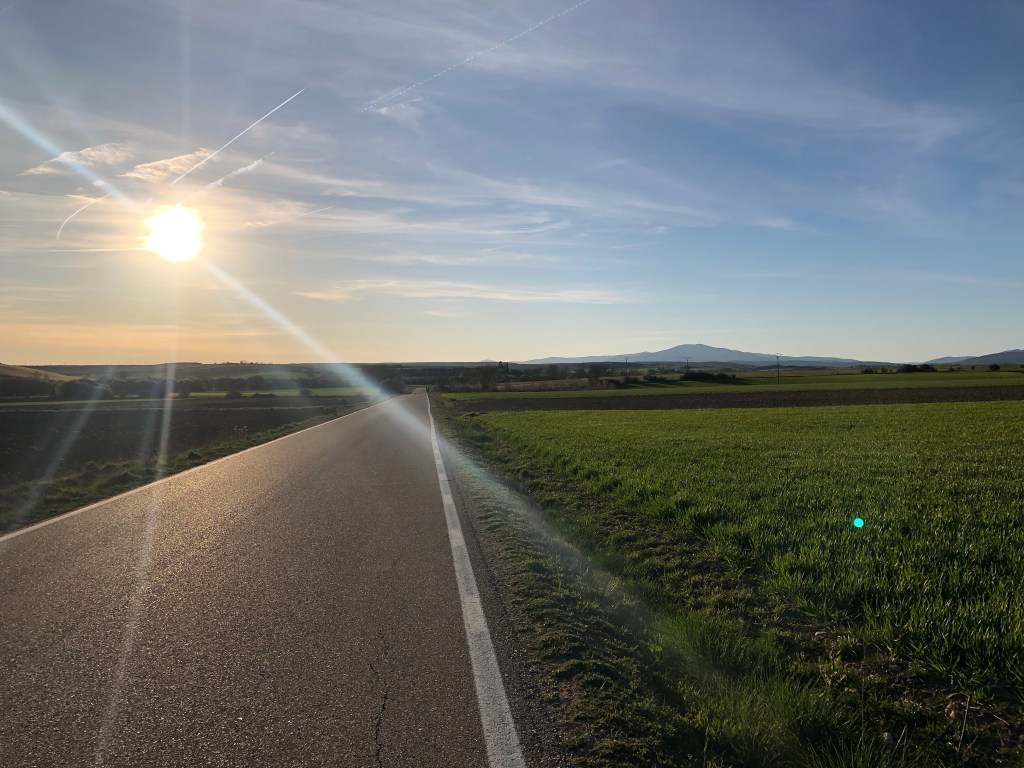
Leaving behind the slumbering town of Agés, I followed the road westward toward Atapuerca. This is possibly one of the most mystical waypoints of the Camino de Santiago, but blink and you’ll miss it – because Atapuerca is the resting place of the oldest known hominids in Europe. Not far from where the Camino crosses the Sierra lies the Sima de los Huesos, a pit that contains the bones of ancient humans who have lain there for nearly a million years. Walk this stage of the Camino and you really do get the sense you’re following in the footsteps, not just of a thousand years of Christian pilgrims, but almost a million years of human wayfarers. One of my fellow pilgrims pointed out that there are far older pilgrim routes in India, but if you think of the first humans pushing toward the end of the known world (where Finisterre stands today) as the first Camino pilgrims, I’d like to think the Camino de Santiago is a fair contender for the top spot.
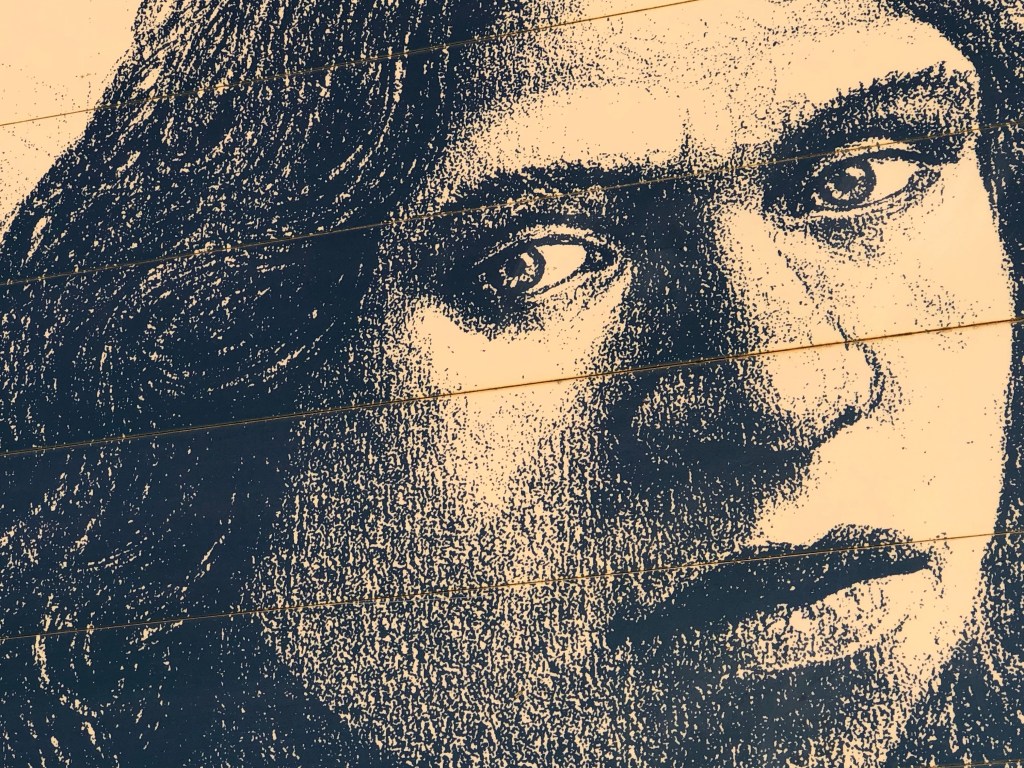
I made the climb alone, taking with me a sprig of mistletoe, a fallen olive branch and a strip of blackthorn blossom: something wicked, something old and something new. It seemed like the right thing to do. Meanwhile the birdsong up the mountain was spellbinding: hoopoes, cuckoos and woodlarks on all sides, and these last especially, becoming for me the quintessential sound of this stretch of the Camino. I’ve recorded a video so I can share some of that magic with you.
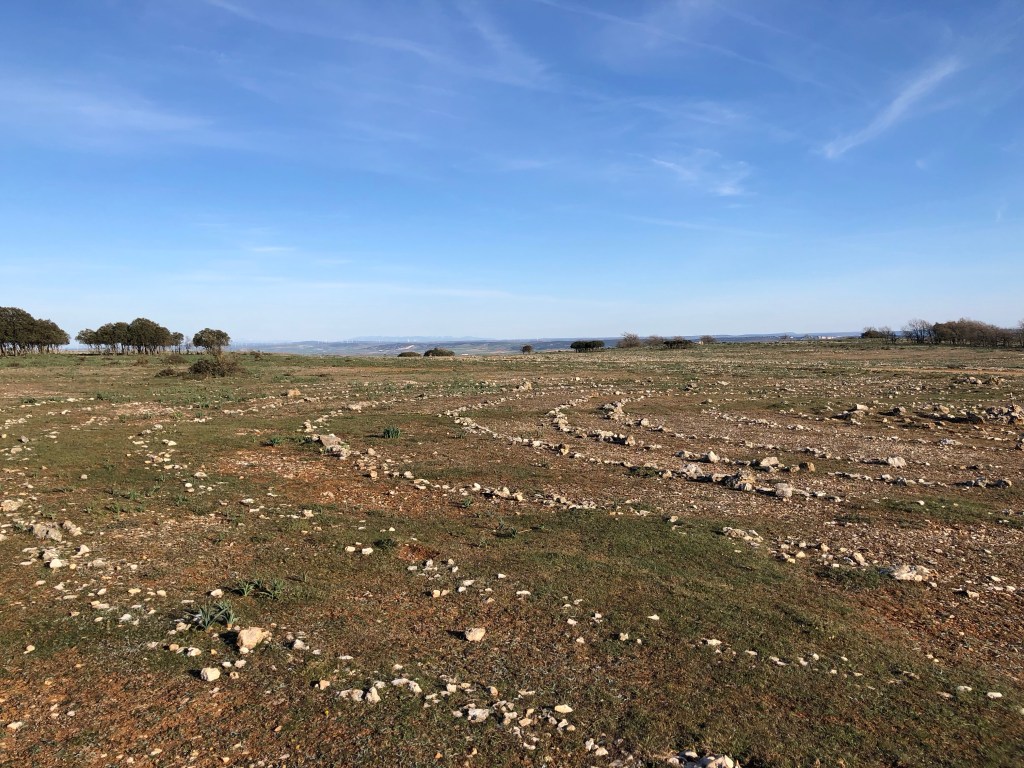
From the mystical heights of ancient Atapuerca with its lonely wooden cross and stone circle, you look down from the last high place upon the city of Burgos and the seemingly endless reach of the Meseta beyond, with the daunting white cliffs of the Picos de Europa clearly visible over 130km away.
Having waited for my companions at the cross, I joined them for the descent into Burgos, but when their stop for a mid-morning snack threatened to stretch over an hour, my itchy feet swept me back onto the road again. It would be the last time I spoke English on the Camino this year, because from there on out the only people I encountered were Spaniards on the road (they took long enough to find!).
For the final twelve kilometres into Burgos I was joined on the road by Fran, a programmer from Soria in his twenties who was an enlightening companion. From him I learned that the Spaniards, as I suspected, had indeed done the Camino for Semana Santa, but they had started at the beginning of the national holiday and were thus a few days ahead. I also learned about his home town of Soria and how the Mesta have monetised their trade, turning what was once an affordable experience following the shepherds’ route into a glamorous eco-tourism experience to the tune of 200-300€. He also gave his thoughts on the Catalan question, likening it to a dog barking furiously at a door which, when it is finally opened, suddenly goes quiet – it is easier to hate when you cannot see what it is that troubles you. Or something like that. I was just happy to be speaking Spanish – and flattered to be told that if I hadn’t revealed I was English in the first five minutes I’d have had him stumped, as he was genuinely ‘confundido’ by my Spanish.
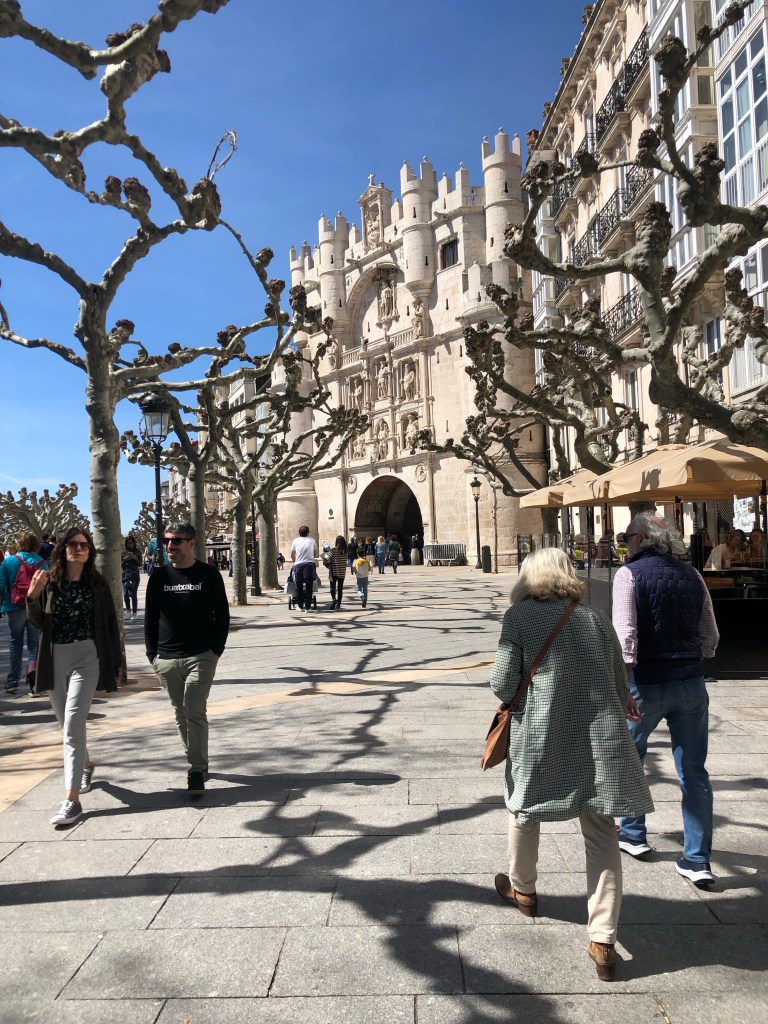
I took my leave of Fran outside Burgos’ enormous cathedral, after a brief conversation with a local (‘De dónde sois?’ : ‘Yo de Soria,’ / ‘Y yo de Inglaterra, pero con familia en La Mancha.’ / ‘Soria e Inglaterra? Menuda familia los dos.’). Fran took off to catch his BlaBlaCar home and I set out in search of my hostel.
I didn’t get much of a siesta, because the next guest to arrive was another Francisco, this time from Puebla, México. After a brief exchange over the subtle numbering of the hostel beds we ended up talking for close on two hours about a number of topics, with him asking after my thoughts on Italy, Spain and the British Empire and me asking for his wisdom on La Malinche and nahuatl. He is on a quest much like I was years ago: on his tour of Europe he has come to far-flung Burgos to seek out the village of Grijalba, from which he believes his father’s ancestors may have hailed (through the legendary explorer Juan de Grijalva).
It is always heartwarming to meet another traveler on the road, but especially so when they are on a quest – you don’t meet many of that kind these days. Perhaps it is fate that the day started in Bar El Alquimista, named for Paolo Coelho’s famous novella.
After one more conversation in Spanish which left me feeling more confident than ever before, I led the pilgrims of our group that remained down a side street in search of dinner. It couldn’t have been a better choice: six raciones and a salad split between us made a feast such as we hadn’t had yet. Morcilla, croquetas, calamares and sepia a la plancha, torreznos and zamburiñas (what more fitting food for pilgrims than scallops?)… it was far and away the best I’ve eaten on the trail.
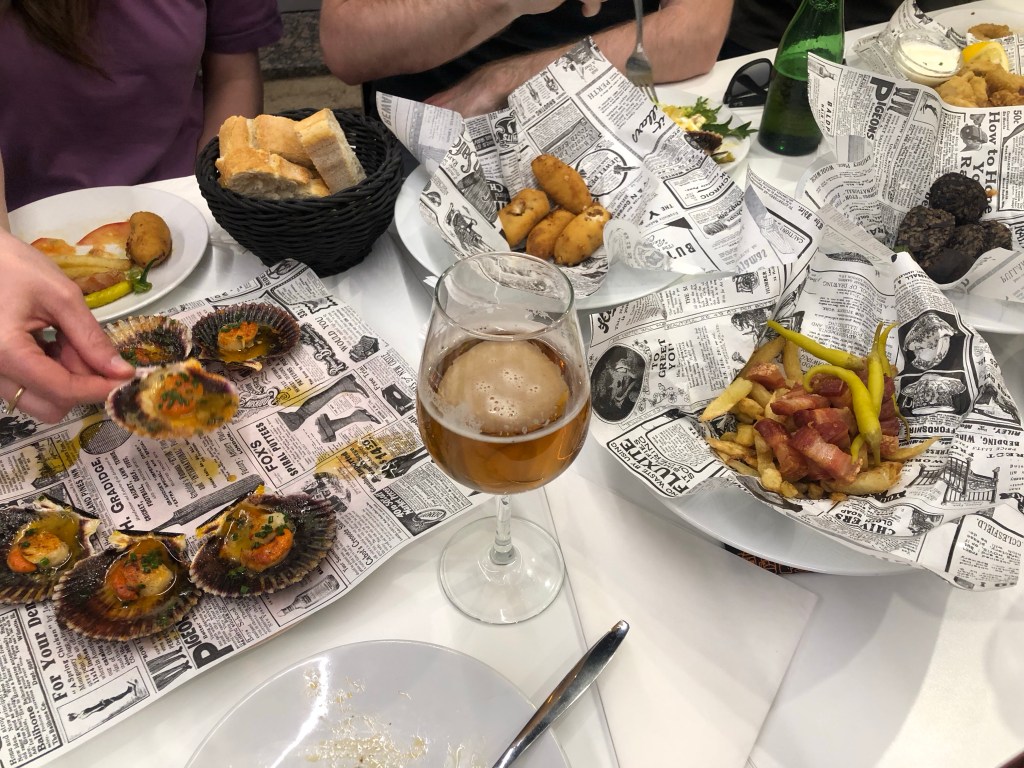
And I didn’t have to pay a cent, since the generous Dane in our number footed the bill before we twigged what he was up to. I’d done something similar a few days prior, so I guess he was paying me back, but that kind of generosity is what makes the Camino so special. For our last meal as a group, I could not have asked for more.
I’ve never bonded with other peregrinos quite so quickly, and I wish I could take the road with them to the end. But every road leads to a parting, and we part as friends.
It is not the end of the road for me, but rather a parenthesis. One day I will come back here, to the ancient city of Burgos, and pick up the Camino where I left it. Hopefully I’ll meet other pilgrims like them who will make the road an adventure with friends once again. Sophia’s charm and maturity. Mikkel’s wit and his generosity. Katie’s wisdom and Lachlan’s humour, courage and peace of mind.
Domenico the Carabiniere. Enrique the Arriero. Phil the Professor. I have met so many characters on the Camino this time. That has been the real blessing of the road this Easter. I’m glad I came. Truly. (And especially since it was a whim decision just over a couple of weeks ago).
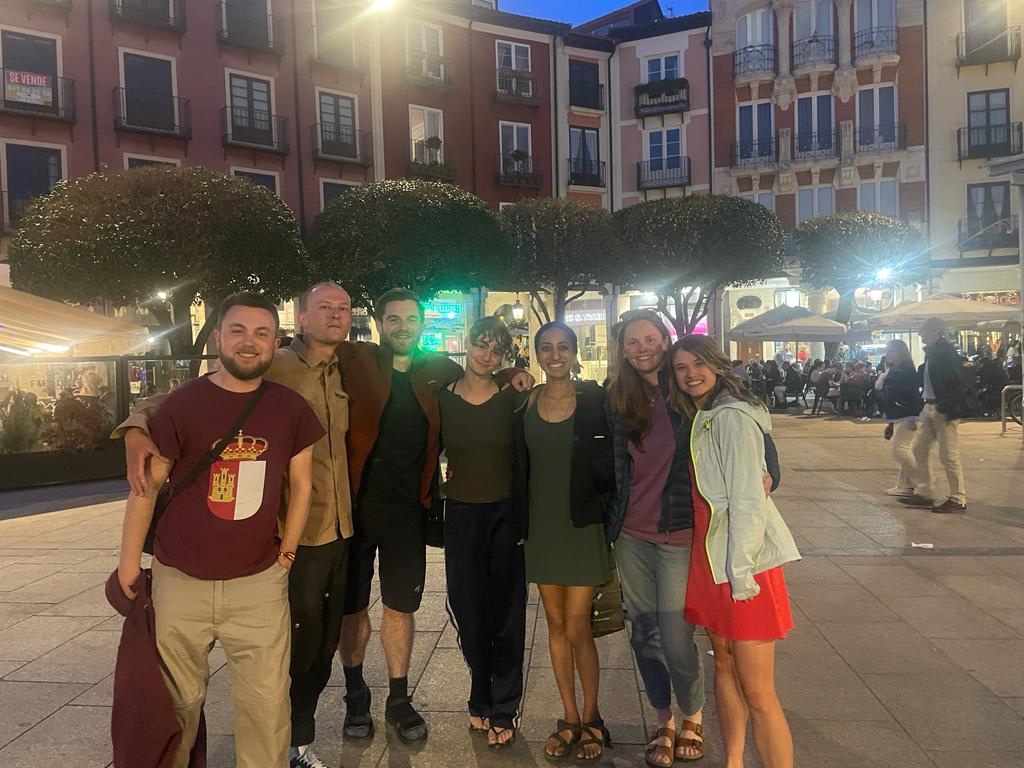
It’s now half past eight in the morning. By now they will have left Burgos and will be somewhere on the road to their next destination. All I can do now is wish the four of them all the best on their road to Santiago. And someday, sooner or later, I will take up my shell once more and follow them. BB x
 The Book of Barnabas