Cross Country

The Camino might be over for this year, but the adventure certainly isn’t. Before my flight back home tomorrow, one last challenge remained: to scale Monte Santiago and lay eyes upon Spain’s highest waterfall, the Salto del Nervión. Since I’m staying in Bilbao, which straddles the Nervión on its journey to the sea, it seemed only natural to go in search of its source. The fact that it springs from a mountain bearing the same name as the patron saint of the Camino clinched it. So, just after eight o’clock this morning, I grabbed my rucksack and poncho (just in case) and set off for the Bilbao-Arando train station.
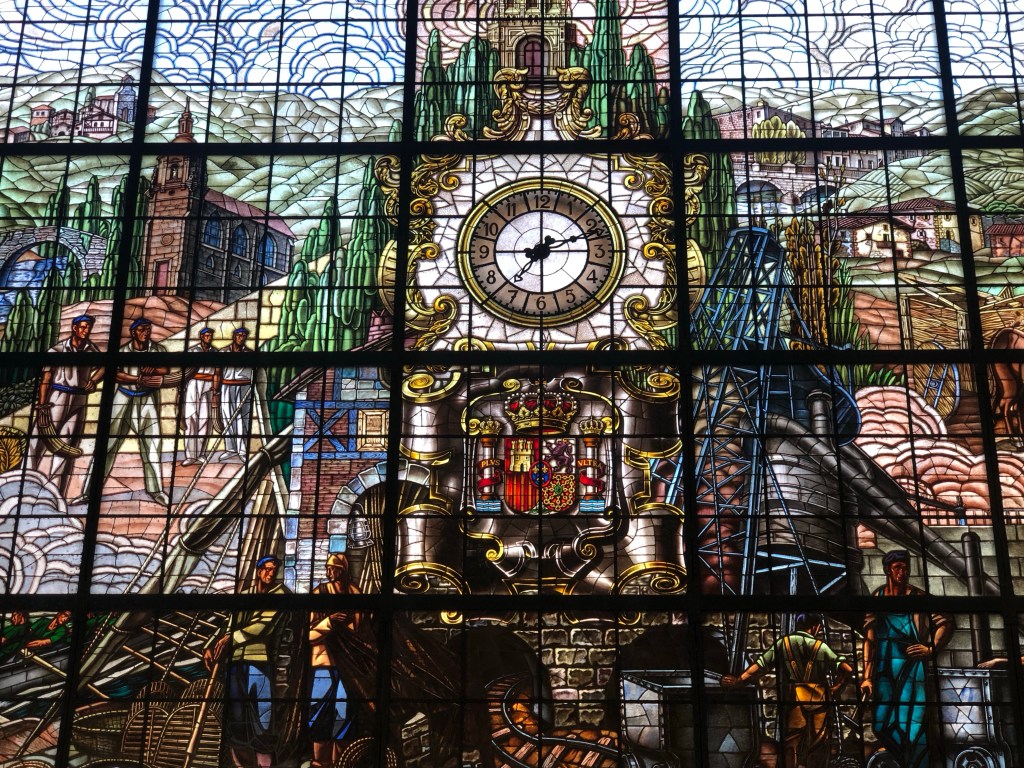

Leaving the stained-glass masterpiece of Bilbao-Arando behind, I took the 8.25 to Orduña on the C3 line. It’s the furthest stop on the Cercanías line and the trains were running very consistently even through the holiday season, so I was pretty confident about getting there and back OK.
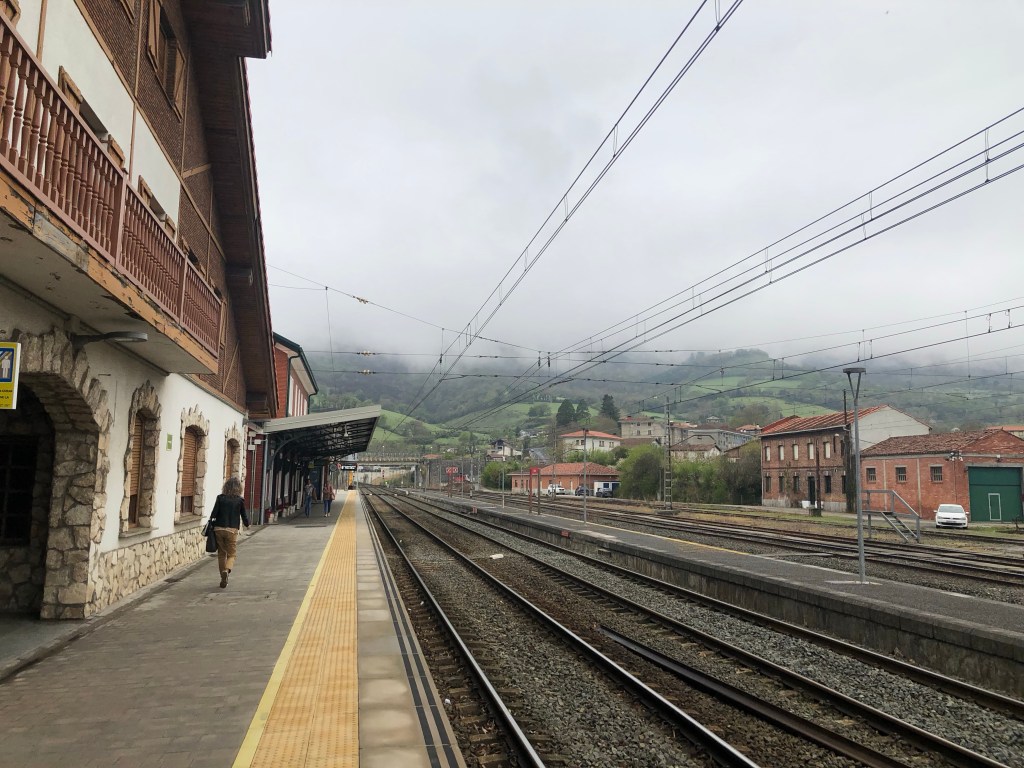

Orduña itself was just waking up when the train pulled in. I made a quick detour via an AlCampo mini-market to grab a picnic lunch: the usual fare of semicurado cheese, chorizo slices and a fresh loaf of bread, with a punnet of grapes to boot. I then doubled back, crossed the bridge over the railway and started to climb up into the hills.

Fortunately for me, somebody had the peace of mind to leave a clearly-labelled map outside the train station. I’d found a few maps online, but I was relieved to find a more reliable one at the start of the trail, so I snapped a photo and used it as my map for the day. I can’t find it online, so here’s a copy if you’re interested:
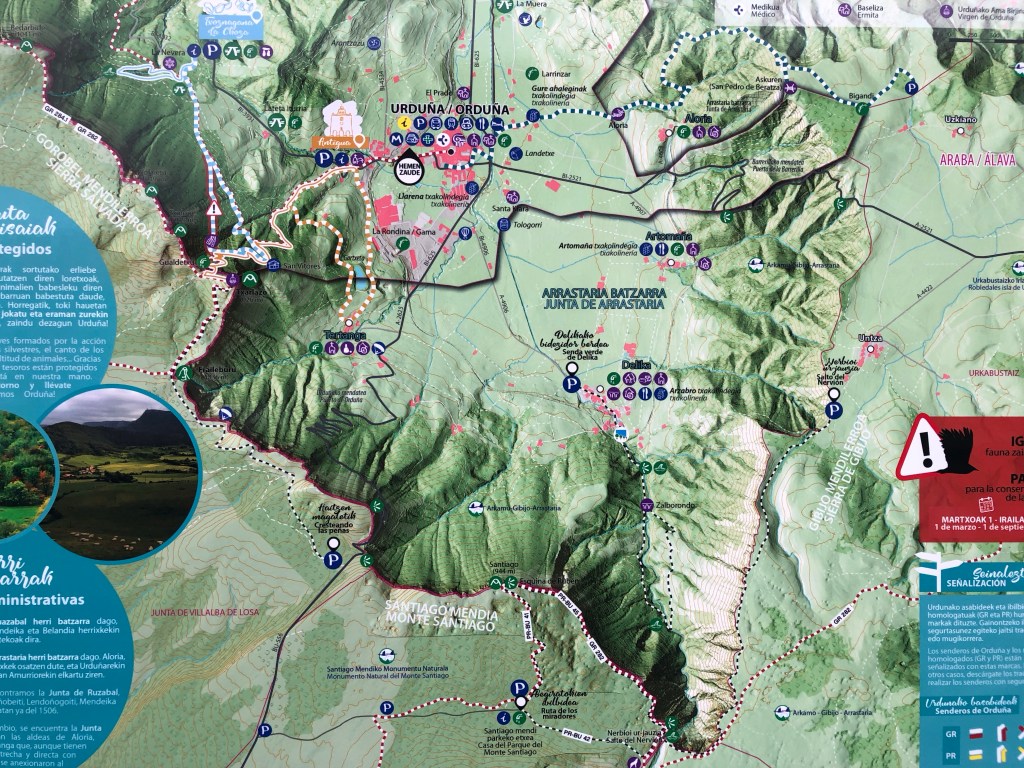

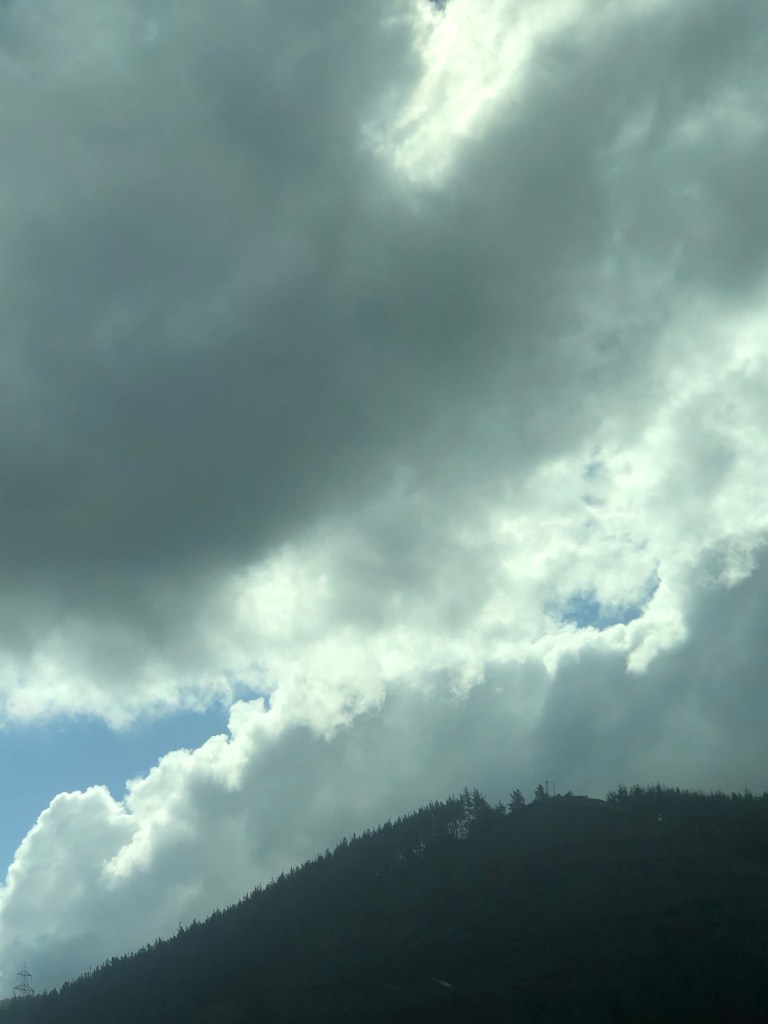
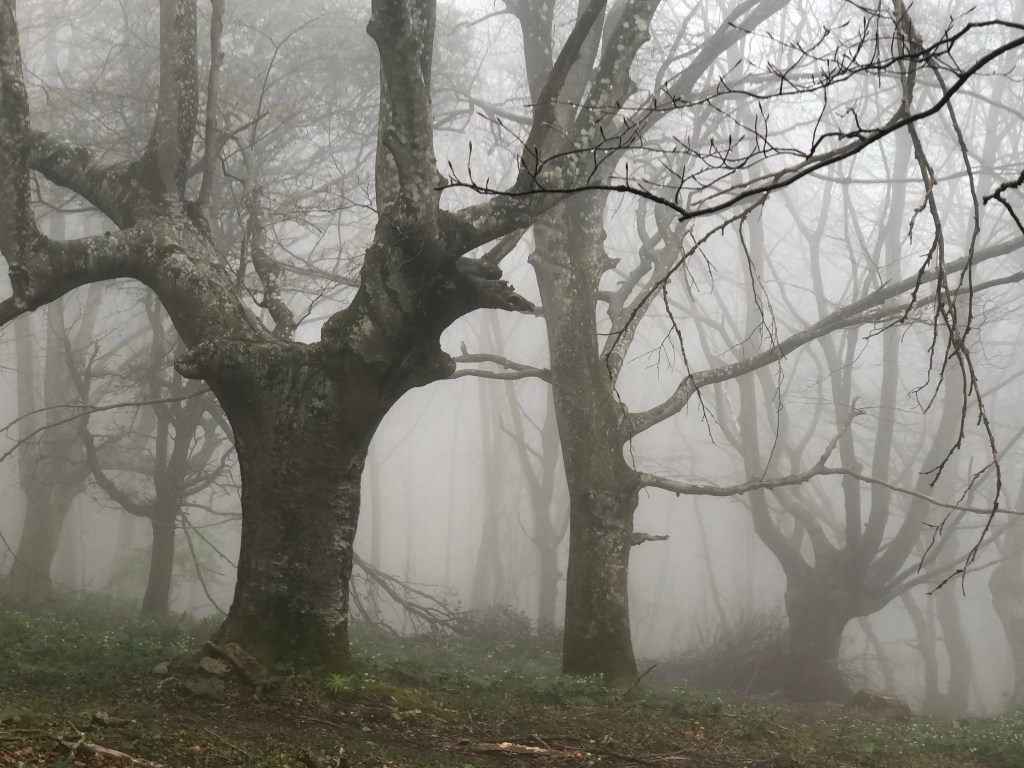
First things first: the climb was bloody steep. Easy to follow, but steep. And before long, I’d climbed up beyond the cloud level and was weaving in and out of the mist. Sometimes I couldn’t see more than ten metres or so ahead, and sometimes the road seemed to stretch on forever up the mountainside. A jay screeched at me from the base to the summit, and while it may well have been a number of them, I had the strange feeling it was the same bird watching my slow progress. And yet, whenever I tried to lock eyes upon it, I only ever caught a disappearing shadow between the trees.

In the deep woods of the Basque Country, when the clouds are at ground level, it’s easy to see how myths of the Basajaun – wild men of the woods – persisted for so long. God only knows what was watching me unseen in the mist.

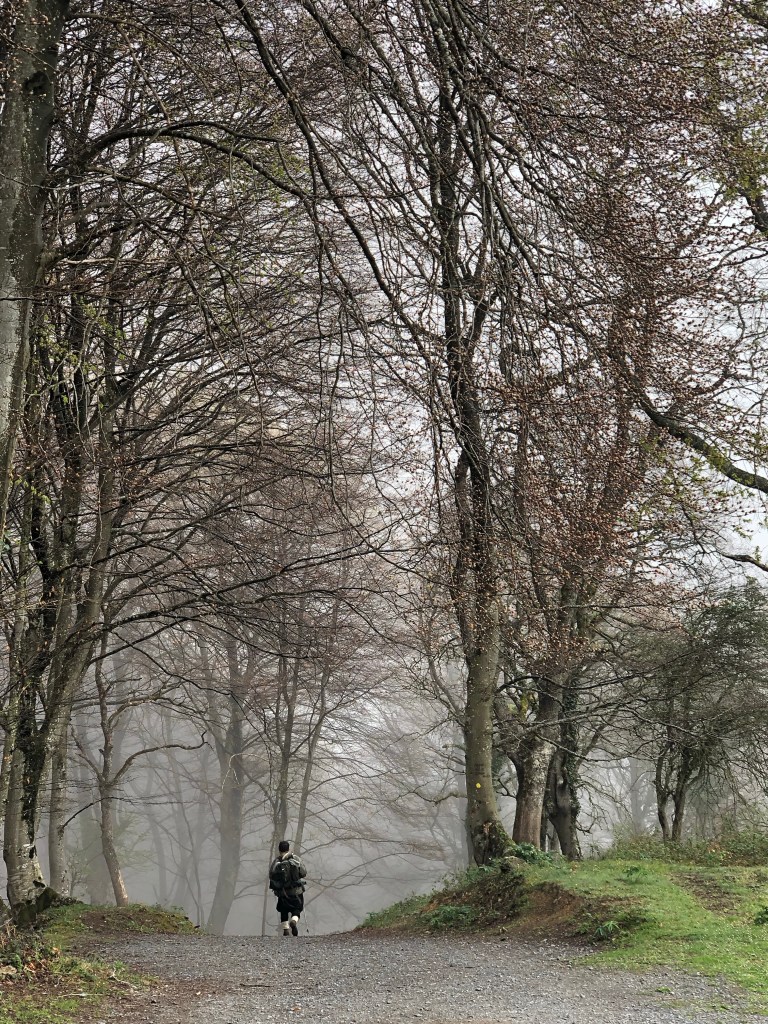
I only met two other souls on the road coming down: a local man with a hiking pole in hand about halfway up and a jogger leaving the forest, which would imply he’d just run down the mountain. There’s a reason the Basques have a formidable reputation.

Near the summit, a spring of crystal clear water was a welcome find. I couldn’t help remembering a childhood memory of vomiting for days after drinking from a village spring in the Alpujarras, but the water looked so clean I couldn’t help myself. It was easily the most delicious water I’ve had out here – mountain water always is, if you can get it – though I was sane enough not to use the metal cup chained to the rock, which looked in dire need of a good clean. In a nearby tank, filled to the brim with the spotless spring water, a few tiny newt efts were swimming about.

After what felt like an age (but in reality only took ten minutes over an hour) the track suddenly came to a narrow crevasse which cut a path through the karst to the clifftop. With one last screech from the jay echoing after me, I put the cloud forest behind me, pushed the metal gate open and stepped out of the Basque Country and back into Castilla.

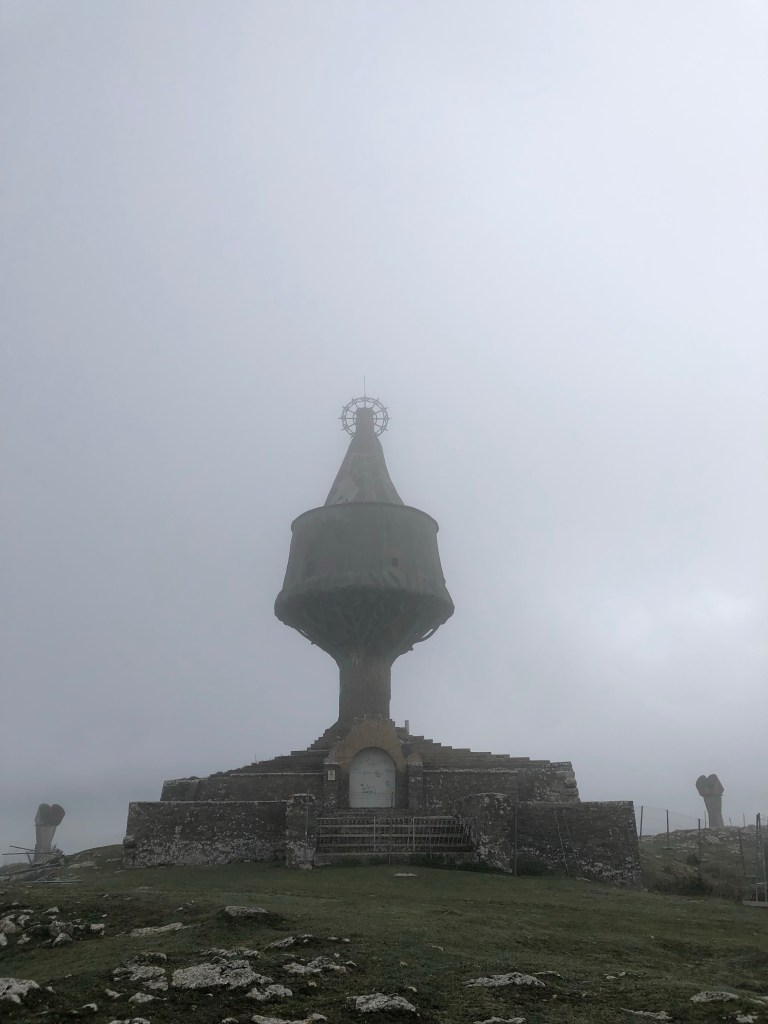
At first, the rolling clouds shrouded all but the peak upon which I was standing from view. I could just about make out the bizarre sculpture to an apparition of the Virgin Mary in the form of a colossal concrete block supported by a stylised tree looming out of the mist, but it looked like it had been fenced off and graffitied for good measure long ago.

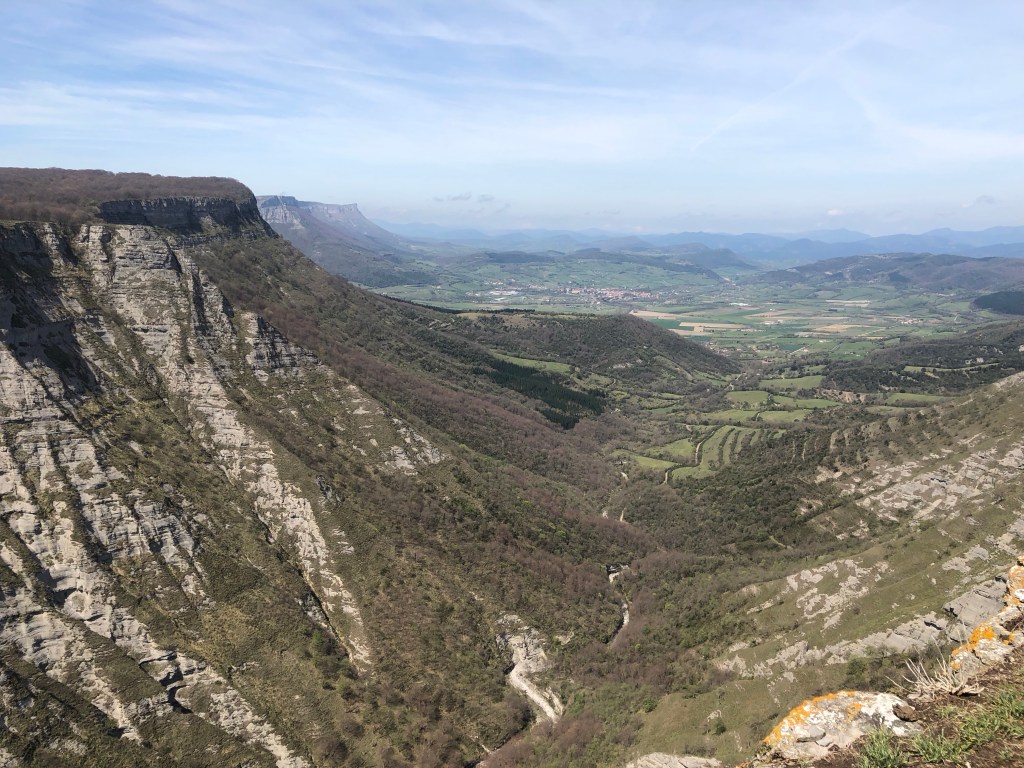
More impressive by far was what I could see when I turned around. The Castilian sun began to beat down through the clouds, and suddenly the sheer majesty of the Sierra Sálvada began to unroll before me like a painting. I was lost for words. Pictures don’t do it justice, but they might bring you closer to that wonder I witnessed.
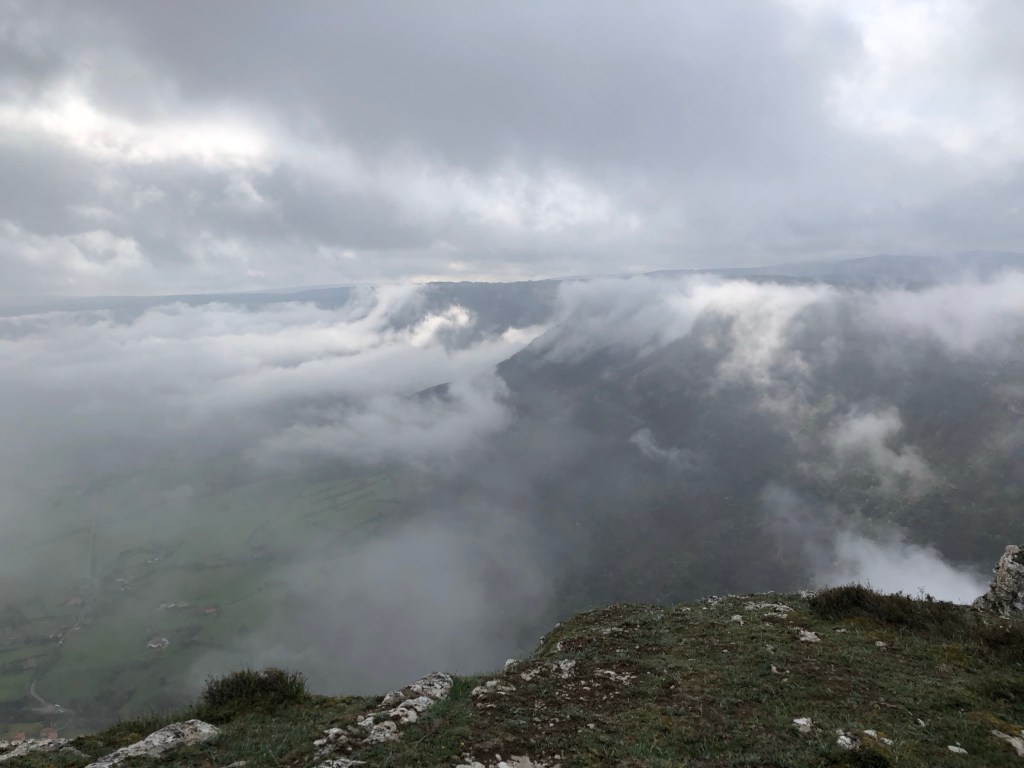

The breathtaking crags of the Sierra Sálvada give an indication of what to expect from the Salto del Nervión long before you reach it. It’s a drop of more than 200m to the bottom in places, and even the thought of kicking a pebble over the edge is enough to tie your stomach in several uncomfortable knots.

Don’t get me wrong. I’m absolutely mad about mountains. But there’s nothing funny about a drop of that height, particularly when it isn’t broken by any tree or slope on the way down.
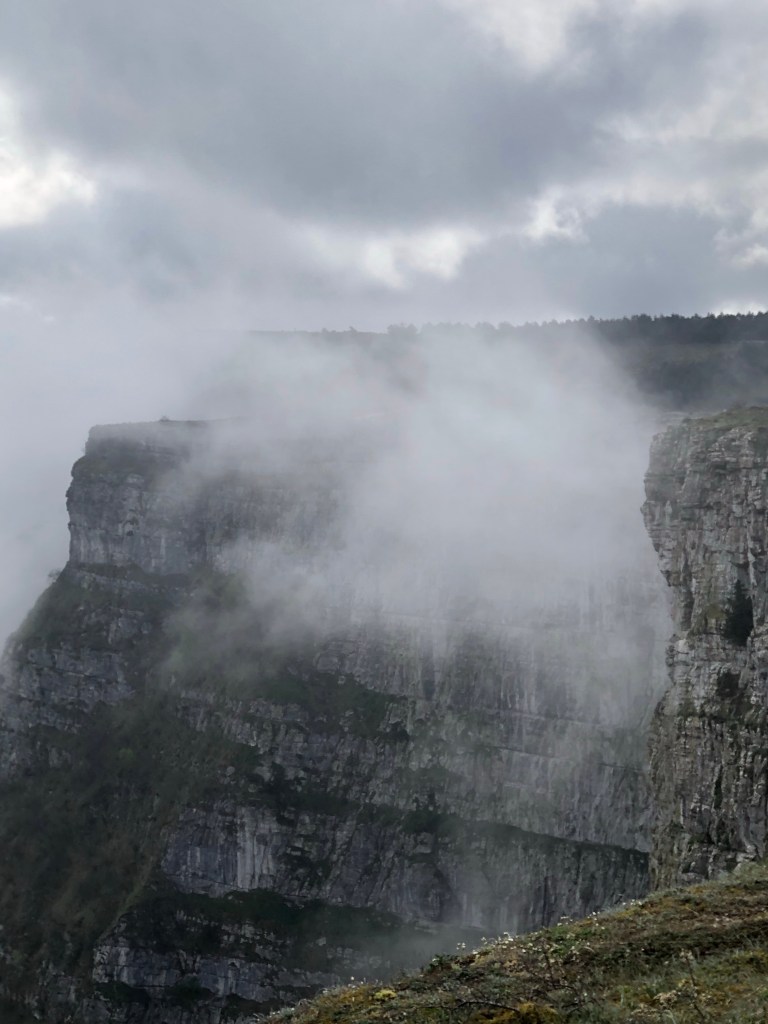

Ironically, perhaps, some of Spain’s biggest creatures are perfectly at home here. The hulking shape of the griffon vulture was rarely out of sight during my wanderings along the clifftop, but nowhere more so than about the stark stack known as the Fraileburu – the Friar’s Head – an utterly unassailable column where many of the Sierra’s griffons had chosen to roost, haughtily observing the valley below. I haven’t needed my camera once on this holiday – my phone has done a more than satisfactory job – but I was missing it then more than ever. A decent telephoto could have worked wonders on the griffons riding the thermals below, as well as pulling the acrobatic choughs and the few pairs of Egyptian vultures into focus for good measure. Instead you’ll just have to see how many you can spot clinging to the cliff face below.
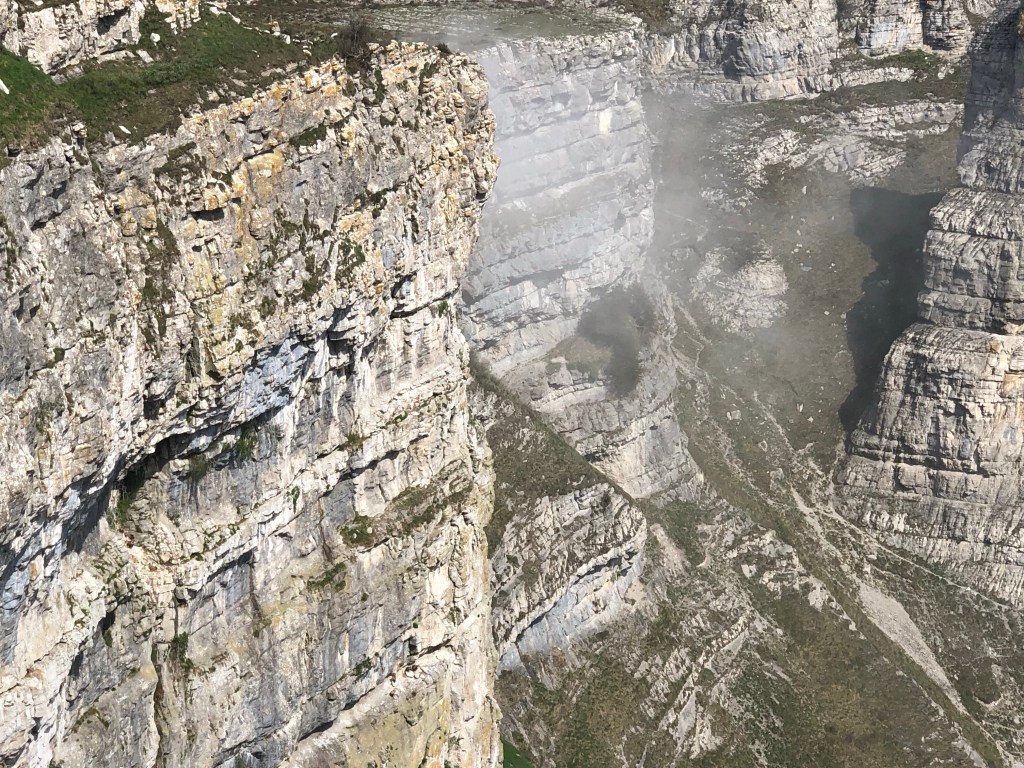

From the summit of Monte Santiago, it’s a fair trek to the Salto del Nervión. I didn’t stop often and I keep a pretty merciless pace, but it still took me the better part of two hours to reach the waterfall. Fortunately, the path cuts through tree cover for a large stretch, and the views are incredible – especially so as the sun had burned off most of the mist by this point, offering spectacular views down to Orduña, now some way in the distance.
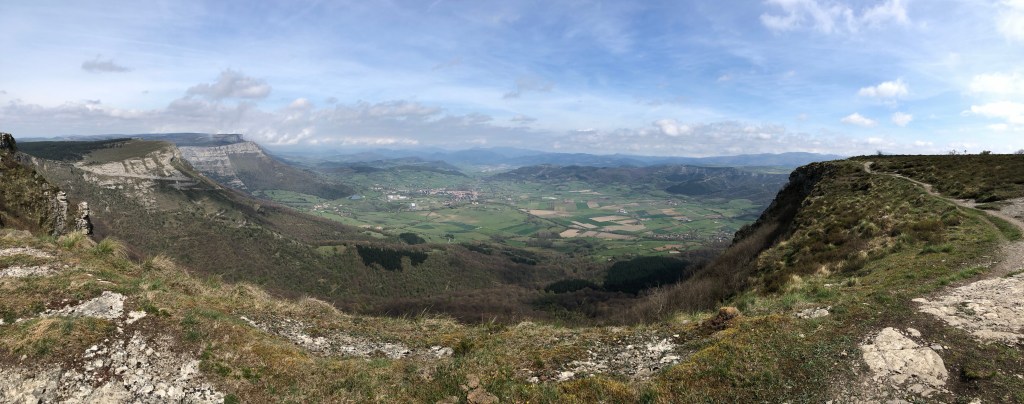

The Mirador at the Salto was quite busy by the time I arrived (around one o’clock) but one look was enough. The river was bone dry: I might have guessed from the absence of any sound of crashing water. So much for the highest waterfall in Spain! It seems it’s only really in action after heavy rain, otherwise the Nervión is supplied by a network of underground rivers that ensure it flows year-round, while its primary spring in neighbouring Castilla has a tendency of drying up in all but the wettest seasons.

Still – box ticked, I suppose.


Perhaps more interesting than a dry waterfall is the nearby lobera, an ancient wolf trap built possibly over two thousand years ago by the ancient Basques to hunt wolves and other large game on the clifftop. In a fashion akin to the Native American buffalo jumps, the wolf would be chased into a funnel, with men beating drums on one side and the cliff on the other, driving the poor beast into a deep pit at the end of the funnel as its only escape.

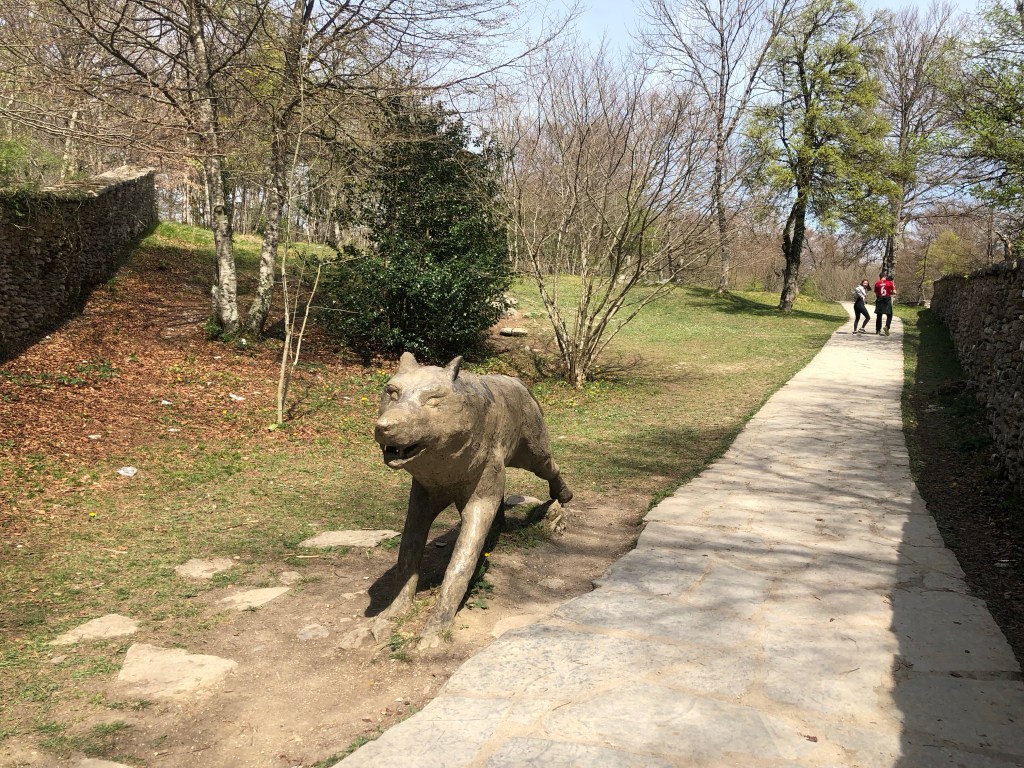
I didn’t see any wolves during the hike, though they have been seen recently in the area after a long absence. Instead I disturbed an amorous couple who had straddled the large wolf statue and were enjoying each other’s company, though they had picked an exceedingly odd place: I can think of better spots for a tryst than the site of a Neolithic abattoir.

From the Salto del Nervión, I decided to fork east and descend back into the valley of Orduña that way. The trouble was, the map – which had been utterly brilliant thus far – was pretty dismal about suggesting a way back down bar turning around and heading back the way I came. One of the maps I’d found online seemed to indicate a track that led down through the forest an hour or so to the north of the Salto, but I couldn’t find anything like it. Scanning the east side of the valley during the hike didn’t show much either, beyond what might have been a dry river gulley running down the mountainside.

In the end, rather than face a possibly two or three-hour march to the north, I decided to follow the beginnings of a track that appeared as the cliff began to slope rather than drop. Whether it was made by man or beast I’m not entirely sure, only that it probably wasn’t the track suggested online and that it very quickly came to an end.

There are few things more frustrating than getting halfway down a mountain and realising you’ve lost the path. At least you can surrender going up, but on the descent, you have no choice but to find a way down somehow. So I did what I have done in the past, foolhardy though it seems, and cut across country.

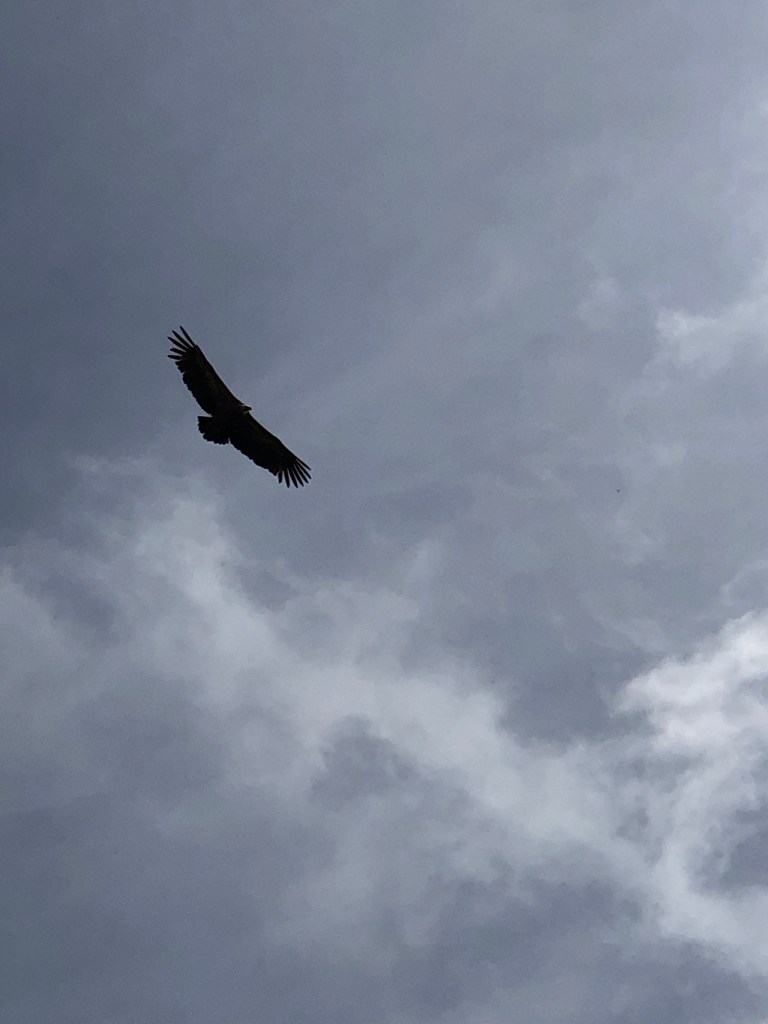
This is a lot easier said than done when the cross country in question is a forest thick with underbrush that happens to be growing on the side of a mountain. The ground under my feet was not always stable, there were thorns everywhere and the animals tracks I was following – boar, I wouldn’t wonder – were not always reliable. The heat of the midday sun was similarly unwelcome, silencing the forest and making my every step sound like a cannon. The vultures circling overhead only added to the dismal state of affairs.

Twice I came upon what looked like a road, but rather than wind up on some local farmer’s turf (and potentially ending up in really cross country) I decided to stick to a personal motto (don’t ever, under any circumstances, f*ck with the Basques) and continue to forge my own path.

It took just over an hour to escape the forest. I don’t think I’ve been more relieved to see a tarmac road in years.
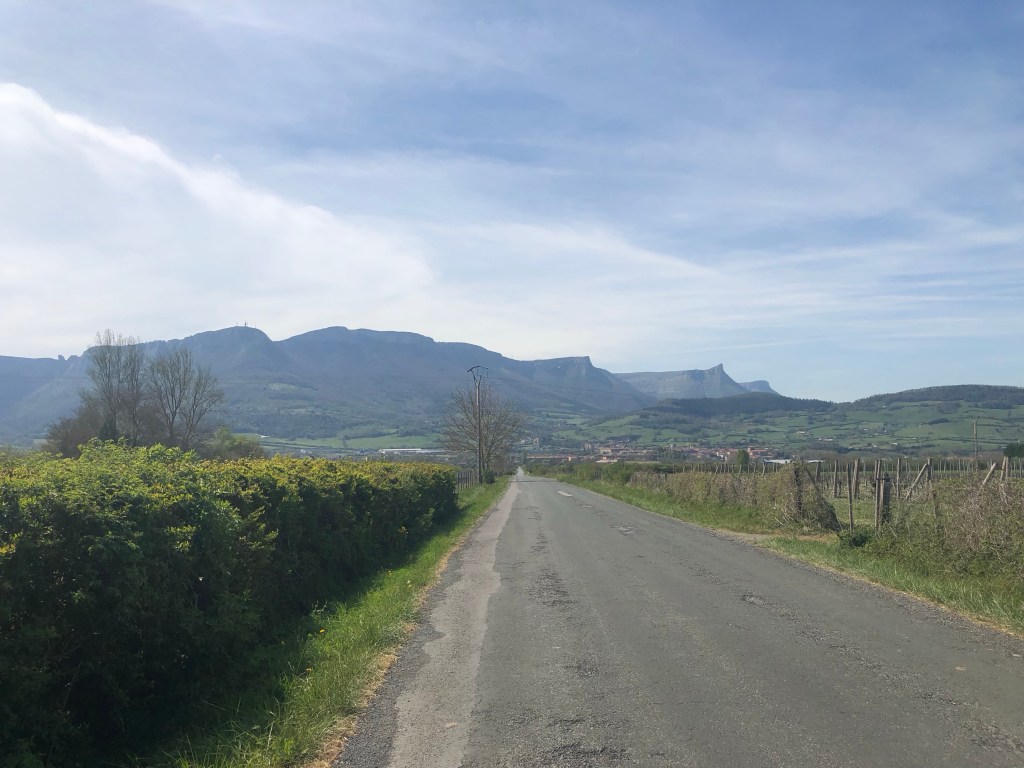

I made it back to Orduña’s train station with seven minutes to spare before the 16.45 train back to Bilbao. I must have looked a beardy, sweaty mess but I was past caring. Despite the mountain’s best efforts, I’d made it back in one piece.

My old English teacher once told me you can’t claim to conquer a mountain, a thing which has been standing on this earth since the world was young and will be there long after you have gone. I’m still hooked on the idea of climbing higher than the vultures – there are few things in this world more awe-inspiring than looking down on creatures that are usually specks in the great blue beyond – but I’ll hand it to him here. Mountains are ancient, treacherous things that deserve to be treated with respect.

I finished my time in Spain by summiting Santiago’s mountain, but the mountain very nearly got the better of me on the way down. A knock to my hubris – and a necessary one.

I’ll stick to regular cross country around the school grounds for now. I’ve had quite enough wayfaring for one holiday! BB x
Easter and El Cid

Ending any stage of the Camino is always a sad experience. I think I’d managed to put it out of my memory last time, but it came back to bite this morning. I guess it’s the routine sense of purpose the Camino provides so effortlessly: wake up, eat, walk to your next destination, wash your clothes, eat, sleep and repeat. You never need to worry about planning ahead, and that allows you to focus on the small pleasures: conversations on the road, birdsong in the morning, the joy of taking off your sandals at the end of the walk. Life can seem a little lacking in purpose when you step out of it.

So, unwilling to surrender entirely to sorrow, I strapped my sandals back on and set out to explore the beautiful city of Burgos, city of Spain’s greatest hero of all time: Rodrigo Díaz de Vivar, El Cid.


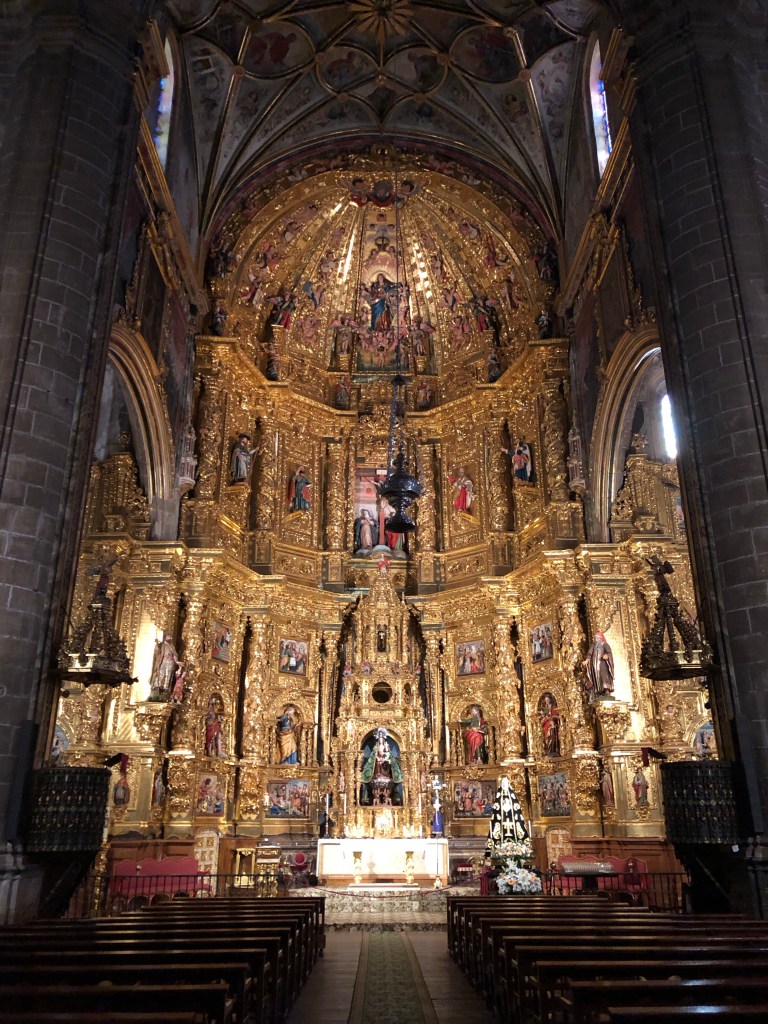
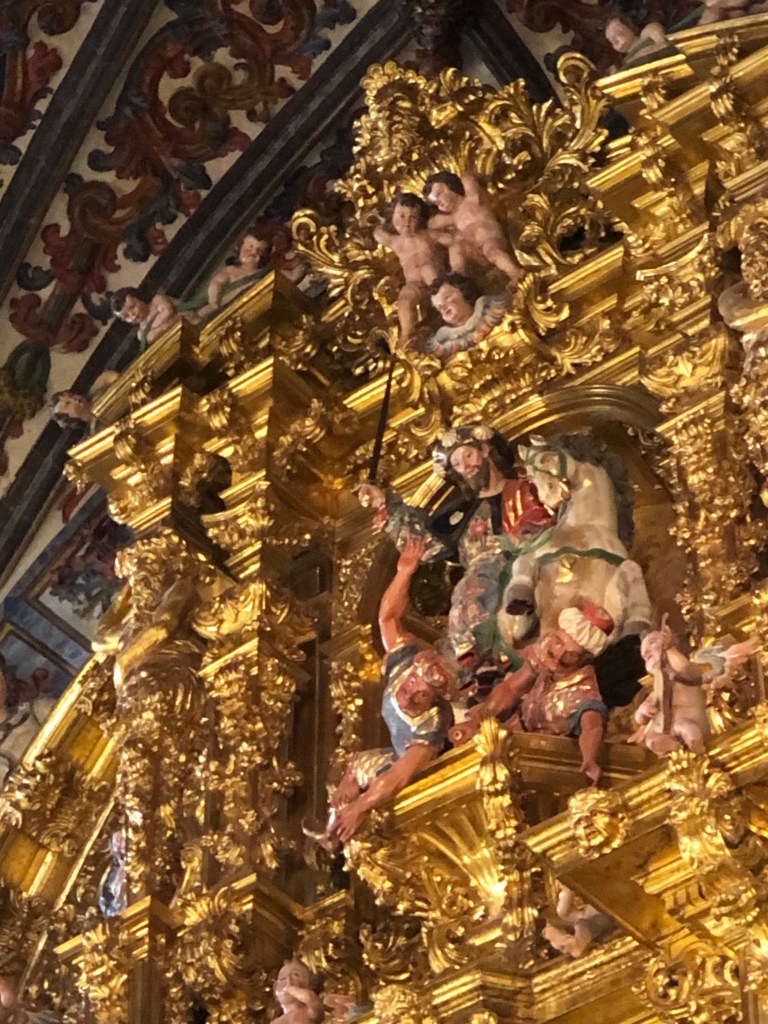
I went to Mass in the cathedral. There were two celebrations taking place in the chapels at the front of the cathedral ahead of the misa solemne. I opted to attend one of the smaller ones. For my sins I haven’t always been to church on Easter Sunday since becoming a Catholic, so it was extra special to turn that around here in one of Spain’s most beautiful cathedrals. Even if it did mean staring up at one of the least subtle icons of Santiago Matamoros.


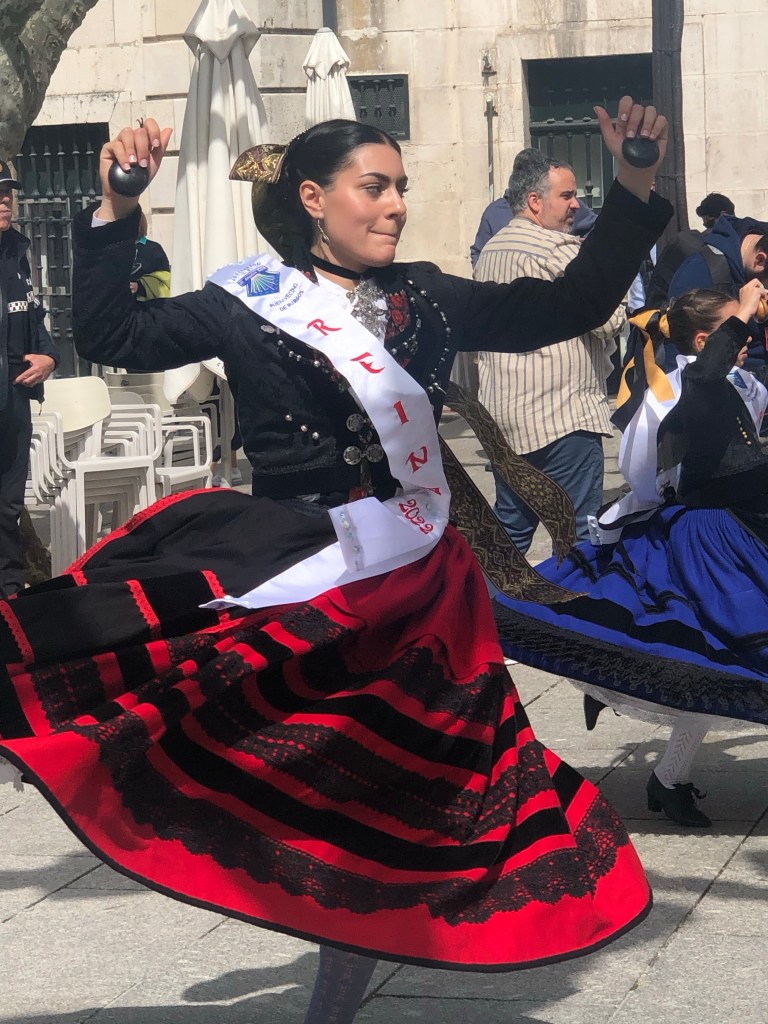
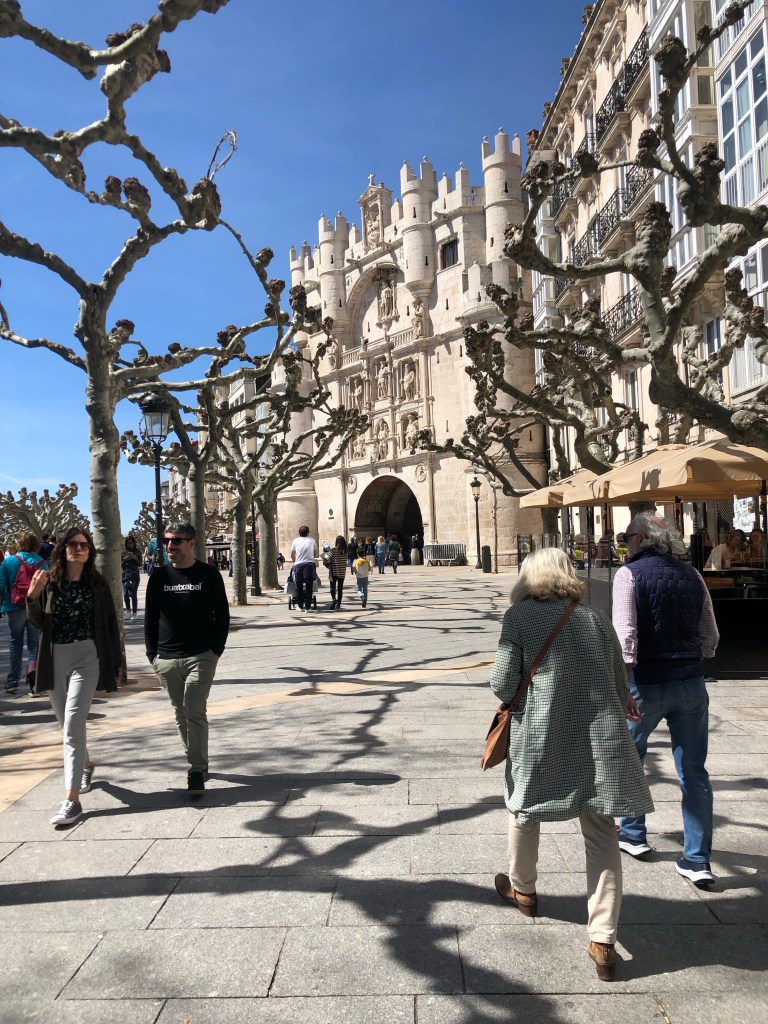
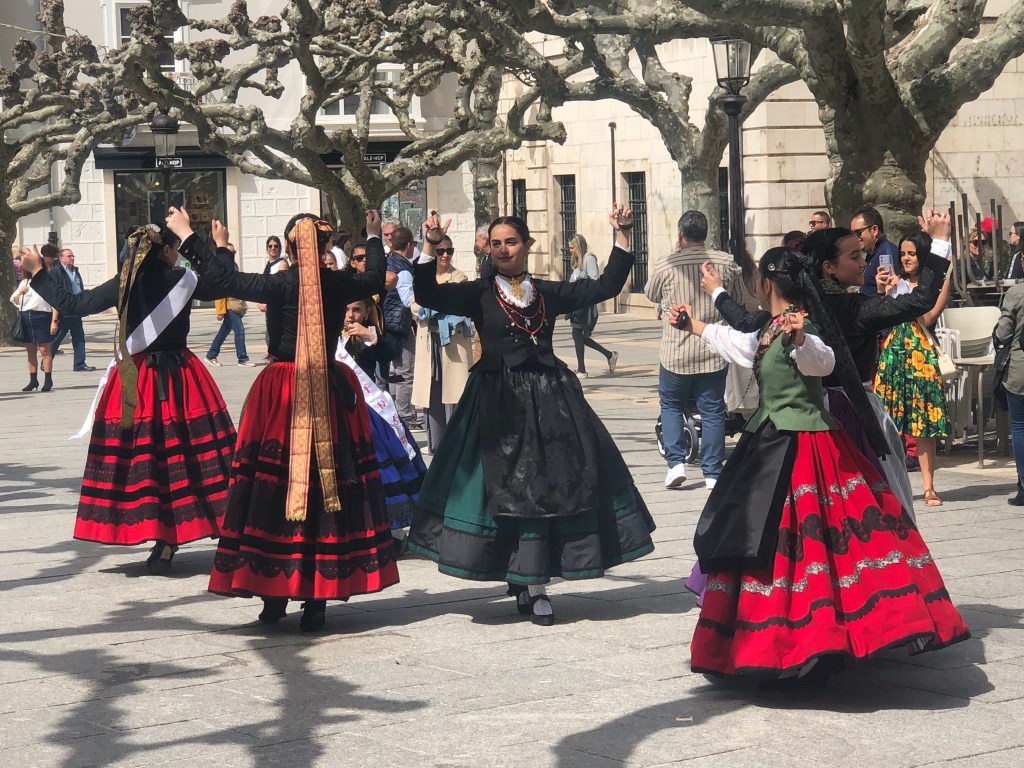
While soaking up the sunshine on the bank of the Arlanzón, I heard the sound of bells. A colourful procession was making its way down the Paseo Espolón, trailing a happy crowd of Sunday pedestrians. Gone were the solemn drums of the nightly pasos: the air was thick with the clean sound of hand bells and castanets. Gone too were the hoods that had so spooked the American pilgrims: these celebrants were welcoming the Easter season in with golden ribbons in their hair.


I’m a bit of a purist when it comes to Semana Santa. In the same way that I prefer enigmatic bulerías to happy-go-lucky sevillanas, I’ll always take the dark mystery of the nightly processions over the happier parades that bookend Semana Santa, Domingo de Ramos and Domingo de La Resurrección. Even so, the addition of an advance guard of local dances (in local dress) is a very nice touch: I don’t think I’ve ever been moved so by Easter Sunday’s celebrations.


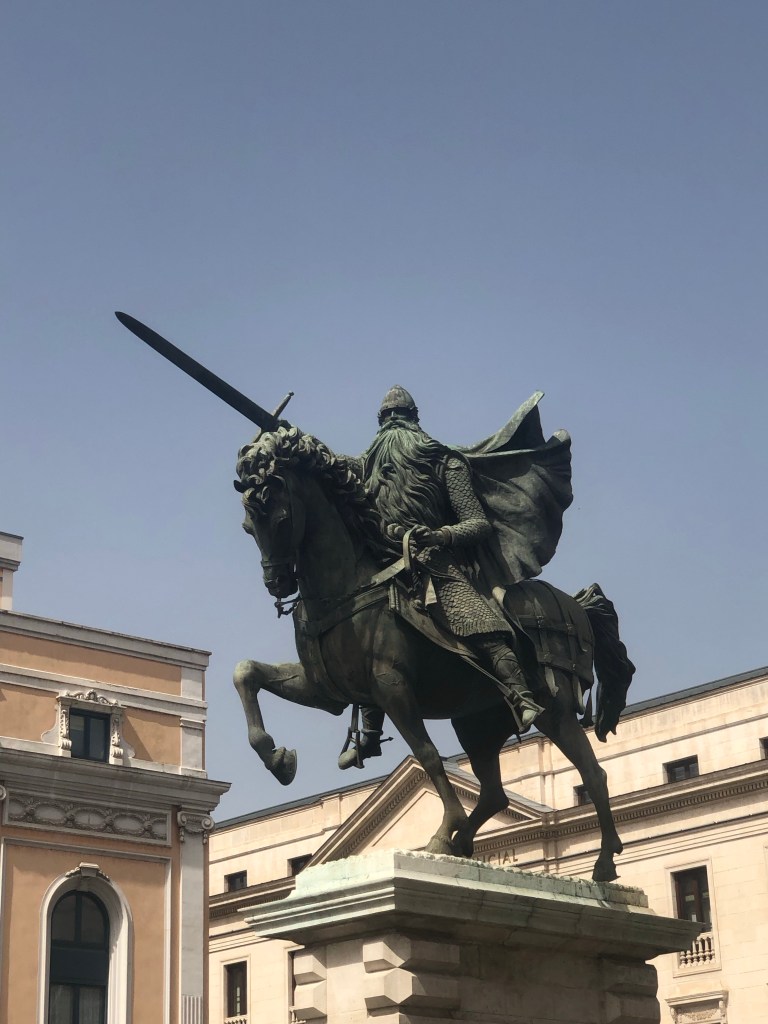
Leaving the celebrants behind, I made for the Puente de San Pablo, which is, frankly, a less than impressive name for what should really be called the Puente de los Héroes. Watching the passing traffic from eyes of stone are the primary characters of the Cantar del Mio Cid, among them Alvar Fáñez, his lieutenant and nephew; Jimena Díaz, his wife; and Abén Galbón, his Muslim friend and lord. At their head on the north bank stands the Cid himself, an imposing figure astride his war-horse Bavieca with the sword Tizona in his hand. I’ve been obsessed with the legend of El Cid since I was a boy, and none of that has faded as I approach thirty. I still get a giddying kick in the guts at the sight of that statue. Whatever the real Rodrigo Díaz might have been – warlord, mercenary, king in all but name – I will always be a fan of the legend. It is, truly, one of the greatest stories to come out of Spain.


It occurred to me that I had not actually been inside the cathedral proper on my last visit ten years ago, so I decided to make good on that this time. After all, it isn’t every day you get to pay your respects at the resting place of a real-life legend – and at half the price, as a peregrino (5€ with a credential – that’s a steal!).

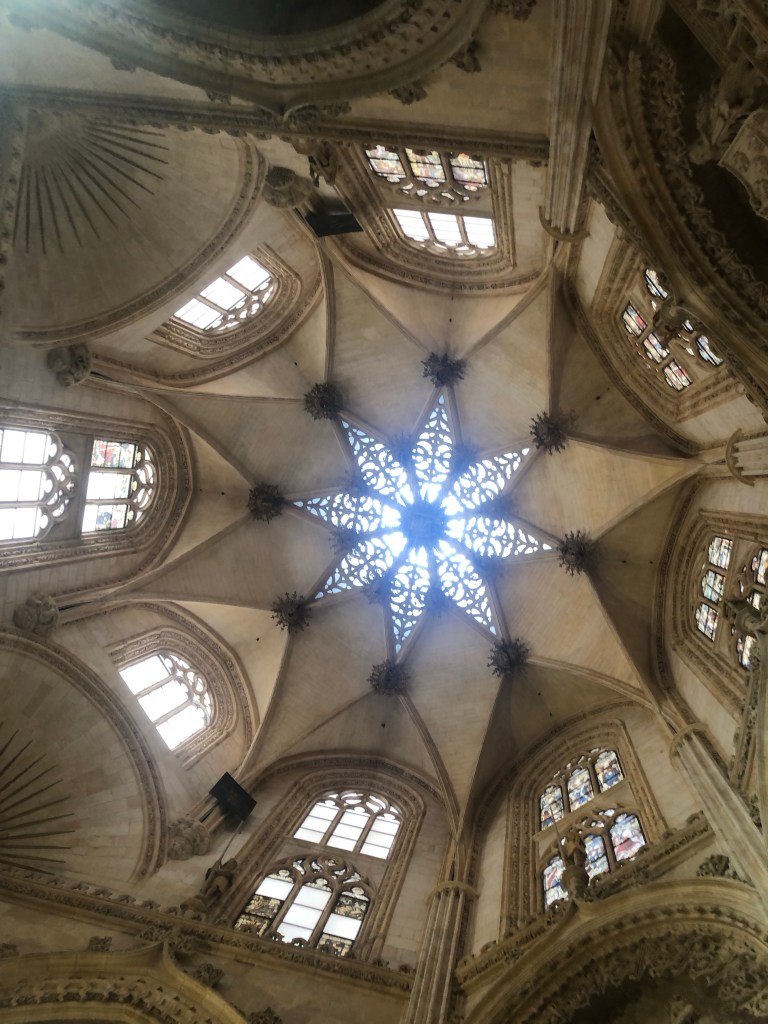
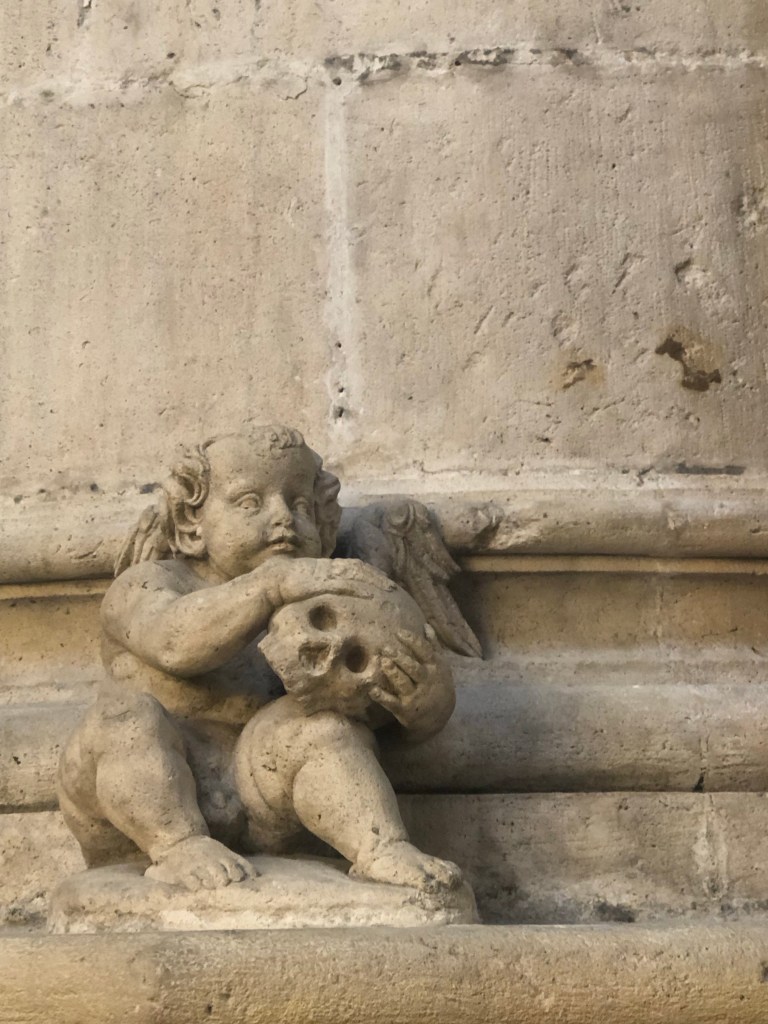
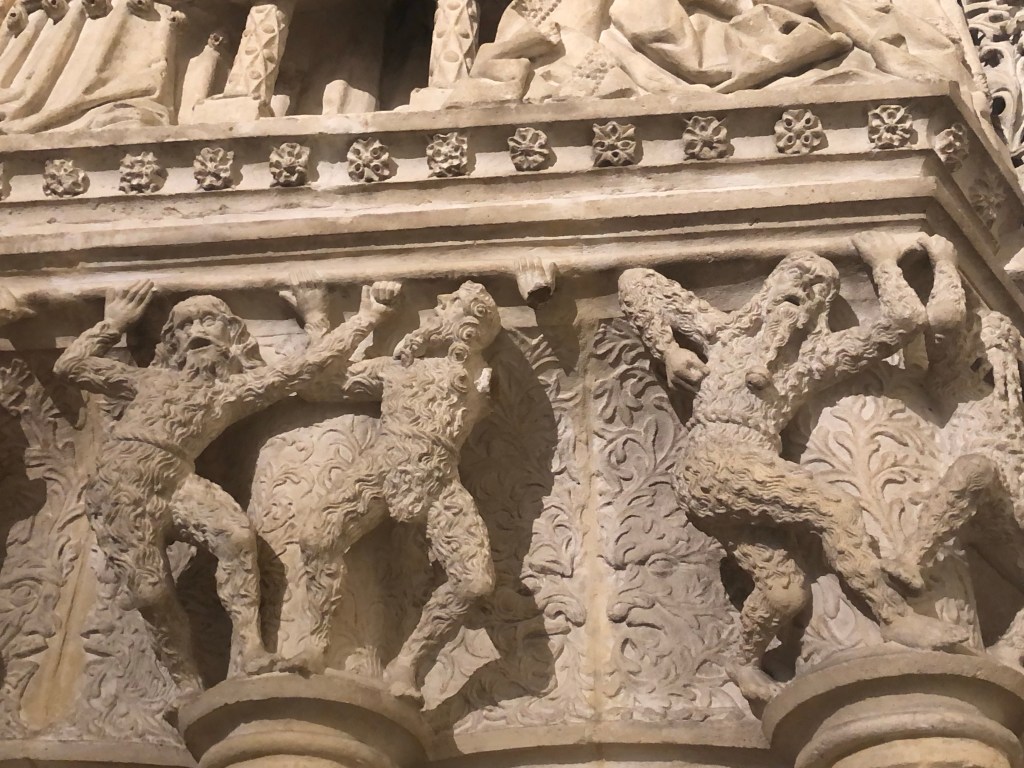
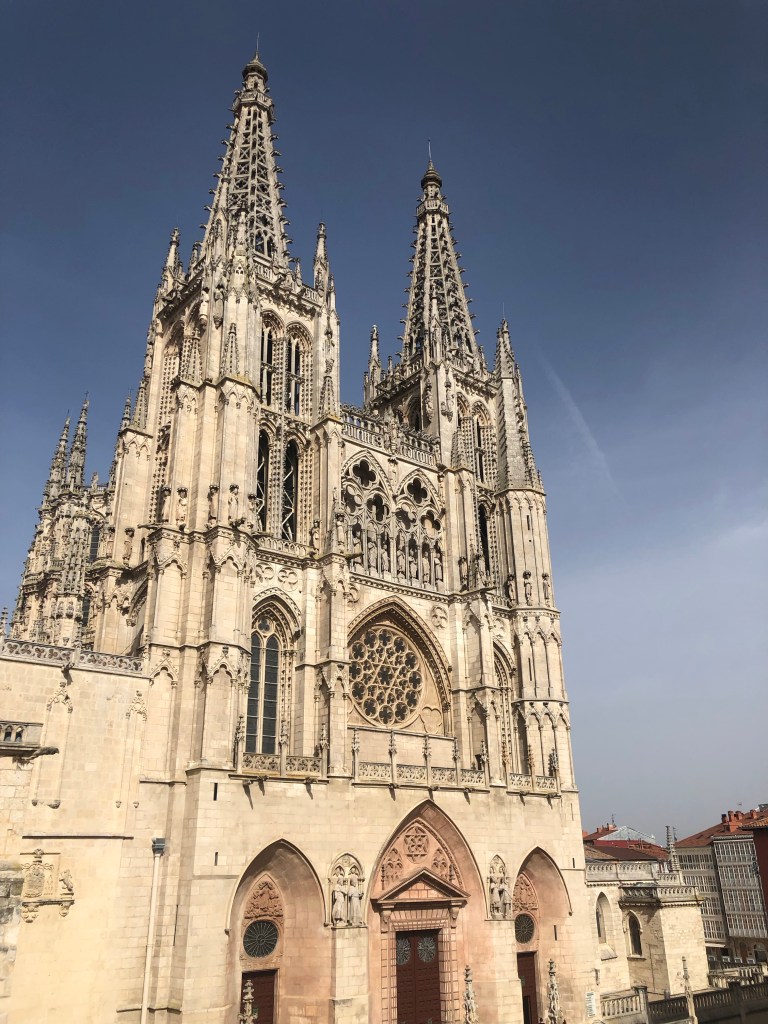
Now, I’ve spent my life in and out of cathedrals – I know Canterbury’s so well I could probably navigate it blindfolded – but Burgos is something else. I’ve heard people say it’s more impressive outside than in. While it’s easily one of Spain’s most breathtaking cathedrals to behold, the interior of Burgos’ cathedral is no slouch. Come for the tomb of El Cid (or what remains of his the French didn’t loot as trophies during the Peninsular War) but stay for the incredible stonework. There really is something to see at every turn, from starburst-like windows in the upper vaults to stone carvings of skulls, savage beasts and wild men.


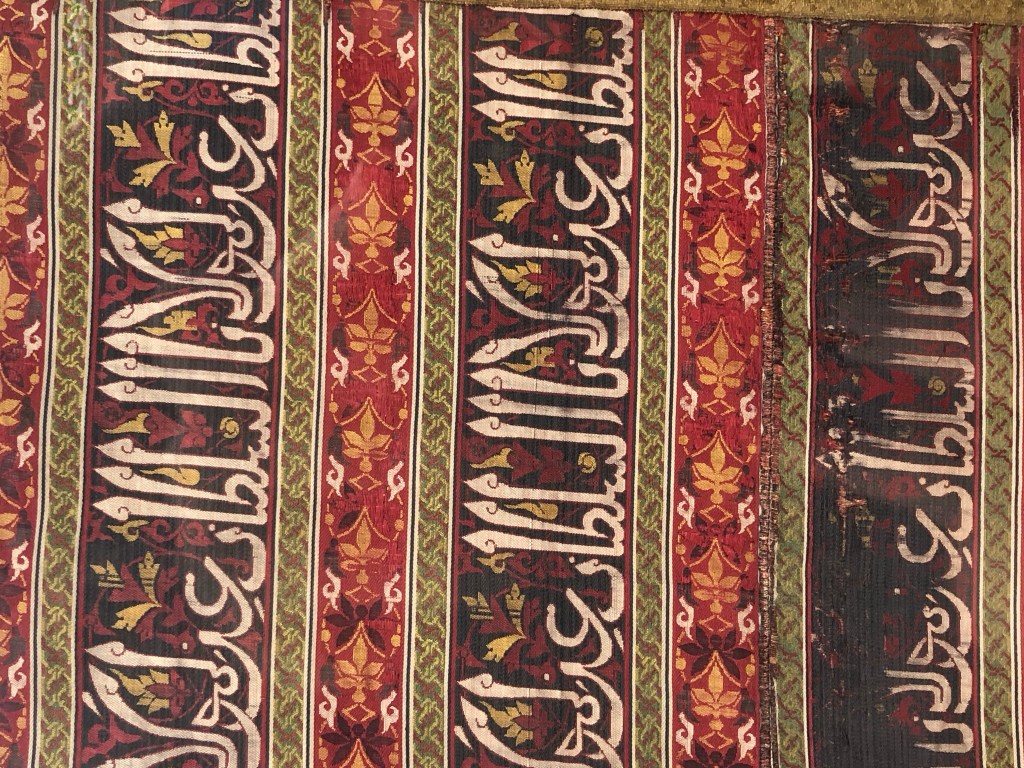
The treasure rooms in the lower chambers also hold a number of interesting relics, including the Cid’s legendary chest of sand, the silver hand of Saint Thomas A’Beckett (of Canterbury, of all places!) and a beautiful Moorish cloak emblazoned with the motto “Glory to the Sultan”. I wasn’t expecting to see any Moorish treasures so that last was an unexpected bonus!


With my tour of the vaults complete I popped into one of the only food stores still open and had a snack dinner of mejillones en escabeche – a solo travel staple of mine – overlooking the cathedral. A pair of ravens circled the twin spires for about an hour, their usually impressive stature dwarfed by the Gothic masonry. I couldn’t get into the bottled tinto de verano I bought on a whim – foolishly, I didn’t think to check if it would need a bottle opener. It’s still sitting unopened on my beside table as I write.


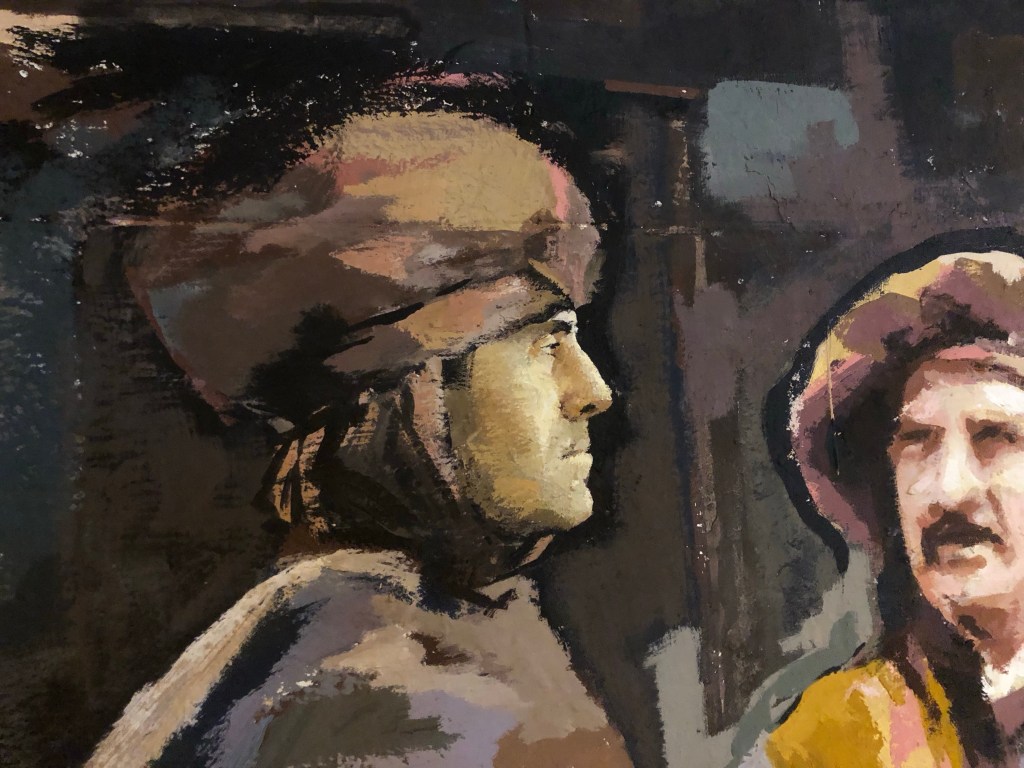
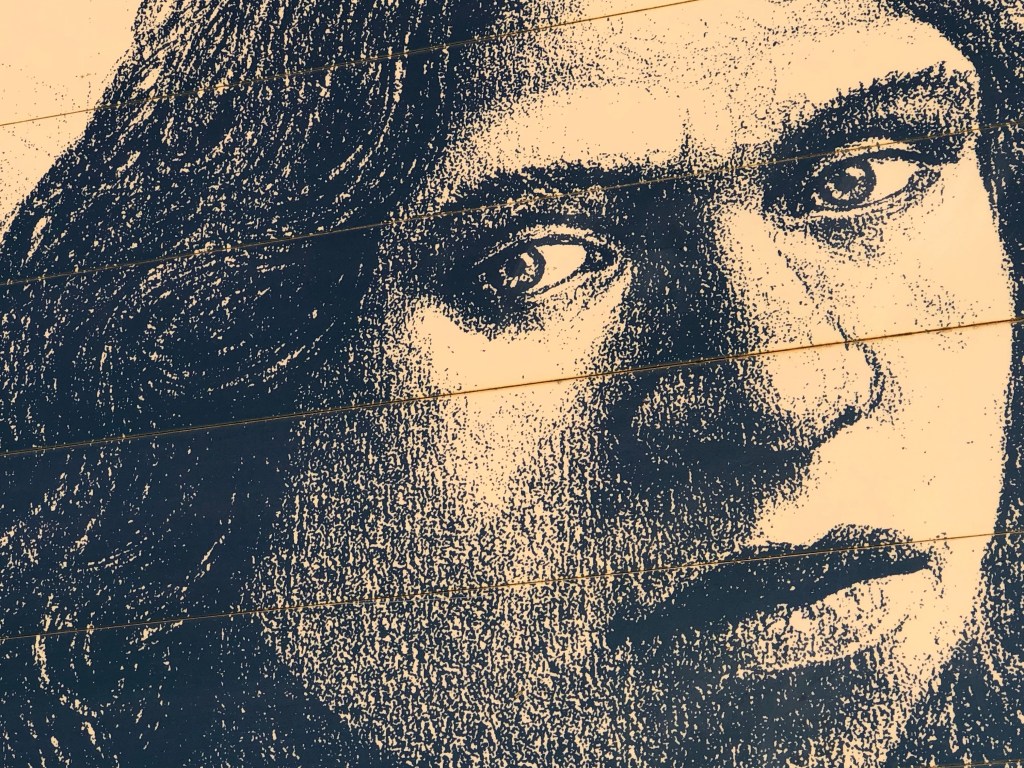
Finally, I went out for a beer with Francisco, the Mexican from the hostel. He was keen to draw my attention to a mural near the bar, where the Cid once again leapt off the page of legend into life. I was most impressed to see one detail in particular: the moros watching from the corner were striking for how un-Moorish they looked. Why, without their turbans, they might just as easily have been as Castilian as the other citizens of Burgos.

Which is exactly the point. We can be fairly certain that, by the time of the Cid (the mid to late 11th century), many if not most of Iberia’s Muslims would have been native to the peninsula for generations, not the lean, bearded Syrian stereotype that is so often thrown about when painting this period of history. Major props to the artist – it’s a brave stroke but a necessary one.


I have now made landfall in Bilbao. I’ve scouted the bus and train stations and they seem navigable enough. Tomorrow, I strike out for the highlands that followed me all the way along the Camino. I’ve had two days to recover and my feet are feeling much better. One final challenge stands between me and my flight home. Let’s hope I’m up to it! BB x
Camino VI: Parenthesis

In Burgos, the journey comes to an end. One leaves for home, two pack for their flight tomorrow and one more digs in to stay, leaving four of the gang to push on toward Santiago tomorrow. Perhaps mine is the hardest, watching the others move on or away, knowing that if it weren’t for my flight (and my beleaguered feet) I’d have long since decided to chuck in my plans and make for Leon with them. But life is full of farewells, and I could never have gone with them all the way to Santiago in the week of holiday that remains. So here I am, at the end of this run at the Camino, putting my thoughts into words.


Today’s leg was a special one. Impatient after a crush in Bar El Alquimista over breakfast – I’m still not especially good at dealing with loud and crowded spaces – I set out ahead of the others this morning, nursing a doctored but still painful blister and conscious it would likely slow me down. It didn’t feel great leaving the group behind, but the crush in the bar threw me off a bit and I needed some time on my own on the road as a remedy.


Leaving behind the slumbering town of Agés, I followed the road westward toward Atapuerca. This is possibly one of the most mystical waypoints of the Camino de Santiago, but blink and you’ll miss it – because Atapuerca is the resting place of the oldest known hominids in Europe. Not far from where the Camino crosses the Sierra lies the Sima de los Huesos, a pit that contains the bones of ancient humans who have lain there for nearly a million years. Walk this stage of the Camino and you really do get the sense you’re following in the footsteps, not just of a thousand years of Christian pilgrims, but almost a million years of human wayfarers. One of my fellow pilgrims pointed out that there are far older pilgrim routes in India, but if you think of the first humans pushing toward the end of the known world (where Finisterre stands today) as the first Camino pilgrims, I’d like to think the Camino de Santiago is a fair contender for the top spot.


I made the climb alone, taking with me a sprig of mistletoe, a fallen olive branch and a strip of blackthorn blossom: something wicked, something old and something new. It seemed like the right thing to do. Meanwhile the birdsong up the mountain was spellbinding: hoopoes, cuckoos and woodlarks on all sides, and these last especially, becoming for me the quintessential sound of this stretch of the Camino. I’ve recorded a video so I can share some of that magic with you.


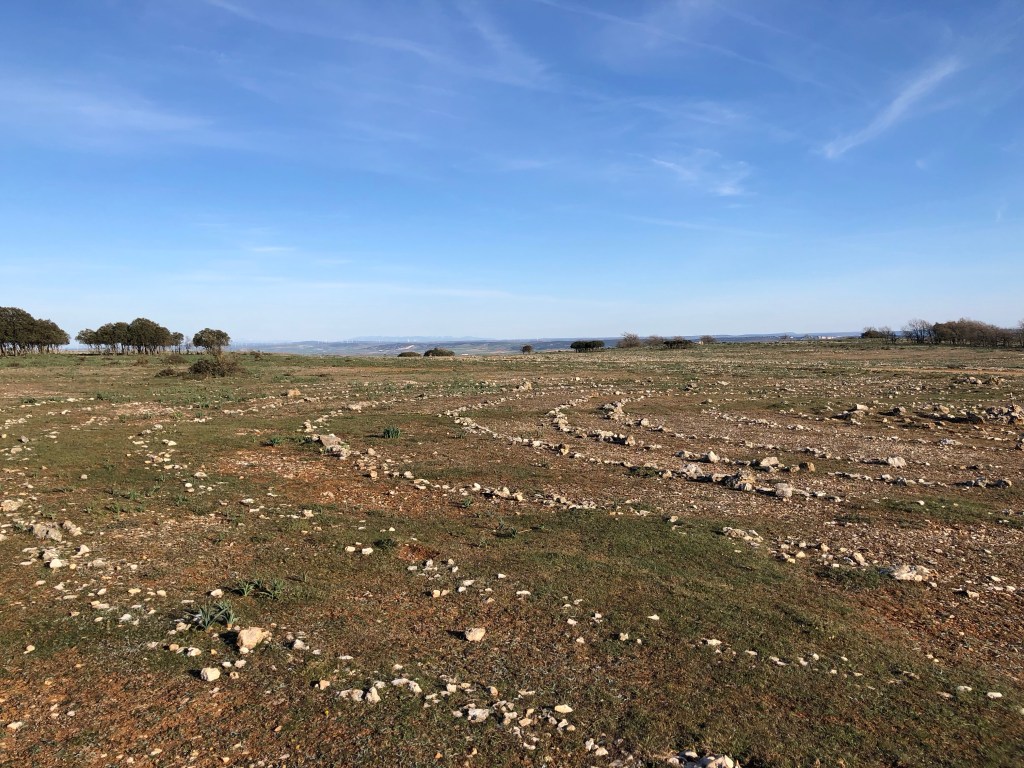
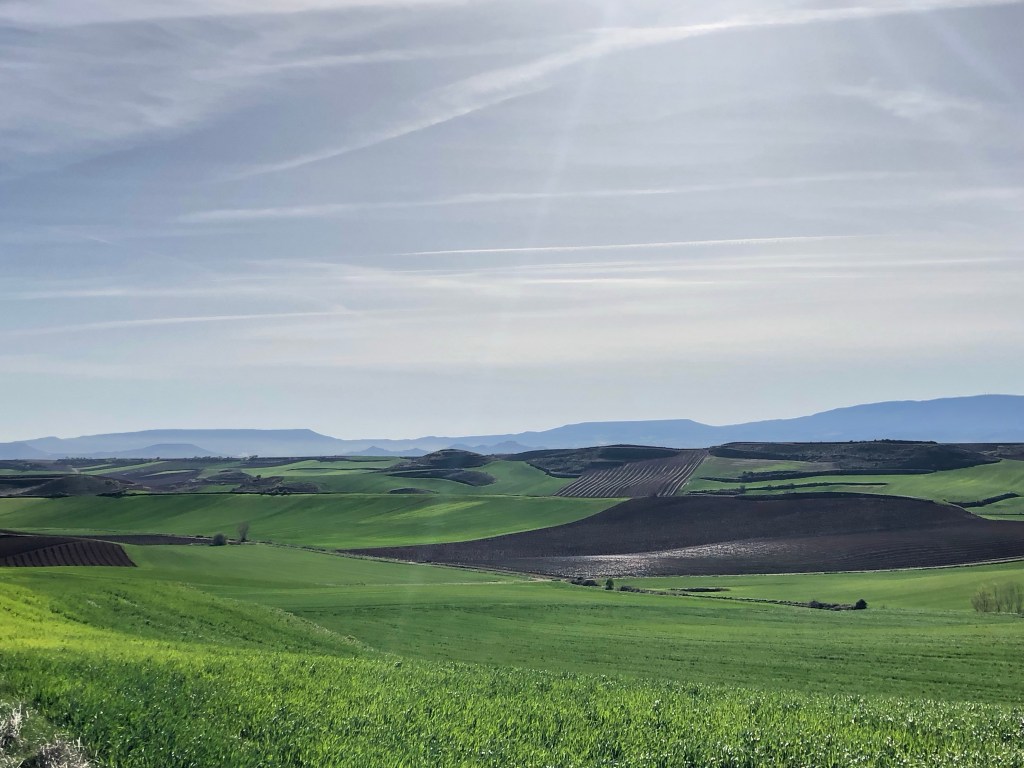
From the mystical heights of ancient Atapuerca with its lonely wooden cross and stone circle, you look down from the last high place upon the city of Burgos and the seemingly endless reach of the Meseta beyond, with the daunting white cliffs of the Picos de Europa clearly visible over 130km away.


Having waited for my companions at the cross, I joined them for the descent into Burgos, but when their stop for a mid-morning snack threatened to stretch over an hour, my itchy feet swept me back onto the road again. It would be the last time I spoke English on the Camino this year, because from there on out the only people I encountered were Spaniards on the road (they took long enough to find!).

For the final twelve kilometres into Burgos I was joined on the road by Fran, a programmer from Soria in his twenties who was an enlightening companion. From him I learned that the Spaniards, as I suspected, had indeed done the Camino for Semana Santa, but they had started at the beginning of the national holiday and were thus a few days ahead. I also learned about his home town of Soria and how the Mesta have monetised their trade, turning what was once an affordable experience following the shepherds’ route into a glamorous eco-tourism experience to the tune of 200-300€. He also gave his thoughts on the Catalan question, likening it to a dog barking furiously at a door which, when it is finally opened, suddenly goes quiet – it is easier to hate when you cannot see what it is that troubles you. Or something like that. I was just happy to be speaking Spanish – and flattered to be told that if I hadn’t revealed I was English in the first five minutes I’d have had him stumped, as he was genuinely ‘confundido’ by my Spanish.


I took my leave of Fran outside Burgos’ enormous cathedral, after a brief conversation with a local (‘De dónde sois?’ : ‘Yo de Soria,’ / ‘Y yo de Inglaterra, pero con familia en La Mancha.’ / ‘Soria e Inglaterra? Menuda familia los dos.’). Fran took off to catch his BlaBlaCar home and I set out in search of my hostel.

I didn’t get much of a siesta, because the next guest to arrive was another Francisco, this time from Puebla, México. After a brief exchange over the subtle numbering of the hostel beds we ended up talking for close on two hours about a number of topics, with him asking after my thoughts on Italy, Spain and the British Empire and me asking for his wisdom on La Malinche and nahuatl. He is on a quest much like I was years ago: on his tour of Europe he has come to far-flung Burgos to seek out the village of Grijalba, from which he believes his father’s ancestors may have hailed (through the legendary explorer Juan de Grijalva).

It is always heartwarming to meet another traveler on the road, but especially so when they are on a quest – you don’t meet many of that kind these days. Perhaps it is fate that the day started in Bar El Alquimista, named for Paolo Coelho’s famous novella.

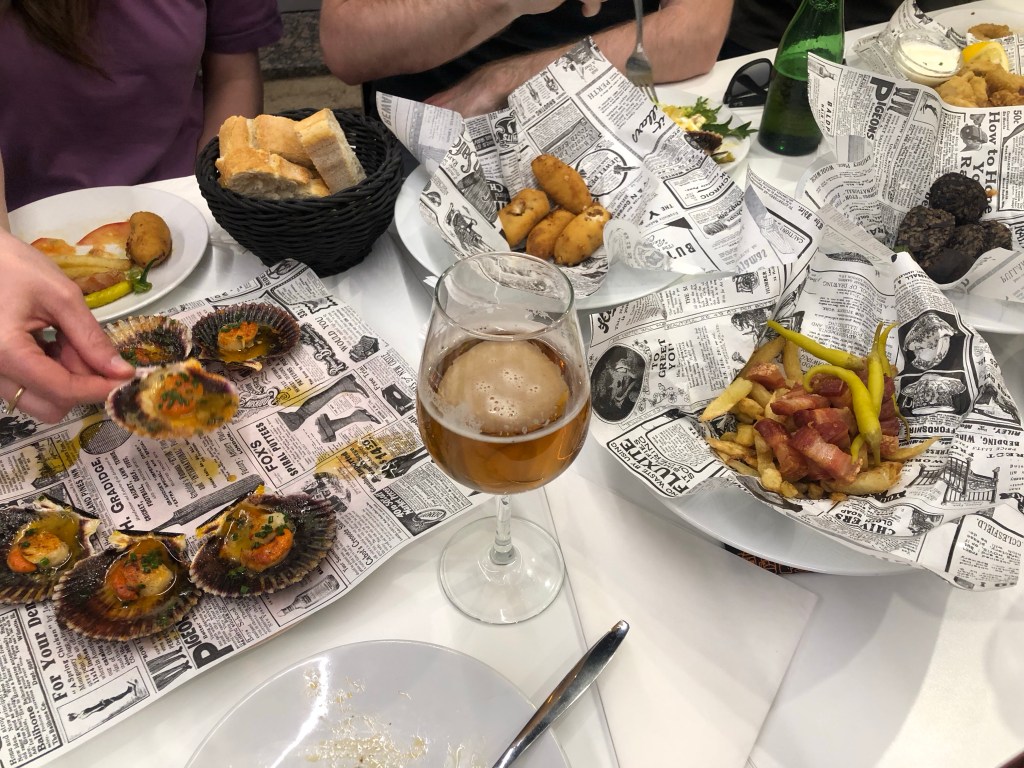
After one more conversation in Spanish which left me feeling more confident than ever before, I led the pilgrims of our group that remained down a side street in search of dinner. It couldn’t have been a better choice: six raciones and a salad split between us made a feast such as we hadn’t had yet. Morcilla, croquetas, calamares and sepia a la plancha, torreznos and zamburiñas (what more fitting food for pilgrims than scallops?)… it was far and away the best I’ve eaten on the trail.


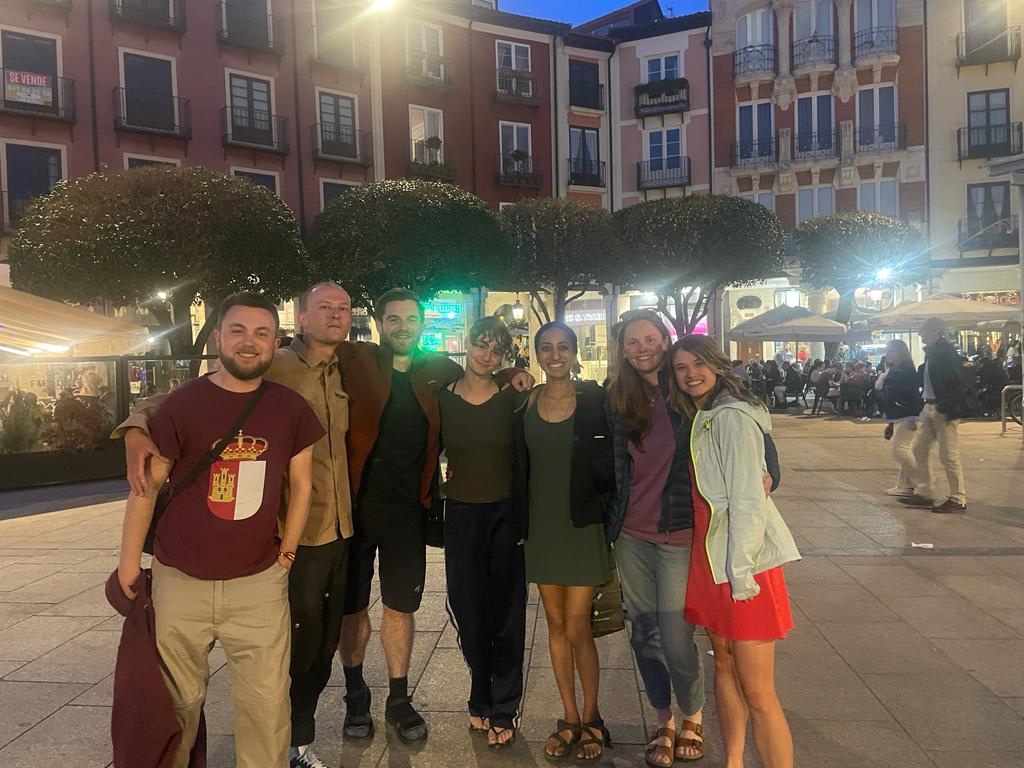
And I didn’t have to pay a cent, since the generous Dane in our number footed the bill before we twigged what he was up to. I’d done something similar a few days prior, so I guess he was paying me back, but that kind of generosity is what makes the Camino so special. For our last meal as a group, I could not have asked for more.

I’ve never bonded with other peregrinos quite so quickly, and I wish I could take the road with them to the end. But every road leads to a parting, and we part as friends.

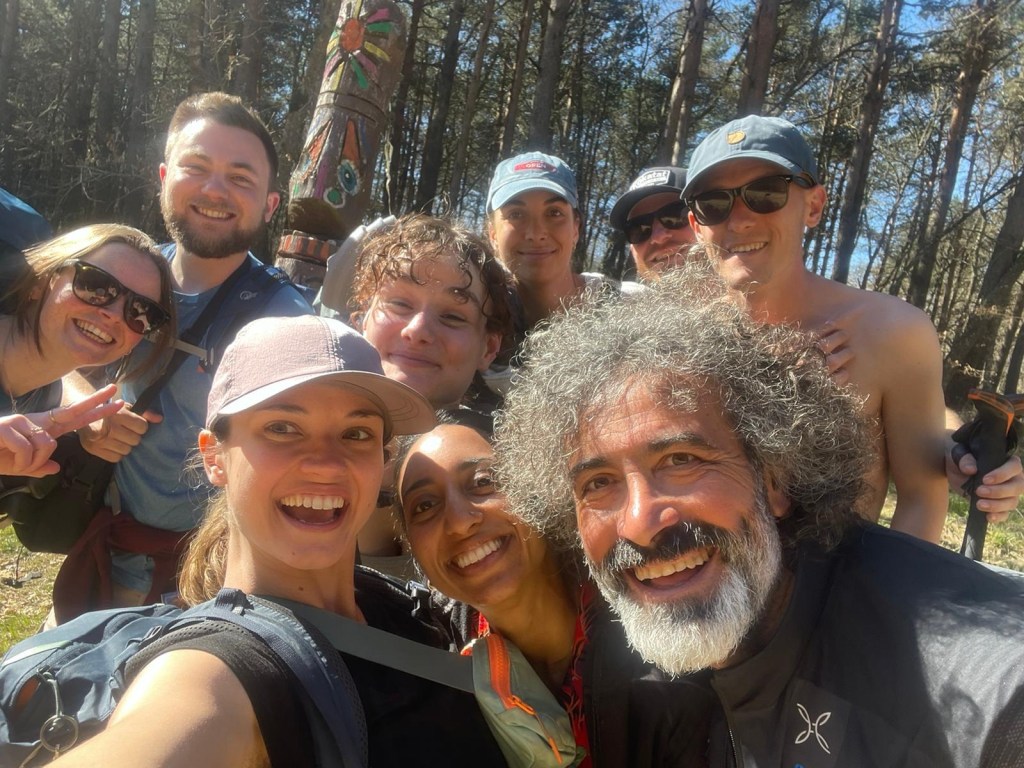
It is not the end of the road for me, but rather a parenthesis. One day I will come back here, to the ancient city of Burgos, and pick up the Camino where I left it. Hopefully I’ll meet other pilgrims like them who will make the road an adventure with friends once again. Sophia’s charm and maturity. Mikkel’s wit and his generosity. Katie’s wisdom and Lachlan’s humour, courage and peace of mind.

Domenico the Carabiniere. Enrique the Arriero. Phil the Professor. I have met so many characters on the Camino this time. That has been the real blessing of the road this Easter. I’m glad I came. Truly. (And especially since it was a whim decision just over a couple of weeks ago).


It’s now half past eight in the morning. By now they will have left Burgos and will be somewhere on the road to their next destination. All I can do now is wish the four of them all the best on their road to Santiago. And someday, sooner or later, I will take up my shell once more and follow them. BB x
Camino V: A Man Out of Time

After the Carabiniere’s tip-off about the limited options in San Juan de Ortega, we made the collective decision to strike out early for Agés, the next town along. So, after a day’s hiatus, I had my sunrise again – at the cost of my fingers, which were numb with cold for the first half hour at least. Mikel the Dane caught up to my ferocious pace to lend me his fleece-lined gloves. The way everyone looks out for each other on the Camino… there’s really nothing quite like it.


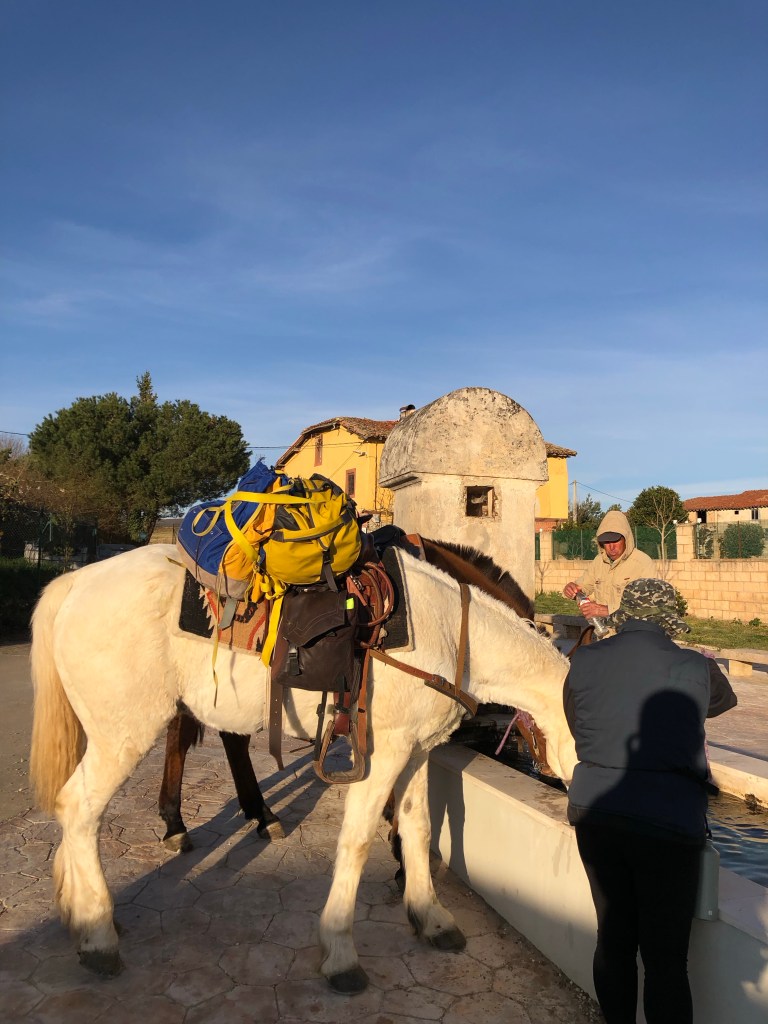
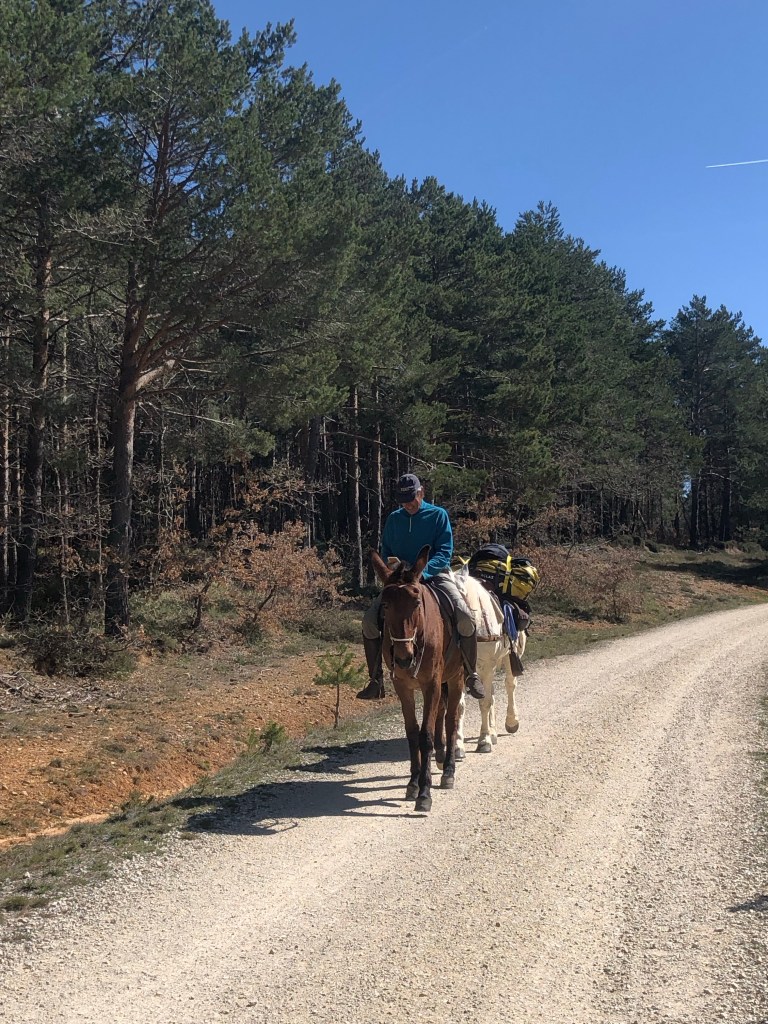
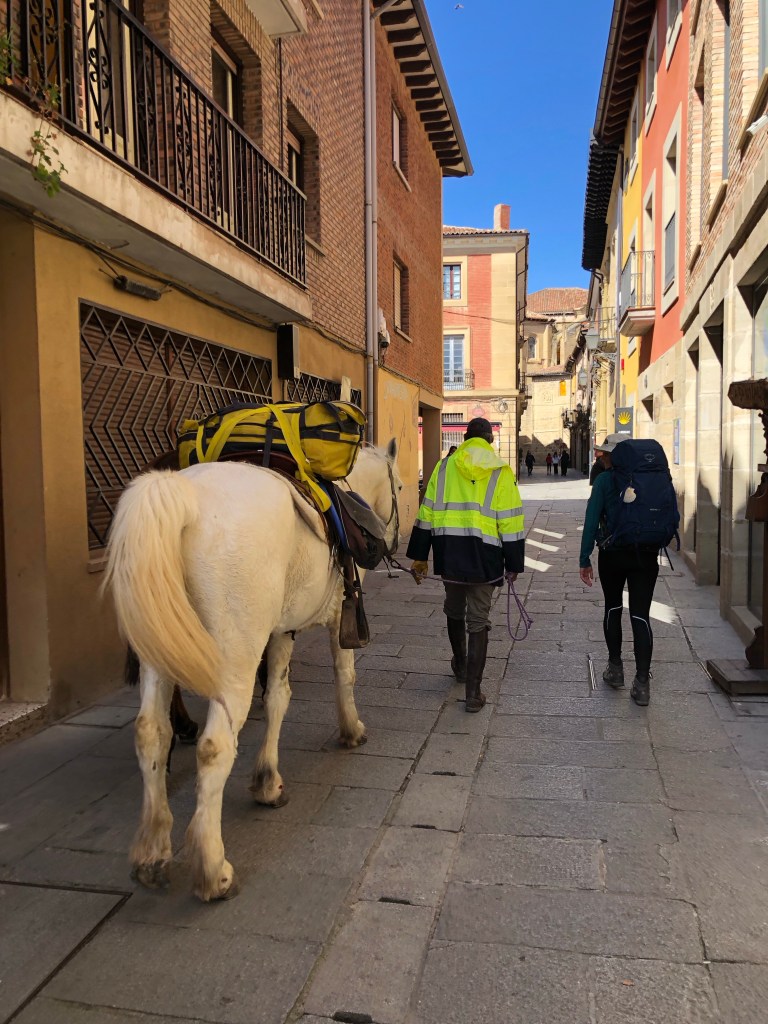
Shortly before reaching Tosantos I picked up the trail of Enrique the Arriero and his mule, Jena, and as soon as he came into sight I picked up the pace to catch up to him. It was a merciless effort on my already beleaguered heels but worth it – with so few in his trade left in the world, you don’t pass up a chance to learn something of that vanishing world. One of our number had lost his card to a hungry ATM so I couldn’t stop to chat long, but I told myself I’d try to catch him further down the road if I could. I had already penned “Entrevista con un arriero” in my journal and that would just be a waste of paper if I couldn’t fill it in.


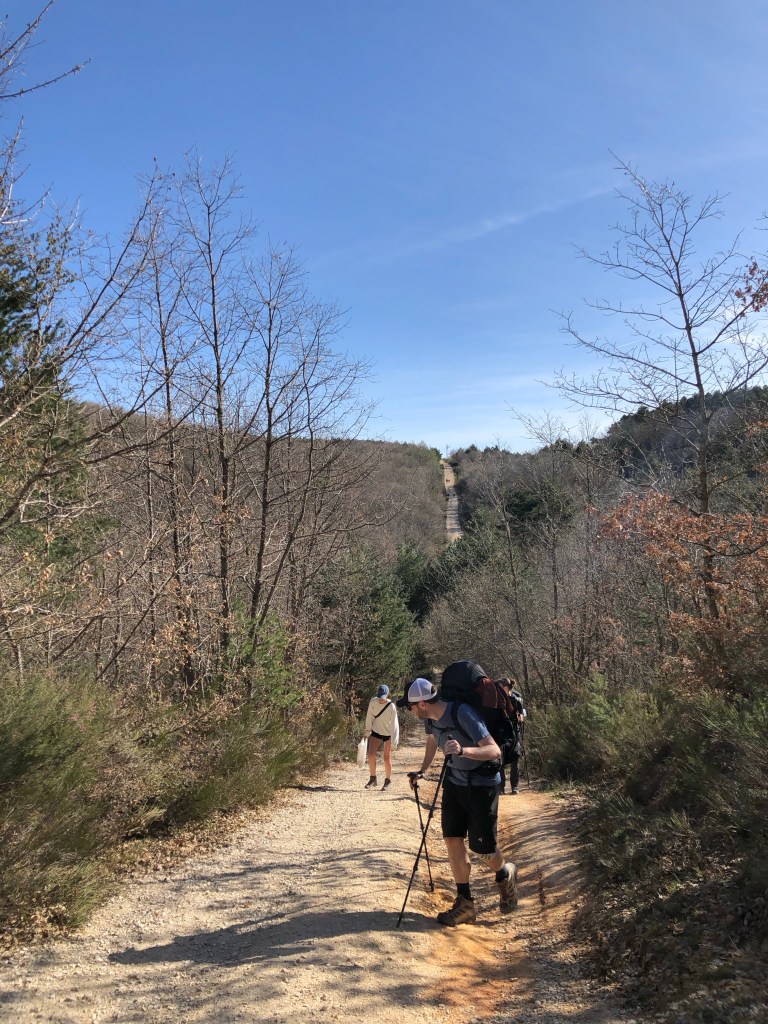
After grabbing an early lunch/late breakfast at Villafranca Montes de Oca (20€ fed all seven of us with a sizeable tortilla & jamón bocata and drinks) the Camino wound steeply uphill into the Sierra de La Demanda. I won’t be the first pilgrim to say it was demanding and I won’t be the last, but it was a welcome change to be under the shade of the trees after the roadside meandering of the last few days.


There’s a monument about halfway through the Sierra to the fallen of the Civil War – that is, the opponents of the Nationlists in Burgos who were dragged out of their beds and summarily executed up here in the woods in the early days of the war. Most Spanish families can relate to this grisly tale: most of the circle of friends of my great-grandfather Mateo similarly disappeared, being known for harbouring or having harboured socialist sympathies even after the war was over. I said a prayer and moved on.

After another steep climb we finally made it to an open stretch of the Camino where the Carabiniere led us to a shaded spot where a food van had been parked on his last run of the Camino a year prior. The proprietor was still here, and while the ‘stamp girl’ was on her way (she’d gone to get fresh ink) he was happy to provide us with fresh strawberries free of charge while we waited.


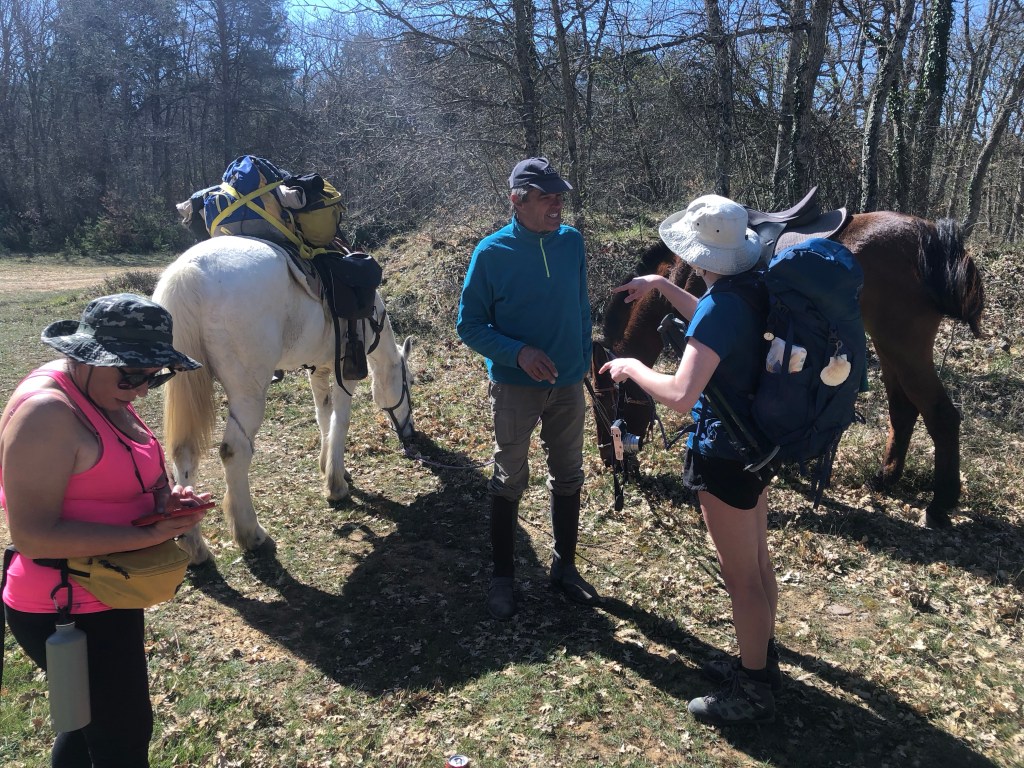
Here, at last, I caught up again with Enrique, and was able to ask him all the questions I’d had on my mind about being an arriero.


Enrique – or Kike, as written across his hat – has been a muleteer ever since he was a child. He picked up the trade back home in Argentina, where the vast distances and tricky terrain have allowed the profession to long outlive its run in Europe. He likened the trade to studying to become a surgeon: long, hard work and dependant on the collected wisdom of many teachers and masters of the art. Experience, said he, was the best teacher of all, and – now in his sixties – he has had almost six decades worth of it. He grew up a poor man, living on the streets and carving a life for himself in the countryside, not that you’d know now from his noble bearing, bright white smile and polished riding boots (an bold choice of footwear for the Camino). Since his move to Spain twenty-five years ago, he’s got by working with horses and mules wherever and however he can, teaching, buying and selling, running activities for children… whatever he can turn his hands to. I remember as a child seeing the odd arriero in the country around Olvera, so it was more than just an honour to meet a man whose profession is that of the title character in my books. It was a warm dash of nostalgia.


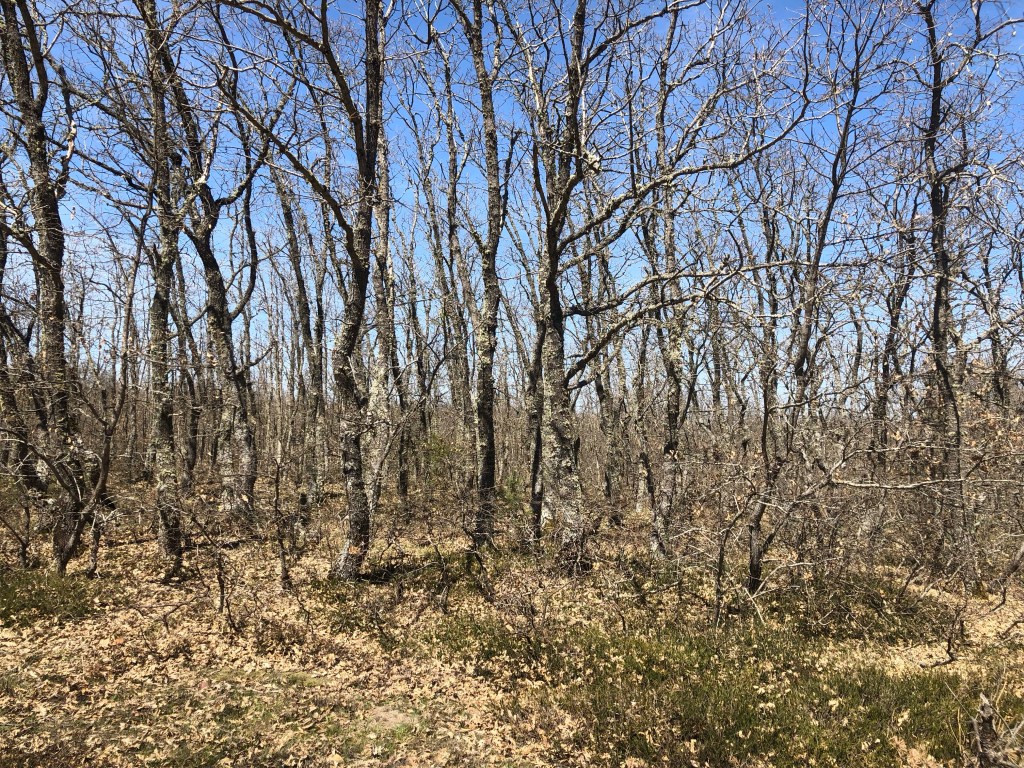
The dark pine forests of the Sierra de La Demanda soon gave way to a skylit swathe of leafless oaks, covered so thickly in lichen that they looked half-dead, like greying, flayed cadavers beneath the sun. However, the forest could not have been more alive. A cuckoo called in the trees and followed us like a shadow along the Camino for some time, while chaffinches, blue tits and the piping song of a wryneck played a merry tune to carry us along. It helped to take my mind off the blisters forming on my beleaguered feet and then some.


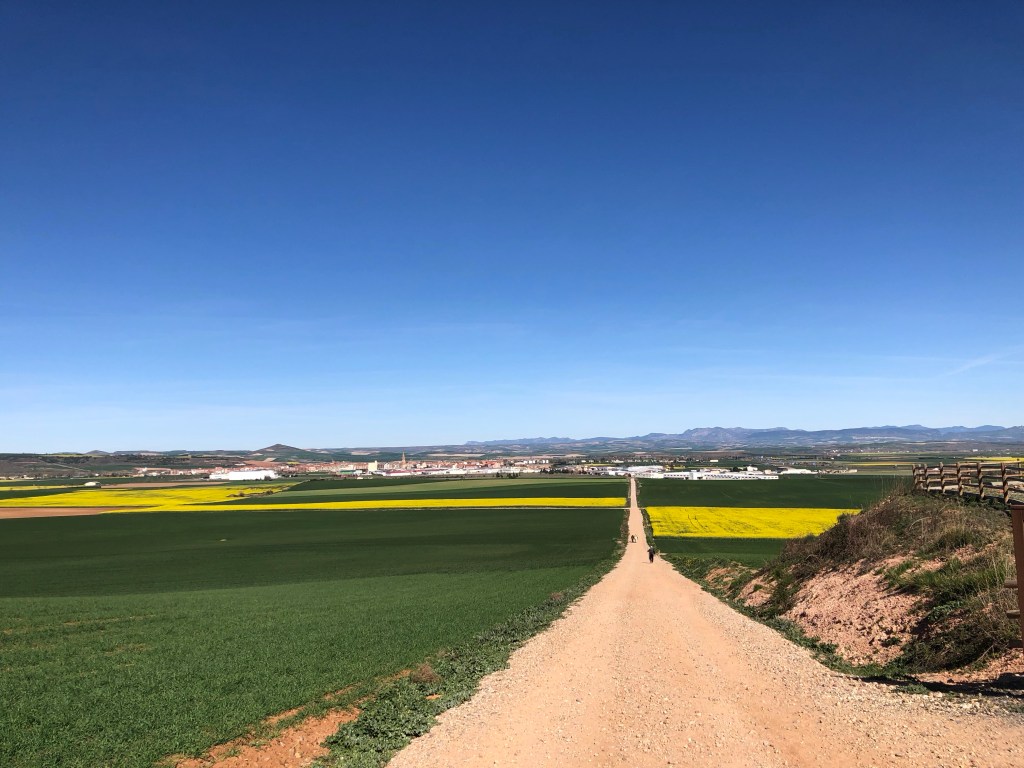
Then, before we knew it, the trees were at an end and there, stretching out before us, was the meseta. The prehistoric treasure trove of Atapuerca lay between us and Burgos, but far away in the blue beyond rose the mighty snow-capped peaks of the Cordillera Cantábrica, as impressive now as they ever have been. We came down into Agés shortly after half past two – well into the afternoon – and within another half hour we had all decided to take a siesta.

The other pilgrims have gone out for a beer. I needed a little longer to recover this time, and besides, I wanted to strike while the iron is hot with the blog rather than wait until later. With the last twenty-three kilometres of this stage of the Camino still to go tomorrow ending in Burgos, I don’t think I’ll see Enrique again. So I wanted to record my interview here before I forget.


You never know who you’ll meet on the Camino. Teachers, scholars and sailors, bereaved parents and happy families, policemen and anarchists, priests and atheists. Now, finally, I can add an arriero to that number. BB x
Camino IV: To Be a Pilgrim

After three to four days on the Camino de Santiago, you really do start to become well-acquainted with the faces of your particular clan – that is, those who are walking the same stages as you and, by extension, staying in most of the same albergues, too.

I’ve fallen in with a group of younger pilgrims ranging from eighteen to thirty-four, and rather than being an unsociable bastard and cannonballing my way toward my next stop, I decided to hang back and take the road with them today. The result? A more leisurely, more talkative Camino – and ultimately, more fulfilling. In some senses, quite literally!


While I didn’t manage to track down Enrique the muleteer today (though there were clear signs on the road that his horse and mule had gone on ahead but recently), I did track down the Professor (the Californian I met on day one), the Sailor (a Spanish/Australian globetrotter and his wife) and the Carabiniere, an outrageous but loveable Italian former policeman for whom the saying “the man, the myth, the legend” might well have been coined. And because I had company on the road, I was much more inclined to stop for food, which made today’s long, sun-scorched hike across the plains of Castile a lot more enjoyable.


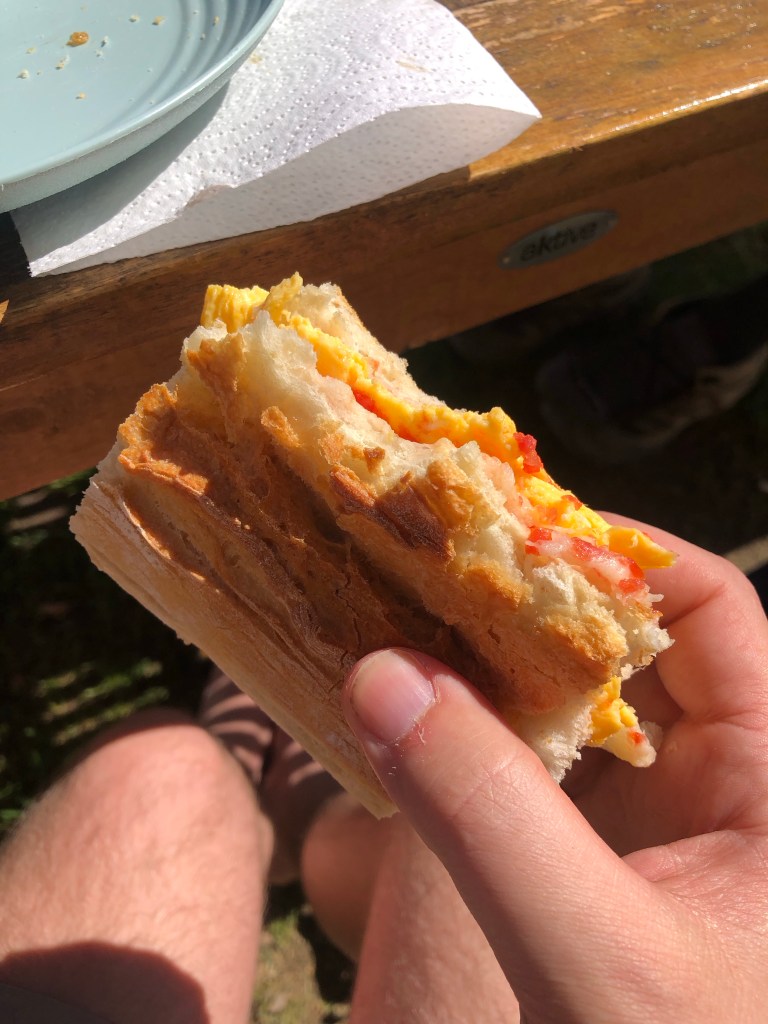
Top tip for pilgrims on this stage: just as you reach the village of Viloria de Rioja, the Parada de Viloria on your right as you hit the town is one of the friendliest places on the whole journey. They don’t have a menu peregrino, but rather the husband and wife who run the albergue cook up a simple lunch with a donations box on the side – you give what you can. The eggs, the bread and the tomatoes are all fresh and presumably their own produce, if not sourced from the farmers a few houses down the road. I had what was probably the best tortilla sandwich I’ve ever eaten in my life today. Hell, I’d do that stretch again for another bite.


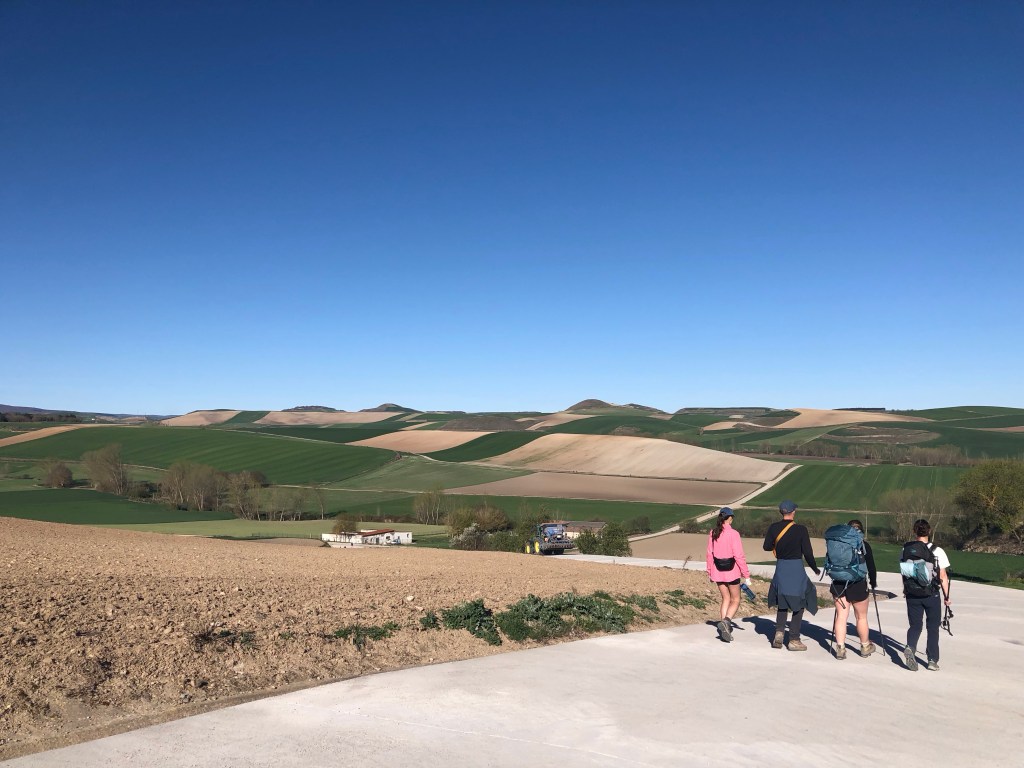
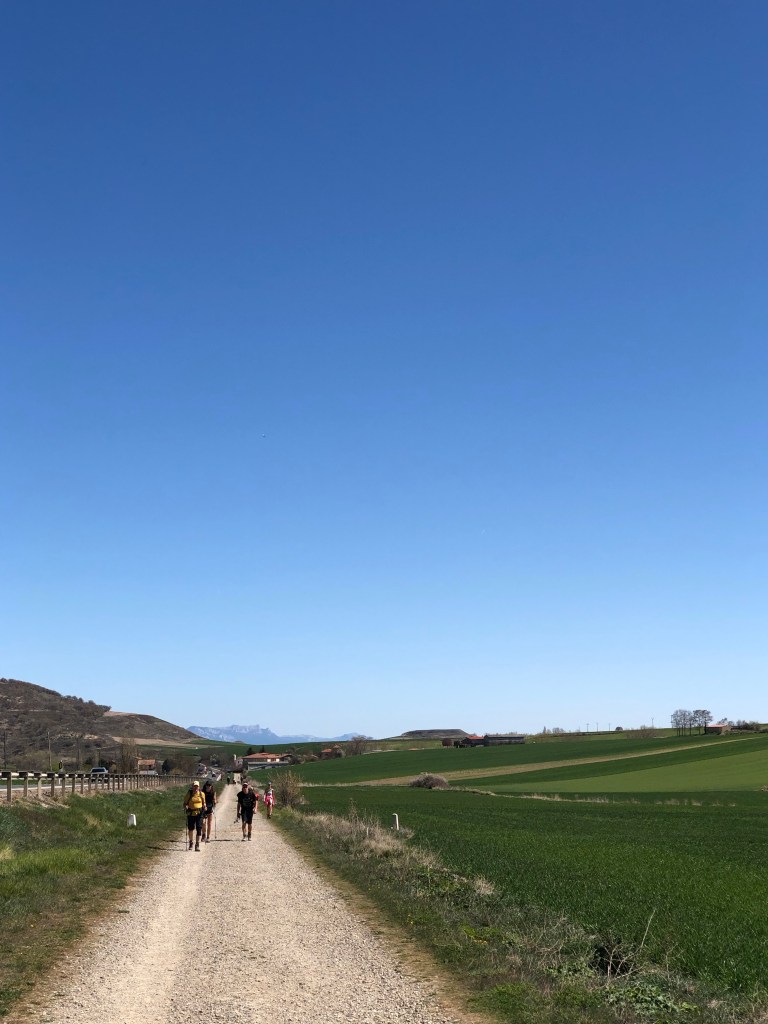
We left La Rioja behind today and started out upon what will become the Meseta Central. In a very real sense it already felt like we’d reached the middle stretch between Burgos and León – sun high overhead, the Camino cleaving close to the road, dust clouds and rolling wheat fields replacing former river valleys and distant mountain ranges. It’s stunning, but in a different way – a very Castilian kind of beautiful, austere and proud in its starkness.

Fortunately I had company to chew the fat with rather than lapse into the same clichés that other (and considerably better-versed) British travellers have used before me.


We arrived in Belorado shortly after two o’clock to find the town heaving with both pilgrims and locals – the festivities for Jueves Santo had just begun, and between that and the concentration of pilgrims in this small town, the albergue municipal was already fully booked. Luckily there were other options, and the place I ended up – Cuatro Cantones – could hardly have been a friendlier establishment. It even had a covered pool, which was a godsend after a twenty-three kilometre hike across the dusty plains.

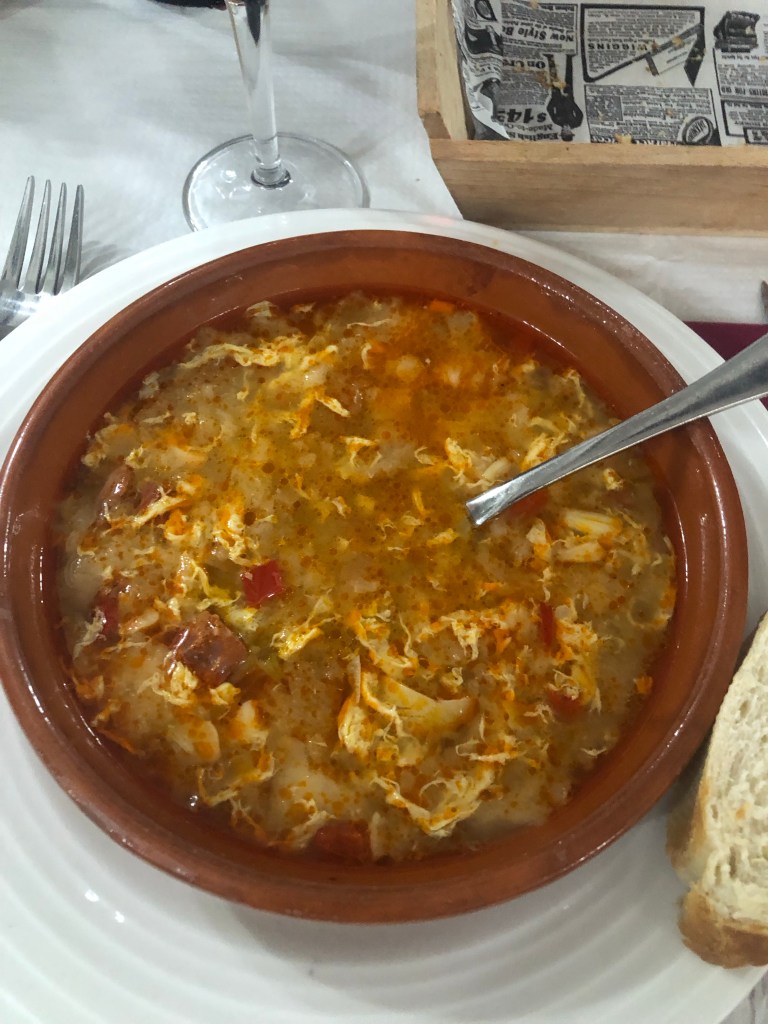
Sopa de Ajo – a personal favorite!

I’m now over halfway through the walking stage of this attempt at the Camino. In two nights it will be over: I will have reached Burgos, at which point I will take my leave of my companions as some move on and others return home while I stay and rest in the city of the Cid. I will be immensely appreciative of the break, but no more so than my feet, which are not used to this much walking – even from somebody who doesn’t drive!

Tomorrow, we either roll the dice on San Juan’s one pilgrim hostel or push on in search of pastures new. Luck be an albergue tonight, I guess. BB x

Camino III: Green Fields Forever

If this is a later blog post than usual, it’s because I’ve bought into the spirit of the Camino a bit more today and allowed myself to socialise with some of the other pilgrims – which often takes some doing for an introvert like me. Tonight’s digs are fantastic, though, and I’m writing from the genuine comfort of my dorm bed in Santo Domingo de La Calzada’s cofradía, one of the longest-serving albergues on the whole Camino.


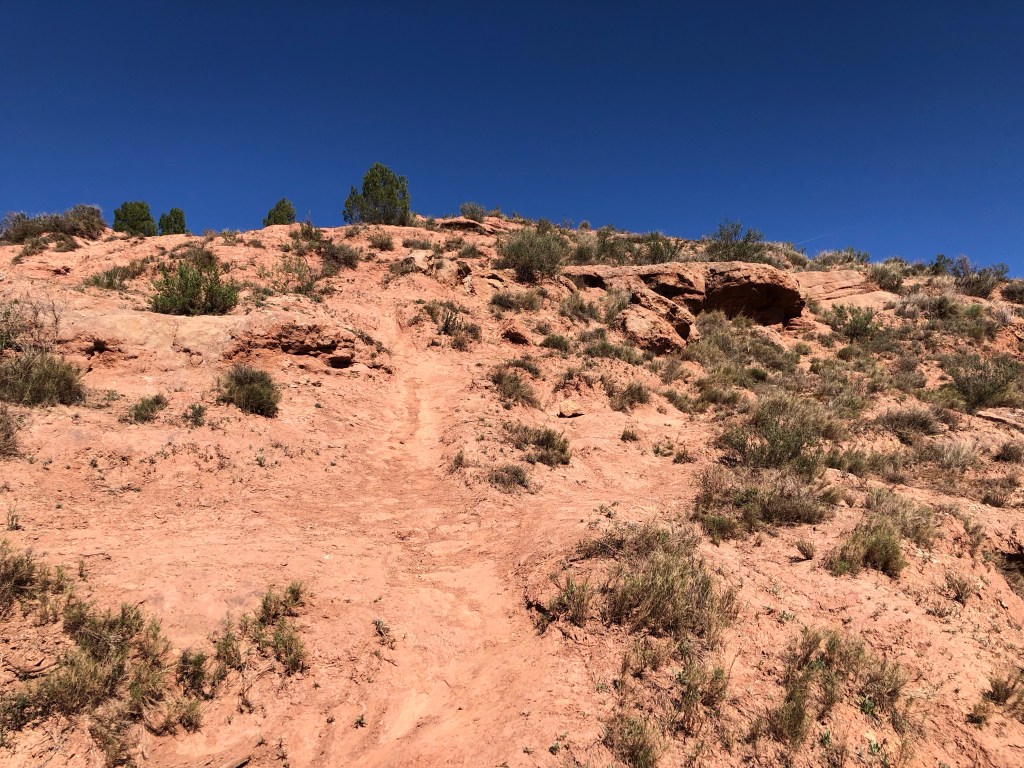
So first, a confession. After arriving in Nájera yesterday, I got itchy feet. The cliffs above the town were calling to me, and the voice telling me I’d already walked 30km that morning was drowned out by the other saying go on, do it, you’ll regret it if you don’t. The summit – a lonely bluff called Malpica – even had a cross at the top, which is essentially putting a hat on a hat. I had to climb it.


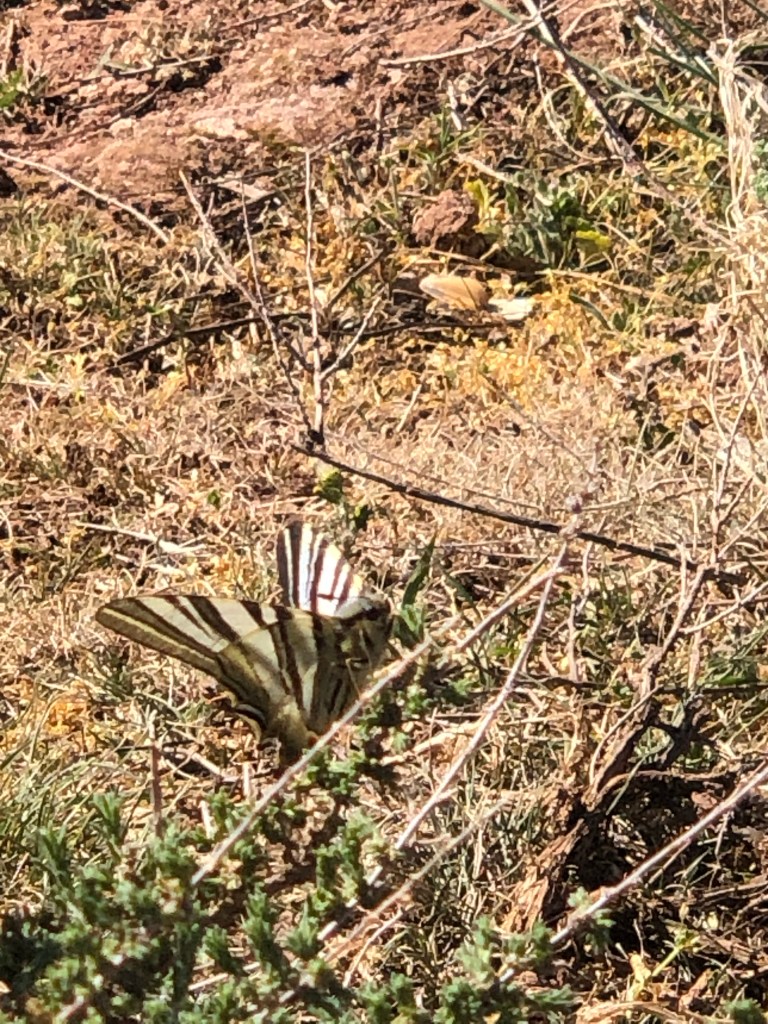
Oddly enough, nobody else was up there at half past four in the afternoon with temperatures pushing into the twenties. Which is just as well, because it turned out to be a hands-and-feet climb to the summit. Fortunately I’ve been doing that kind of thing since I was a kid, so I’m pretty handy with my feet. The view from the top of Malpica was breathtaking – moreso because I didn’t have an awful lot of breath left to take – but the real reward was the butterfly show. For whatever reason, a swarm had descended upon the clifftop, among them some of the most beautiful butterflies you can find in Europe: swallowtails. One or two of them – zebra swallowtails – were so large you could hear their wingbeats. The ‘blood dripping from their fangs’ kind, as my mother would put it. I was just happy to sit up at the top and watch them frolic for a while. It delayed the inevitable descent – again on hands and feet – for at least a short while.


I fully intended to wait for some of the other peregrinos this morning, but when 7 o’clock had come and gone, I came and went with it. I’m rather fussy about catching the sunrise on the Camino, and will happily sacrifice a sit-down breakfast for it. This morning, I’ll admit, I really should have dawdled, as it was biting cold out. It had been well below zero during the night and, with the sun still below the horizon, it was still -1°C when I set out. You notice these things quickly when you’ve only packed with heat in mind.


That being said, the Camino was busy. The Koreans had all set out well before sunrise. They’re turning out to be most of if not the only real pilgrims (in the religious sense) on the Camino, with the possible exception of the odd Brazilian. I’d hoped to explore some of the churches along the way, but they were all closed – a possible drawback to setting out so early – so I powered through the first fifteen kilometres alone, soaking up the silence of the green fields of La Rioja.

And what a silence! At the start of the day the birdsong was explosive, and I got quite used to listening out for certain motifs in certain places: the rasping call of a black redstart on tiled roofs, the drawn out wheeze of corn buntings on fence posts and the singsong warble of woodlarks in the vineyards. But at one point it suddenly all went quiet. No birdsong, no cars, not even the sound of distant chatter from other pilgrims on the road. I had to stop walking to listen, taking out the monotonous beat of my own two feet that’d I’d long since tuned out. It wasn’t eternal, but it was powerful while it lasted. I’d even say it will be a treasured Camino memory.


Just before Cirueña I fell into step alongside the only other English peregrino I’ve met thus far. It was good to share the road at last, and we swapped stories to the backdrop of the patchwork fields of La Rioja passing by.


Just shy of Santo Domingo itself, we caught up with a genuine arriero, making the Camino in riding boots and a high vis jacket, taking his mule Jena and a Connemara horse along with him. It was a fleeting encounter, cut off all too soon by our imminent arrival in Santa Domingo, and I hope I can catch up to him again – I must have a hundred questions or more from years of research on arrieros that only a real muleteer could answer. Wait for me, Enrique! BB x

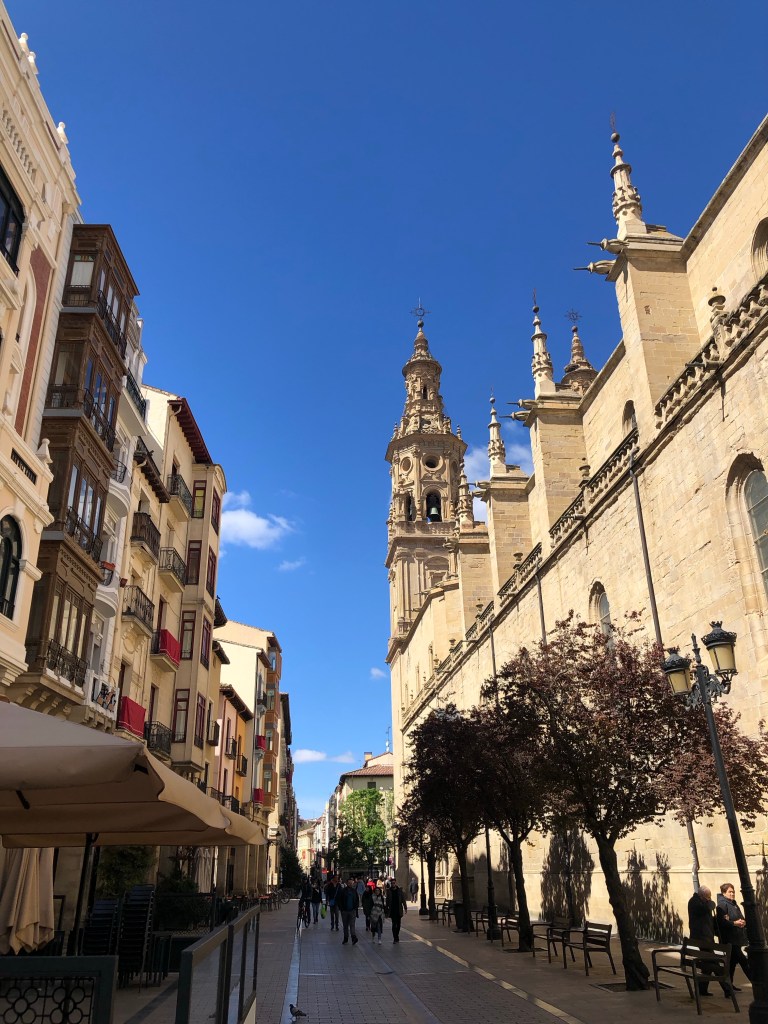
Camino II: Dawnbreaker

Holy Week got off to a flying start last night outside Logroño’s cathedral, Santa María de La Redonda. It isn’t always easy to tell which towns will have a serious procesión, but for the record, Logroño goes the distance. It looked as though all the brotherhoods were out in force last night, garbed in white, red, green, black and blue. Crucially for me, they also beat out the same halting drumbeat from my memories of Holy Week in the south. Not every town does it, but you’ll notice if they do: it’s the ever so slightly delayed drum roll during the march that, once you hear it, you can’t unhear. It’s the suspense of the last days of Jesus’ life, as his followers waited to see if he would save himself. At least, that’s one way of reading into it.

I had supper with a rather awkward American, the only other guest for dinner at the albergue. He wasn’t even staying there, but appeared to have wandered in looking for a menu peregrino (the cheap three-course fare offered to pilgrims on the Camino). He had his reservations about how sociable people are on the Camino and pined for the quieter stretches, and from his less than satisfied reaction to the ‘vegetarian option’ he’d asked for, I couldn’t help wondering what he was doing out here. He was quick to want to fact check my anecdote about his home state of California being one of the only places in the world named for a fictional location (it takes its name from the mythical island in Montalvo’s 16th-century chivalric novel, Las sergas de Esplandián) but I won’t begrudge him for it. After Trump and the fake news boom, who’d trust anyone?


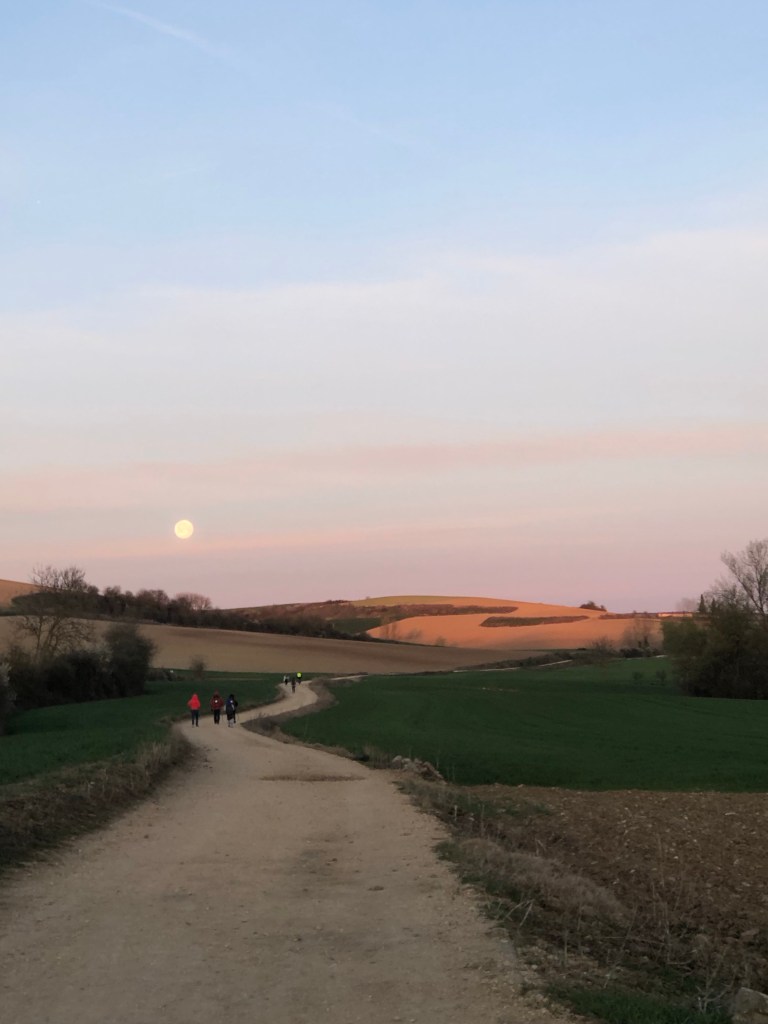
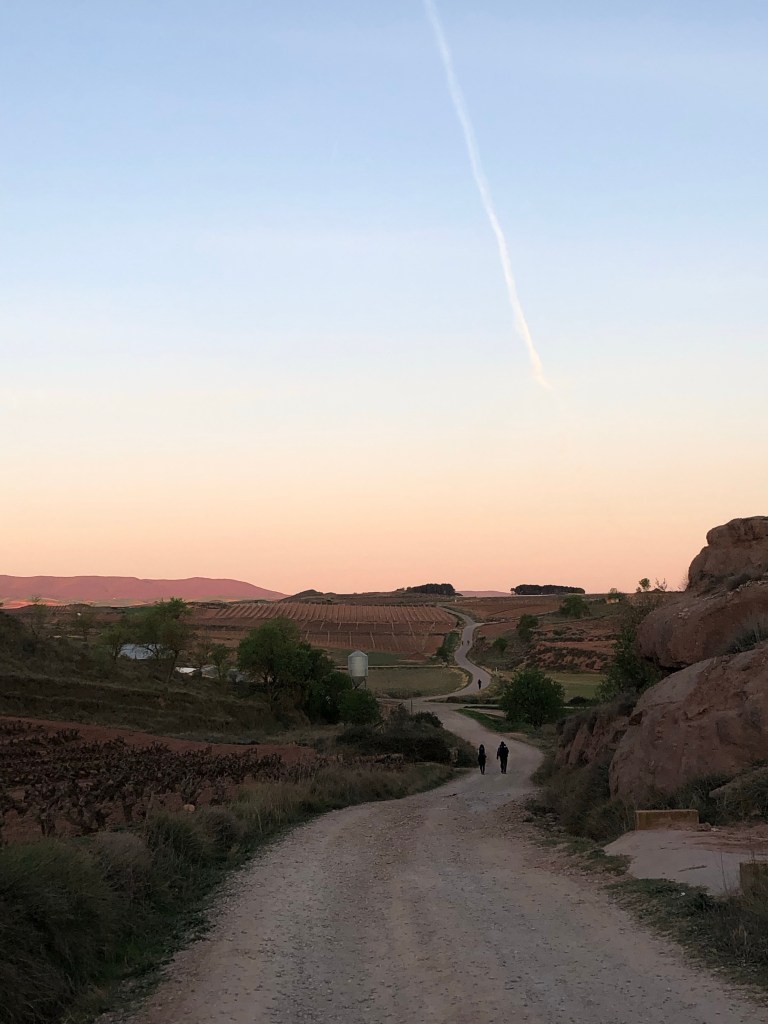
I was definitely one of the first out of town this morning. Though I passed some pilgrims on the road a few hours in, from the speed at which they were walking I suspect they’d been lodging one or two towns ahead. As a result, I had pretty much the whole 30km hike to Nájera to myself – including the first hour and a half before sunrise, which is always one of the most magical times to walk the Camino.

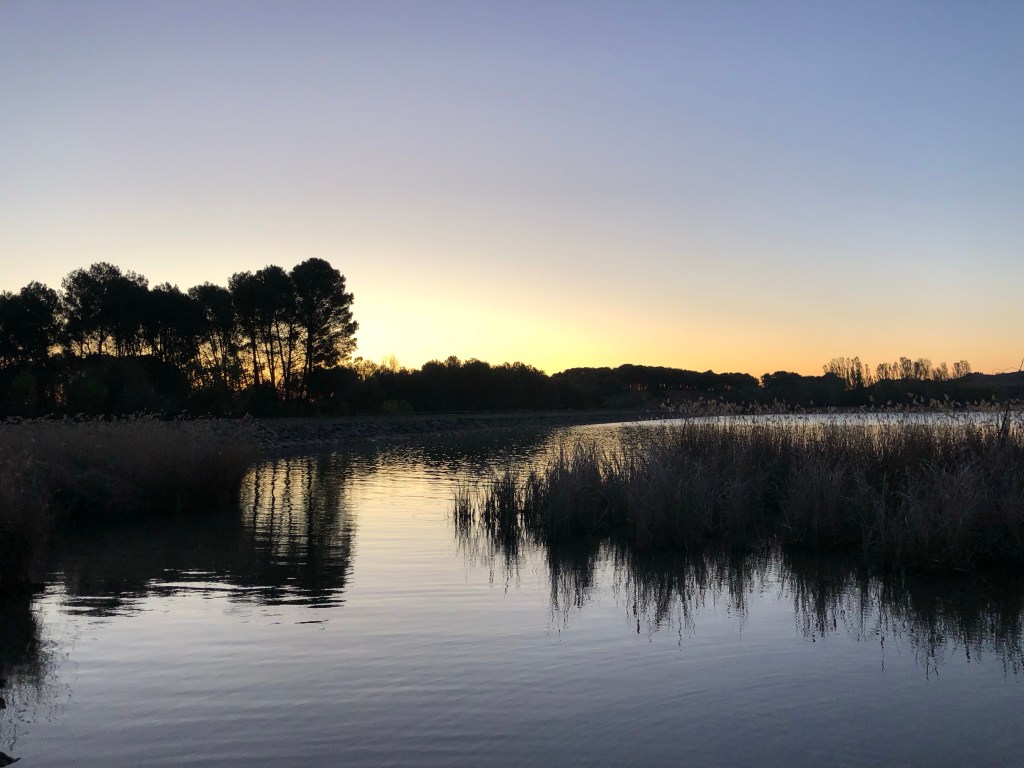
Approaching the Laguna de Grajera from the east, I counted about six or seven night herons flying in from their roost somewhere beyond Logroño. You can just about make out the silhouette of one of them in the photo above, as dawn was starting to break. There were rabbits everywhere – more than I’ve ever seen in this country – and the morning sky was alive with the songs of blackbirds and larks. I could have waited for company at any point, but I do love to have that part of the day to myself. Self indulgent, perhaps, but worth indulging all the same.
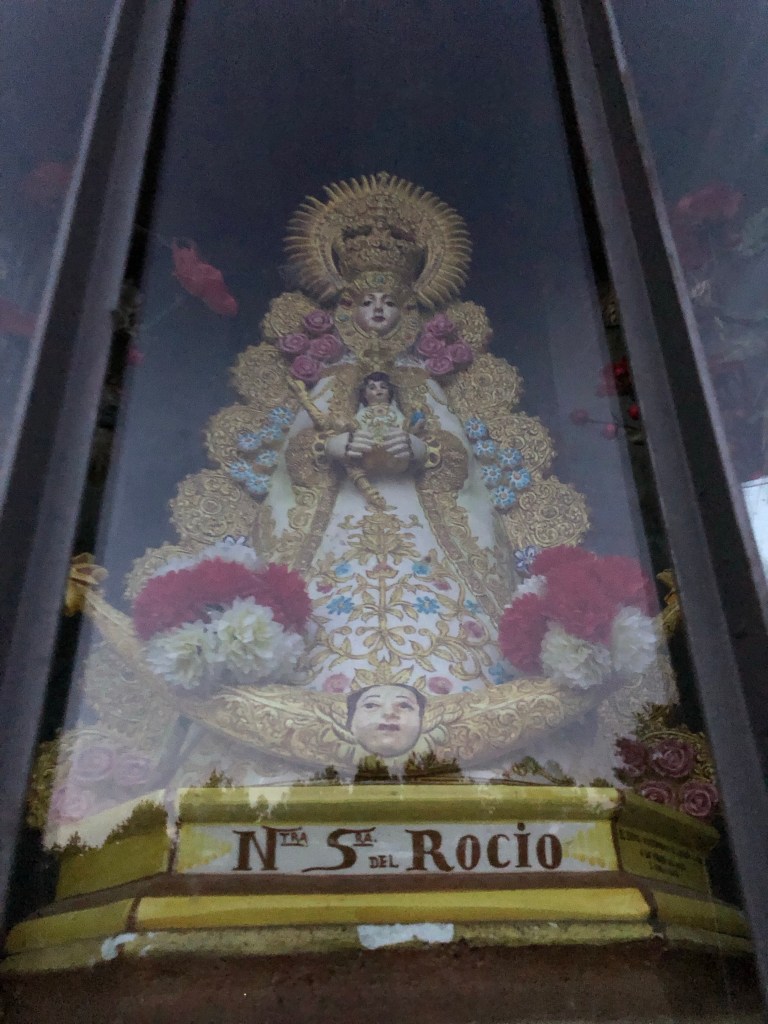
There was even an icon of Nuestra Señora del Rocío on the lakeside. Whether or not I sang her into existence through various repetitions of Las llanuras ardientes and El Rocío es un milagro as I was walking is conjecture. It felt special to find her here, so far from her usual haunt in the marismas down south.

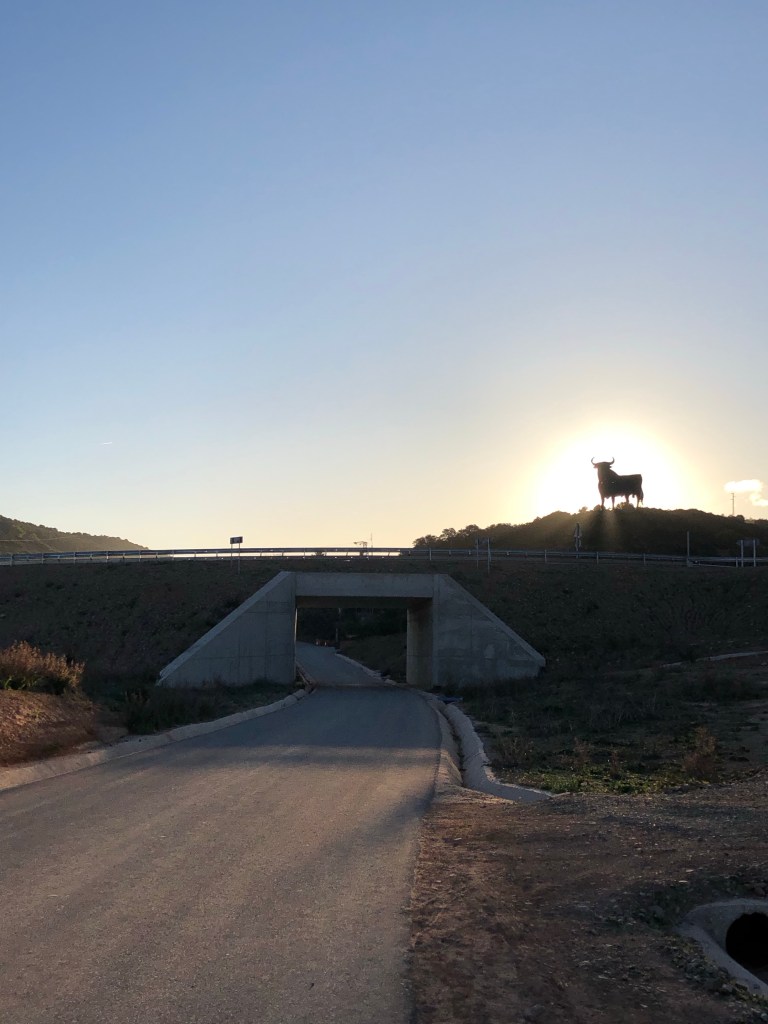
Now, while I needn’t have set off quite so early (the 8 hours in the guidebook is a joke, the trek is at the very most 6h30 with a stop for lunch) I did have my reasons, and one was to catch a very specific angle of the sunrise at just the right moment.

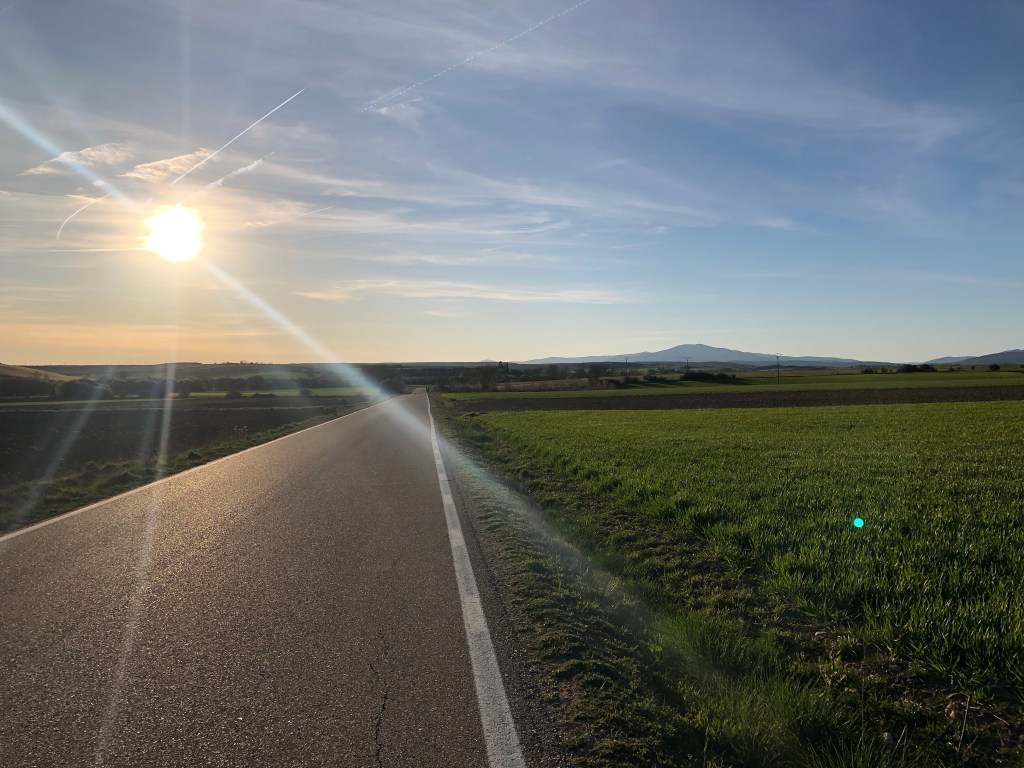
At the brow of a hill to the west of the laguna stands one of the famous Osborne bulls for which Spain is so famous. By the time I got clear of it – at around 8.20am – the sun was almost exactly behind it. I could not have timed it better. Point and shoot!

The rest of the walk was pretty straightforward. The ruins of the old pilgrims’ hospice at San Juan de Acre were picturesque and the Camino itself, though it cleaved close to the road on occasion, was quiet and easy underfoot. I let a couple of Dutch pilgrims overtake and continued to have the road to myself. The Sierra de Cebollera remained cloudbound for most of the walk, and I kept my hoodie on until I reached Nájera – it simply wasn’t hot enough to justify fewer layers, and that’s not bad thing!

Navarrete was stunning – easily one of my favourite stations on the Camino so far. The church is a classic Spanish affair: pokey and generic on the outside, and an immense explosion of heavenly gold within. I lit a candle for abuelo, left a story in the visitor’s book, sang through Thomas Morley’s Nolo mortem peccatoris (since there was nobody there) and moved on.

From Navarrete, the final stretch rolled across the hills before sloping down toward the cliff face of Nájera. Legend has it the French hero Roland fought a Syrian giant on one of these hills in a single combat that went on for days, but I was happy enough to see the familiar silhouette of the giants of my childhood: griffon vultures, circling high above the meseta in the distance. I didn’t keep a tally, but there were raptors everywhere today. Kestrels and kites – both black and red – and buzzards and booted eagles, these last in both white and brown. Since it’s still early enough in the season, some of them were displaying still, climbing high and then plummeting down in a sharp V with wings tucked in. Between that and the flute-song of woodlarks that followed me for the last hour before Nájera, I have been in seventh heaven all morning. Oh Camino, I have missed you!

The Albergue Municipal is filling up. Maybe I’ll meet some of these people later. But for now, I’ve done my write-up for the day and I could use a little shut-eye before I seek further adventures in Nájera this evening. Until the next time, folks. BB x

Camino I: Plus Ultra

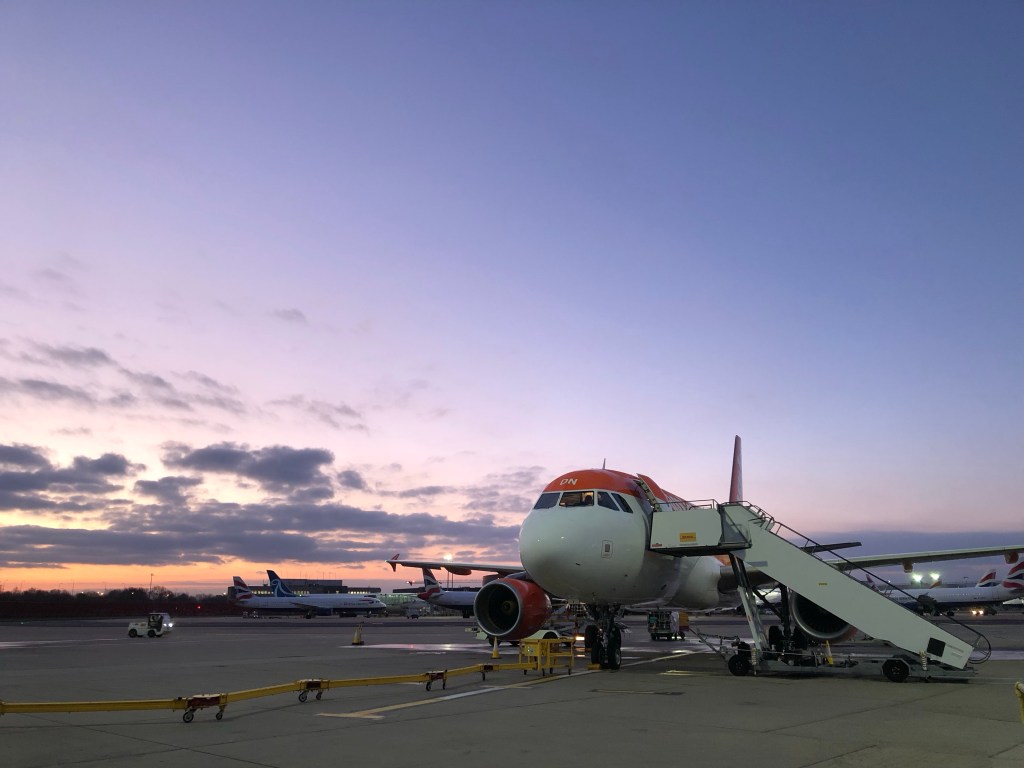
6.15am, Gatwick North Terminal

I left over an hour and a half to make my flight this morning, but I could easily have done it in less. Even with the extras (a few more items of clothing than originally planned in case of inclement weather), I’m traveling lighter than ever. Who’d have the fuss of a suitcase when the open road is so inviting?

I think I must have raced to the gate in my eagerness. It was almost deserted for some time when I got here. Only two or three others joined me in my vigil: a Spanish girl chaperoned by her mother, a Greek/English couple (yes, I googled the man’s passport symbol – call me a nosy Parker but the square cross had me stumped) and a woman who from her accent could only be Basque: one side of her head shaved, brow furrowed, a black hoodie emblazoned with the slogan ‘DESIGNED BY AN IMMIGRANT’ in block white capitals.

No tannoy for this flight – the attendant called out Bilbao almost as quietly as I did trying to call a student over in the canteen last week for his poor choice of language. She only changed her tune to ‘Speedy Boarding Only’ when the first six or seven of us were clear. Sometimes, just occasionally, it pays to arrive ahead of schedule.


10.18am, Bilbao Intermodal Bus Station

I’ll say this much for Bilbao Airport: it’s a lot less hassle than Gatwick. All in all I don’t think it took much more than fifteen minutes between touchdown and the shuttle bus.

As I thought, the skies over Bilbao when we landed were clouded, grey and low. They always have been on my visits to this corner of Spain, to the extent that clouds and the Basque Country are virtually inseparable in my mind. The Spanish author Miguel Delibes once said that the sky over Castile is so high because the castellanos themselves put it there from staring at it so much. While my kith and kin chase the coy heavens plus ultra, always in search of the new, the ever practical Basques bring the skies down to their level, coveting the Viscayan rain and wrapping their dark forests in mist and cloud. I don’t expect to be free of that shroud until we reach the frontier.


11.56am, near Pobes

I’m now racing south on the Bilbao-Logroño bus, basking in the intermittent glow of the Spanish sun. Craters of blue have started to appear in the sky as though punched through by some celestial artillery, and still the Basque line of defence holds.

Here below, the landscape is changing. The military ranks of pines encamped around Bilbao suddenly give way to a gentle blanket of beech trees. Patches of brilliant green herald the coming of spring to these hills, and limestone crags scar the mountains like bones – first in uniform grey, then bleached with that warm golden stain that is so evocative of Spain’s highlands.

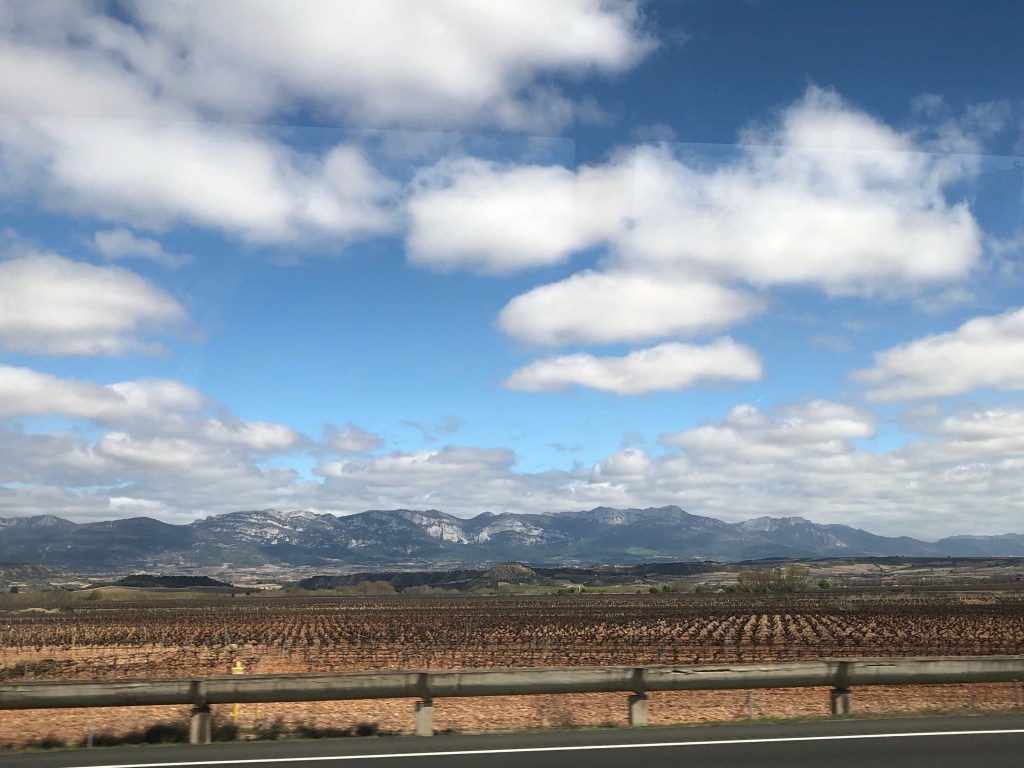
And then, suddenly, the dark hills of the Basque Country fall away and the plains of Castile are all around me: a forgivingly flat golden country, nestled between the high crags north of Haro and the snowbound peaks of the Sierra de Cebollera to the south. Castles and monasteries dating back to the time of a real frontier sit atop the hills and knolls like childish imitations of the limestone cliffs behind, the handiwork of the greatest craftsman of all.

And there, racing over the fields near an Alcampo petrol station, is my first swallow of the year. It’s only a fleeting glimpse as the bus races on past a bodega and a Lidl in quick succession, but it’s enough to make my heart soar – higher still than those Castilian skies.

I’m drunk on all this scenery, in case that wasn’t obvious (the overblown choice of a frontier semantic field was probably a dead giveaway). Rehab is the usual cure. However – to keep in line with this post’s choice of imagery – sod that for a game of soldiers. I have a week and more to wander around my grandfather’s country once again. I can’t think of a better rehab than this.


5.27pm, Albergue Santiago Apostol, Logroño

Logroño is climbing back out of its siesta. I’ve spent the afternoon here and there, though perhaps more here than there. Here being the Albergue Santiago Apostol, the same place I stayed when I last did the Camino four years ago. The only thing that seems to have changed is the stamp for my pilgrim’s passport. That, and I’ve come alone this time.

The albergue is quiet. I’ve only crossed paths with a handful of other pilgrims: Joan i Laura, a couple of peregrinos from Girona, a French family of three and a German family of four. I expected the Camino to be busier during Semana Santa, but I guess if you have a week’s holiday you’d do the stretch that can be done in a week or less – that is, the last 100km from Sarria. Out here in La Rioja, it’s likely to be rather quiet.

That will make for a rather soul-searching experience, which is no bad thing!

I’ve gone for dinner and breakfast at the albergue, 1) to make sure I actually eat and eat well and 2) to meet some of the other pilgrims ahead of the 31km stretch tomorrow. And also 3) because, at 16€ for dinner and breakfast, it’s a steal. I hadn’t forgotten how affordable the Camino is, but it is nice to rediscover, as it were.

I ate my lunch (chorizo and queso curado in a fresh barra de pan) under a beech tree on the bank of the Ebro river. Spring may be slow in coming to England but she’s been here a while already. The beak-clicking display of the local storks can be heard every so often, even from the albergue, though a drumming woodpecker in the park was giving them a run for their money.

English and Spanish birdsong combined on the riverbank. Blackcaps, wrens and blackbirds supported a local chorus of serins, short-toed treecreepers and wrynecks. I don’t think I’ve seen (or heard) a wryneck since my first stint in Villafranca back in 2015, but I hadn’t forgotten its call. After scanning the branches for a minute or so I tracked it down to a lightning tree just a few metres from where I was sitting. They really do look bizarre, the way they move about mechanically, looking for all the world like the clockwork nightingale from Hans Christian Andersen’s fairy tale. The wryneck kept me company for most of my lunch and only took off when a dog walker came by, carrying an African grey parrot on his arm.

I’ll try to catch the first of the procesiones tonight. ‘It’s only Monday,’ said the hostalero at the desk, alluding to the fact that the pinnacle of Semana Santa is toward the end of the week. Even so, my pride as a Spanish teacher is at stake (I have just been teaching the topic to my Year 10s) and besides, I’m a fanatic for the pasos. You can blame my year in Andalucía for that. I’ll also see if I can’t locate the local legend of the Bookseller of Logroño that fellow English traveler George Borrow recounted in his book on the Gypsies of Spain, published a little under two hundred years ago – because what’s an adventure without a quest of some description? BB x