Yesterday was International Women’s Day. If you hadn’t noticed, you probably have a much healthier relationship with your devices than I do. Being naturally cautious when it comes to writing about trending topics – and keeping a wary eye on the growing stack of marking on my desk – I wasn’t originally going to write anything on the matter. In previous years I might have jumped on the bandwagon and sang the praises of women from history who I find inspirational, but that muse didn’t find me today.
It only occurred to me after a couple of hours’ highly productive procrastination on the novel last night that there’s one woman who I’ve been writing about since I first got bit by the writing bug, now twenty years ago. A divisive woman who has been at times a distraction, at others a channel for my doubts, but always a polestar, burning bright, night after night, though the other stars around her blink in and out of the darkness.
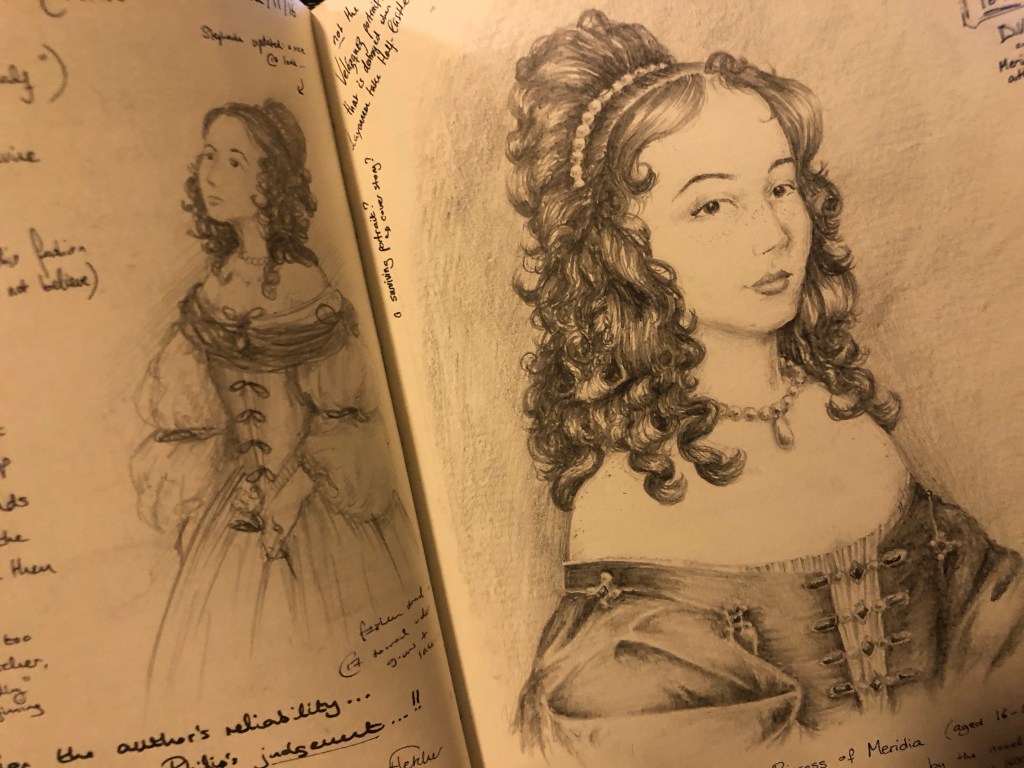
This is Leonor. And this her story.
I’ll be twenty-eight this summer. For no less than twenty of those years, the red-haired princess has been living rent-free inside my head. Whether she was inspired by a childhood friend, the Little Mermaid or a double-page cartoon from an Art Attack! magazine, I don’t suppose I’ll ever be certain. Like as not, she sprung into being as a combination of the three. One thing I know for sure: of all the cast and characters of the books I’ve spent the greater part of my life writing, she’s been the one constant. The world has shifted beneath her feet several times, sometimes drastically, but she has weathered every storm, survived every crush unaltered and resisted every rewrite. When I brought the book over to Spain a few years ago, she was the final frontier, the last character to trade in her name for a nombre.
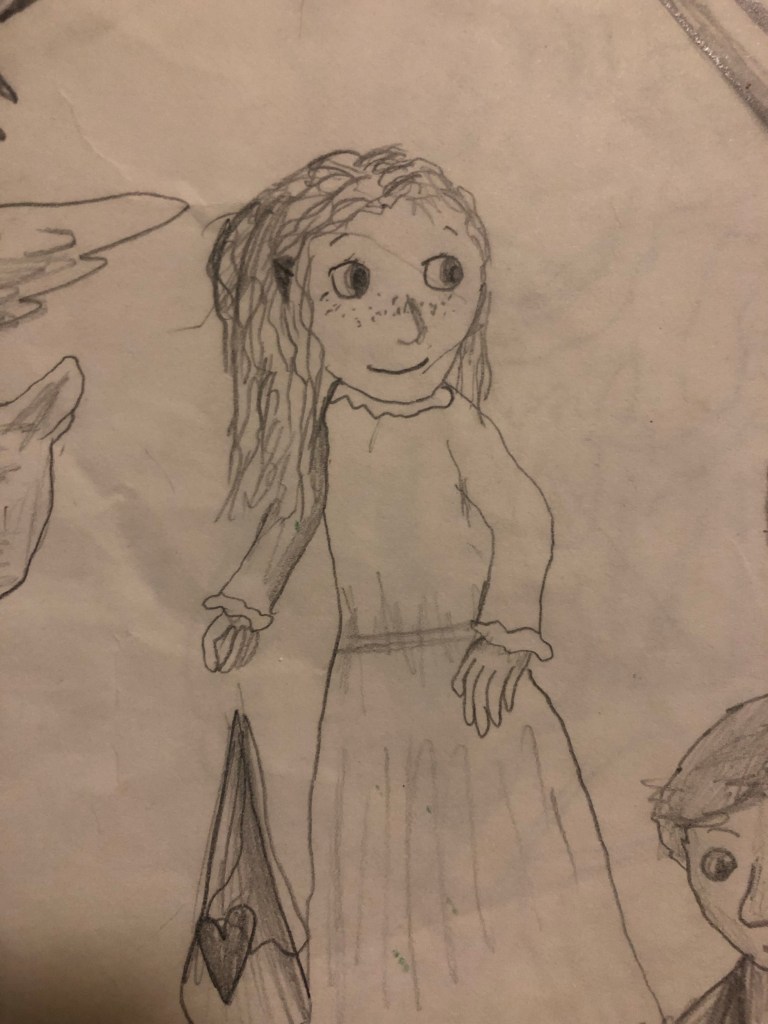
Without giving too much away, I’ll introduce you. Leonor is one of the two central characters in the story, though arguably it’s her story that’s the one being told. The princess of Meridia, she’s playful, sharp-witted and short-tempered, with a sense of duty almost equal to her stubbornness and pride. Descended from two legendary heroes from our own timeline, she is catapulted into the role of Queen by a series of tragic events and, amid the fires of war and personal tragedy, she becomes one of the greatest rulers Meridia has ever known, captaining the sinking ship of her doomed kingdom to its final hour.
She’s an avatar of hope and a rallying flag in human form for her people. And yes, I’m sure I play into the “fiery impetuous redhead” stereotype more than once.
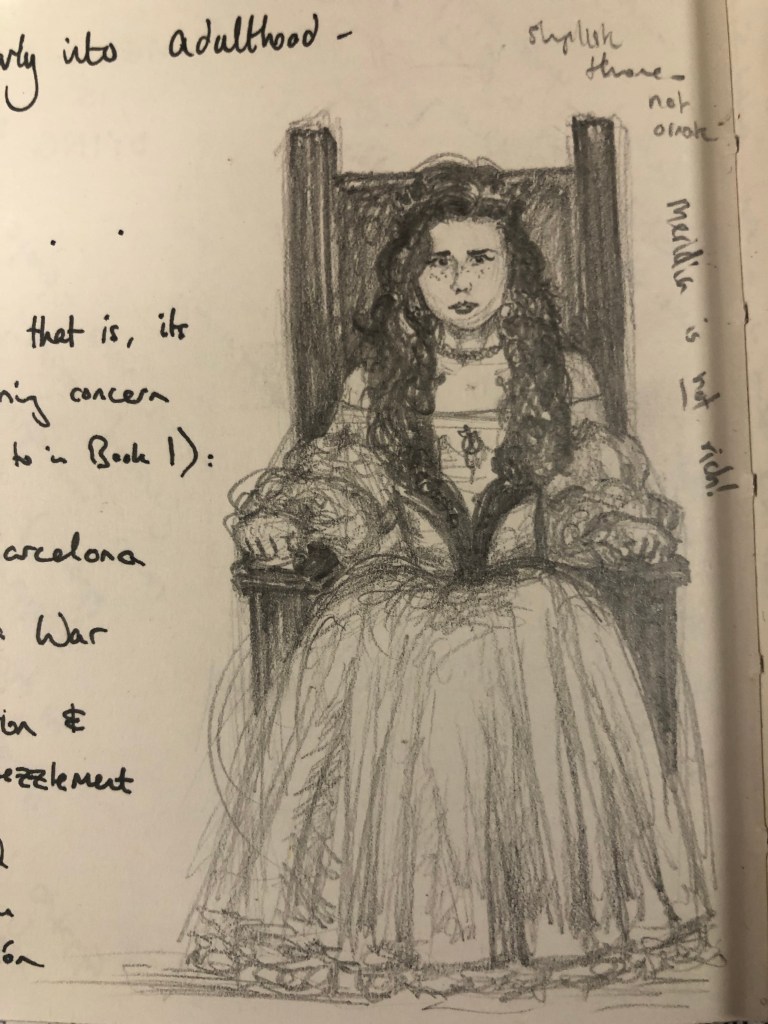
In the saga’s early days, when the concept was still very much a fantasy/sci-fi adventure, I had her imbued with magical powers. These days her greatest power is her charisma: in a saga filled with reluctant rulers, ambitious bureaucrats and silver-tongued servants, Leonor comes into her own as a woman who stands her ground in a man’s world: adored by her subjects, respected by her contemporaries and feared by her enemies. It’s no surprise that in recent years I’ve looked to two other fierce red-headed rulers to bolster her character: Boudicca of the Iceni and Elizabeth I of England.
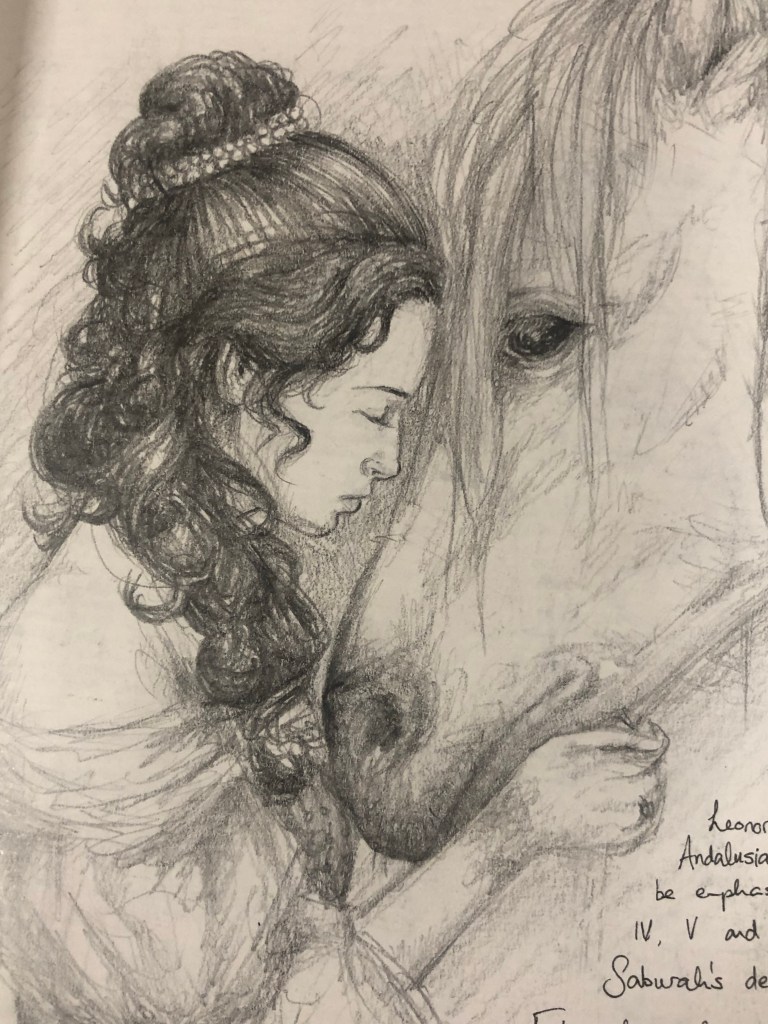
Now here’s the question. Am I in love with my own creation?
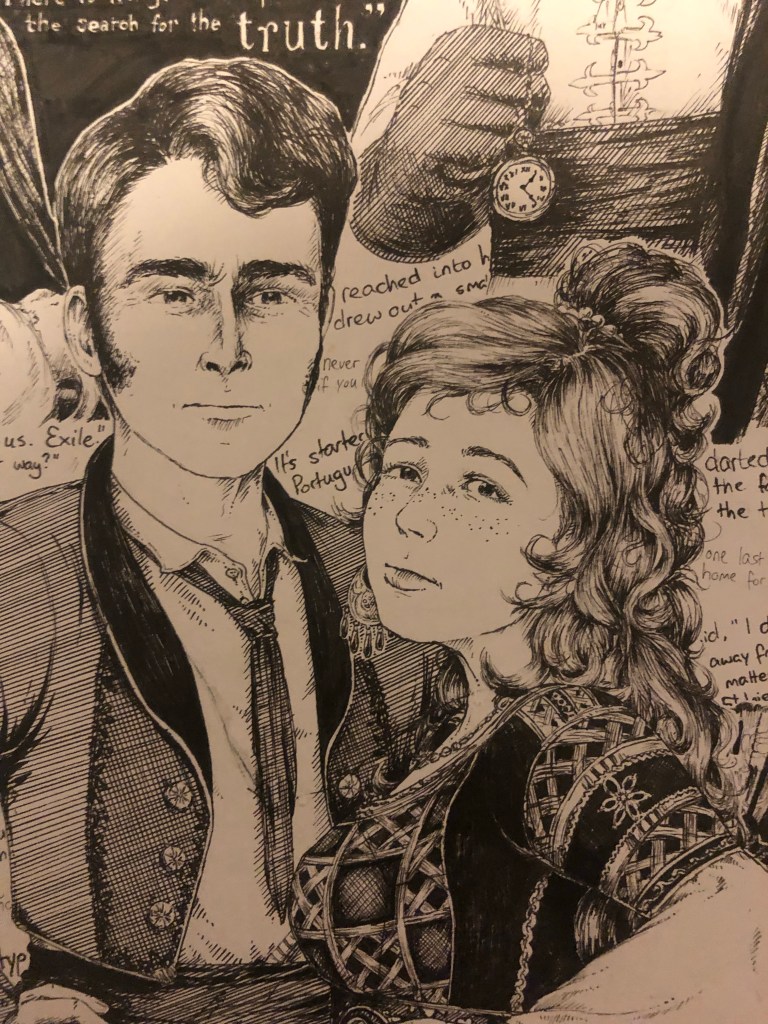
Of course not. For one thing, I wouldn’t dream of playing the third wheel to my hero! But you’d be surprised how much of a flashpoint it’s been in the past. Two previous girlfriends have challenged me about my attachment to her. Try to put yourself in their shoes. I suppose it’s not all that different to inviting a partner over, only for them to discover objects left behind by a former lover. As I’ve tried to explain before, if you want to get jealous about one of my characters, you might as well take it out on the rest of the cast – I have no less love for my other creations.
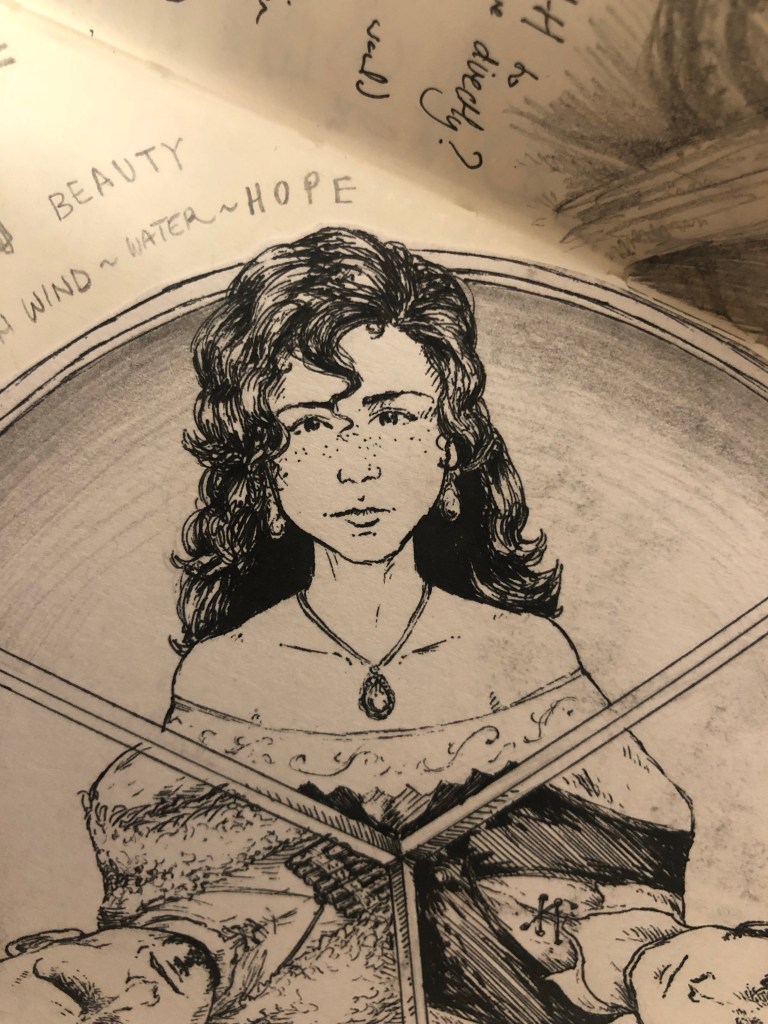
And yet the fact remains that, by the age of twenty-eight, I’ve had a longer and arguably closer relationship with my central characters – Leonor included – than I have with anybody I know, outside of my family. I wonder whether that’s why I’ve always been so comfortable with my own company. It’s easy to handle solitude when you’re never really on your own.
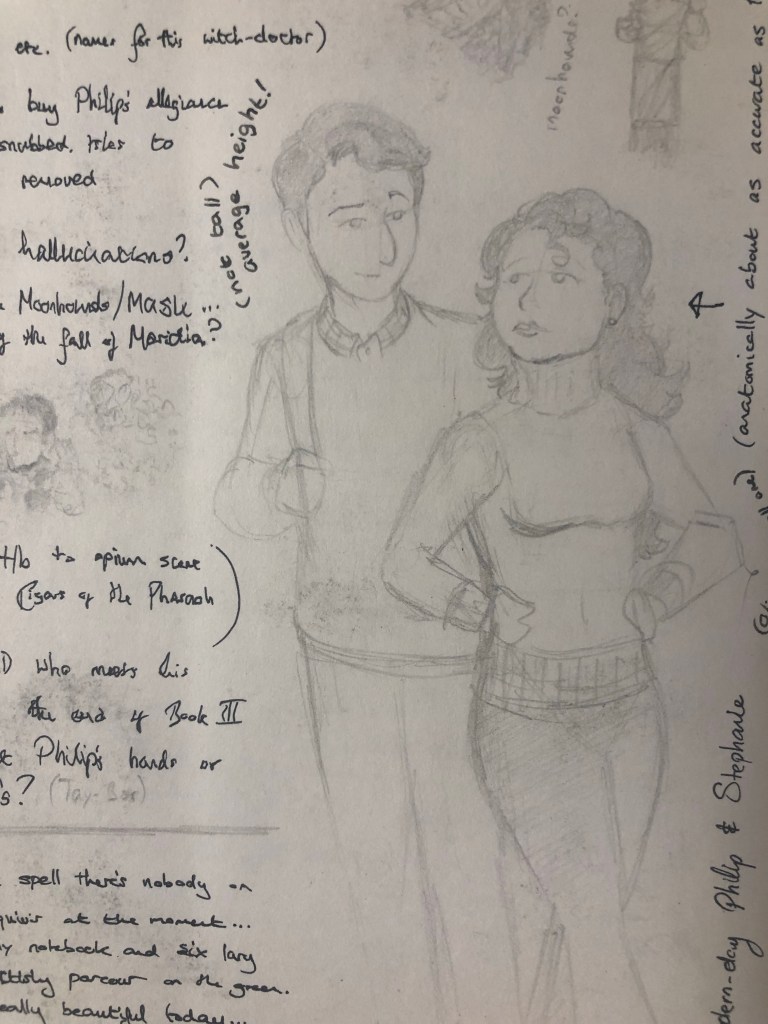
She’s not my idealised woman by any stretch of the imagination, though it’s possibly due to my long connection to her that I’ve always had a weakness for dark eyes and red hair. She’s no imaginary friend, anymore than Desalma is a shadow that haunts my dreams. I neither love the women I conjure out of the air, nor do I fear the monsters I create. She is a figment of my imagination, and though she’s found her way into journals, homework diaries, used envelopes and maths book margins over the years, if I were to disappear one day, so would she. Perhaps that’s why I’ve never stopped trying to tell her story.

Do you know what I’d like? If I should be lucky enough to have a daughter of my own one day, I’d love to tell them her story. To bring them up to tales of her courage, her unflinching hope in the face of overwhelming odds. To show them that, though she wasn’t perfect, though her pride got her into trouble, she kept on fighting for what she believed in.
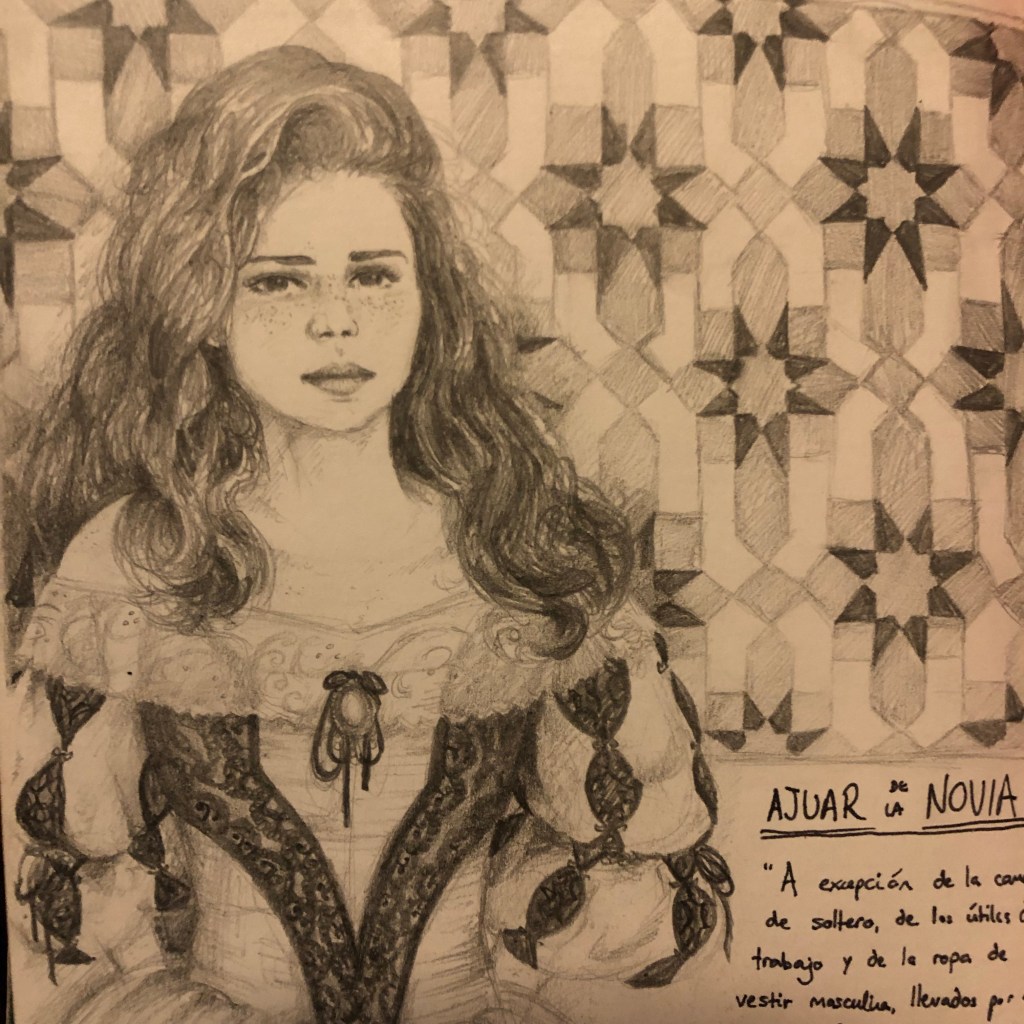
She’s not my Galatea, but she is my muse, my inspiration, and her story needs to be told. That’s why I write. That’s why I’ve always written. After all, it’s hard to say no to a princess. BB x
 The Book of Barnabas