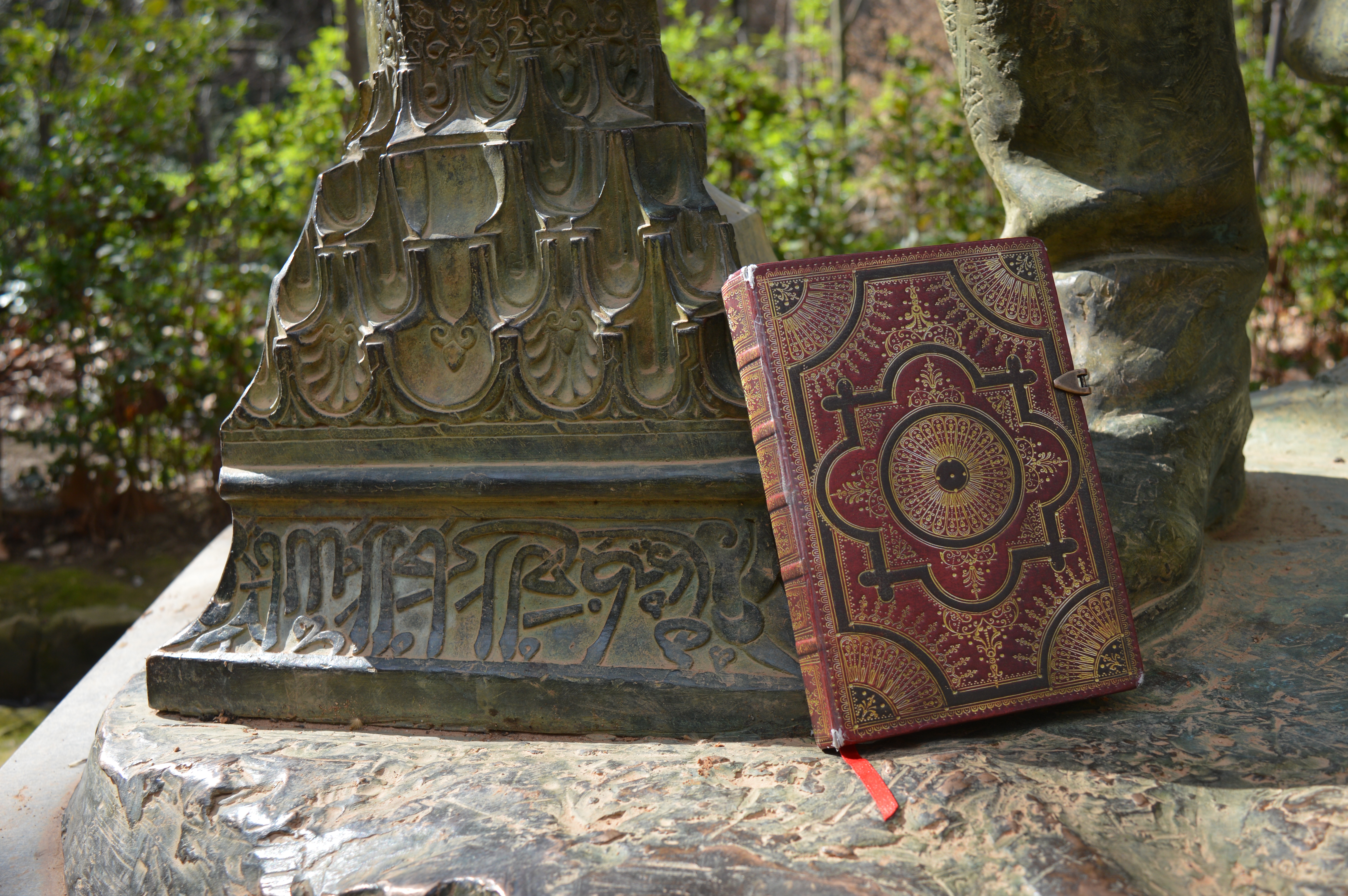
Let me tell you something for free: full-time employment is a writer’s bane. You knew that already, so neither of us lost anything in that transaction. Except me, and the ever-increasing gaps between the dates in my journal.
I spent so much of this weekend powering through marking after a week of KS3 assessments that it only occurred to me as I filed my Year 9 papers away that last weekend was the first time I’d given my novel some serious thought in a year and a half. Since you can chalk that “blip” up to the first lockdown, it’s probably safe to say the last time I made any real headway with my book was before I took up a post in a boarding school back here in the UK. That is to say, back when I was living in Extremadura, now almost four years ago. If it weren’t for the fact that I still carry a journal around with me, I’d have made no progress in that time whatsoever.
But since I’m more of a glass-half-full kind of guy, I’m going to focus less on the killing instinct of working life and more on the magic of keeping a journal. Because, as always, there’s a story behind it – and in my case, it’s a lot more personal than I ever knew.
I’ve written reasonably extensively about my journalling habit before, but in case you missed it, click here for an earlier piece on one of my favourite journals, the Red Book.
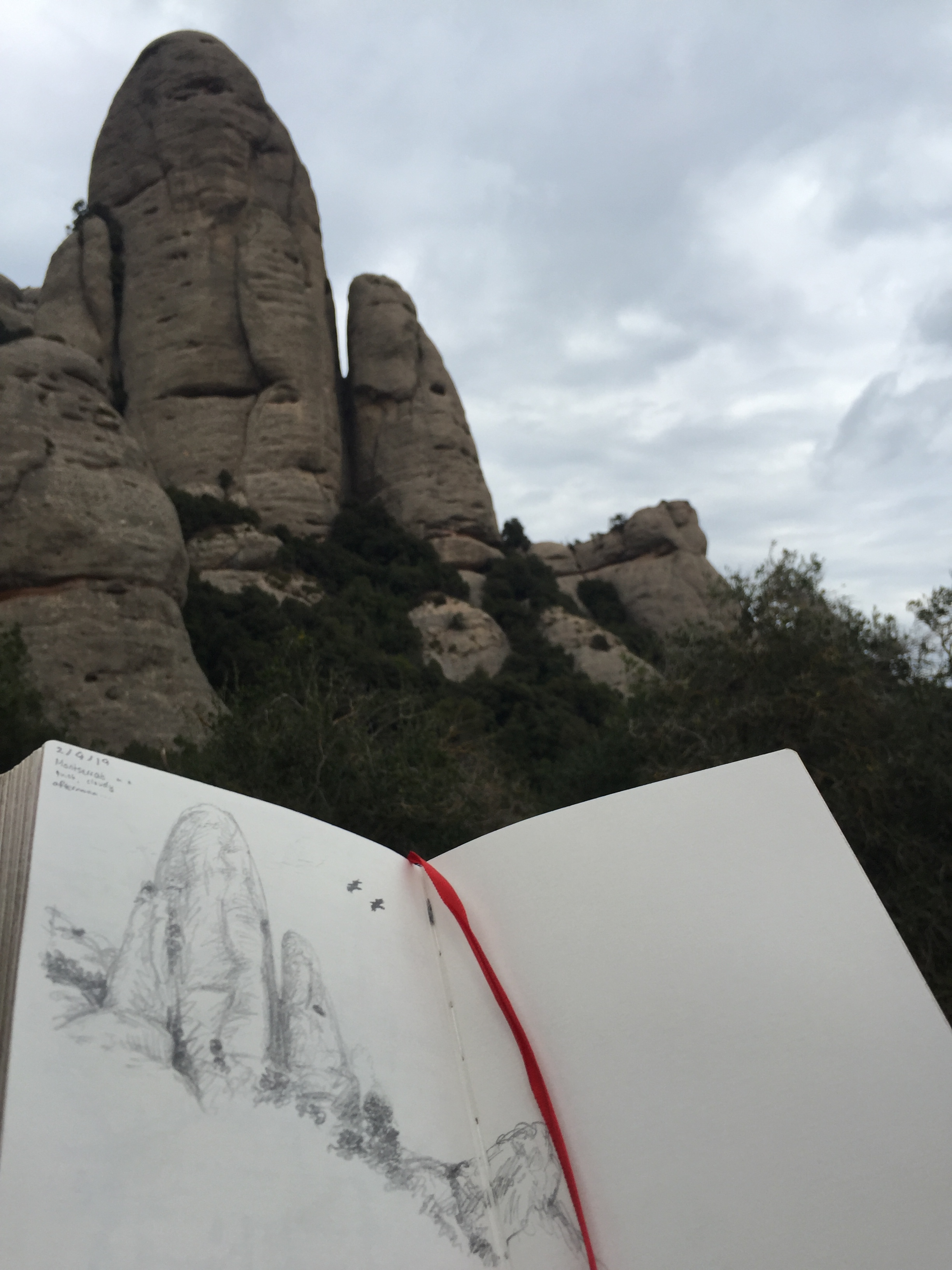
I don’t think I’ve ever been without a sketchbook of sorts. Going back to my parents’ place for Christmas turned up quite a few of my oldest surviving books, dog-eared, half-filled and almost all of them featuring the same cast of characters that share a space in my head and my heart to this day. Studying Art for GCSE and A Level naturally fed the habit, though I seem to remember having separate sketchbooks for school and for myself right the way through. I suppose I should reach out to a couple of early inspirations here: to Mr Howe, for his no-holds-barred approach to sketchbook work (“unfinished pieces are often more interesting than finished pieces” has stuck with me); to my old friend Freddie, whose handwriting I secretly admired and have long since adapted into my own; and, of course, to my own mother, who must have kept several journals of her own when she was younger.
These first attempts were more art than word, though. It wasn’t until my eighteenth year that I took the craft of journalling more seriously, riding off the back of having successfully kept a diary for a little over a whole year – to date, the longest successful writing streak in my life. With many long months to go until the first day of my degree, I picked up a small flip-journal from Waterstones and penned some thoughts. At first, it was just lists: locations in my novel, possible pen names, key elements for fantasy fiction. On the second page I branched out and jotted down some facts that I found interesting, for a change of pace (my brother was quick to point out this was a considerably less interesting way to use a journal). I guess not everybody needs to know that the underside of a waterfall is called an undercutting; that Mullah Omar donned the mystical Cloak of the Prophet to drum up support in 1996; and that Dr William Bryden was the sole survivor of the Khyber Pass massacre of 1842.
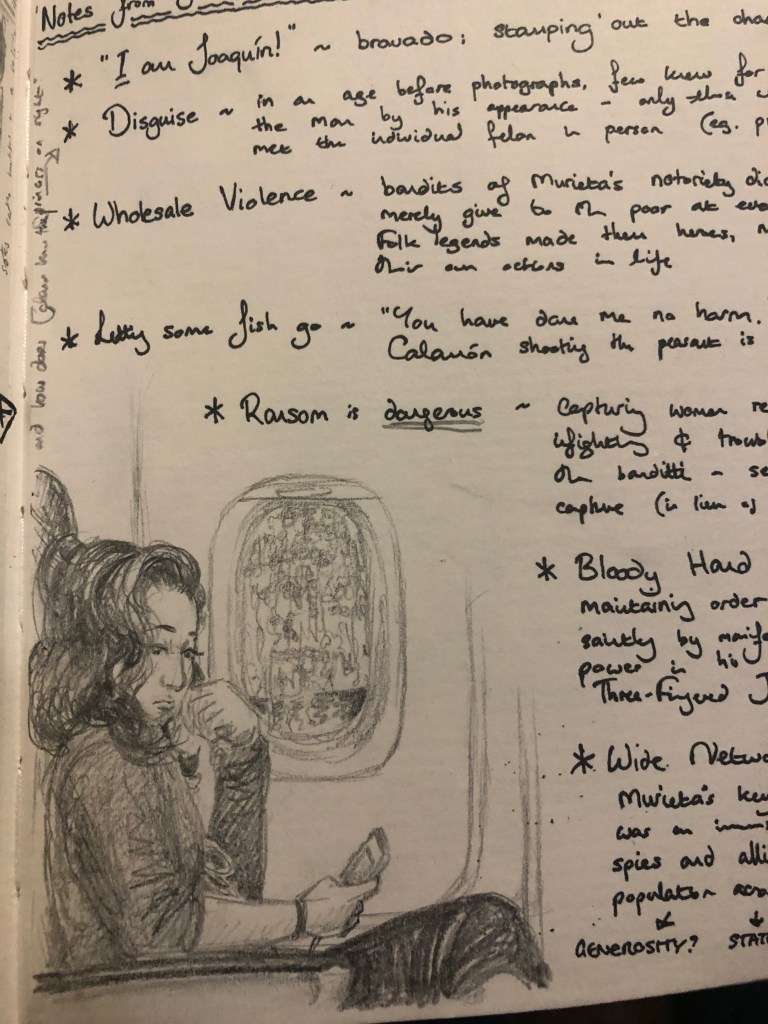
Three pages in and the novel is the back in the limelight – and so it continues. Every so often, I find something in a book or on the news that I deem worthy of recording, but as a rule, the bulk of my pen-and-pencilwork concerns the fate of my cast of characters and the world in which they live, ever-growing, ever-crystallising. Sketches in pencil duck and weave through the gaps like weasels, giving over onto full page illustrations when I really found my mojo. It’s a formula I have deviated from very little for nine years now.

When I was younger, and I still had these crazy notions (as the young and reckless always do) of embarking upon death-defying expeditions to Afghanistan and beyond, I remember thinking that, if something should happen to me, the world in my head that I had spent all but the first seven years of my life creating would disappear completely. That is, unless I left enough material behind for somebody to pick up the pieces. I suppose that morbid justification stuck, because there is now enough information spread across my various journals for somebody to put together the various stories I have always wanted to tell.
And perhaps there’s a logical explanation for that mindset.
My great-grandmother Mercedes was a woman ahead of her time. In a Spain teetering on the brink of Civil War, she found love with a poet and musician called Mateo. They corresponded in verse, quoting Oscar Wilde and Keats and Plato and Engels. Their handwritten letters to each other – safeguarded by my family for over fifty years – tell of a truly devoted husband and wife on an equal intellectual footing, flying in the face of the dictadura and the expectations of women outlined in the Guia de la buena esposa. Mercedes was well-known about town for her journal, which was as much a part of her character as her glass of brandy and cigars. Though her locally legendary journals themselves are lost to time, it is chiefly through her precious letters to her Mateo that I can see through a window in that past. It is a past which comes clearer into focus the more I get to know my family out there. The fatalist in me cannot help but wonder at the sequence of events that led to me arriving at my family’s door with little more than my journal in hand, unconsciously carrying the one item that would prove my connection to a great-grandmother I never had the chance to meet. Mercedes left this world the very same year I came into it.
I spent the greater part of my search for my family focused on the grandfather I never knew, but it is my bisabuela Mercedes who guides my hand these days. I’m a strong believer in upholding family traditions, and it doesn’t half lend a sense of purpose to the scribblings in my journals, even if they never lead anywhere. My ancestors left me a literal paper trail and I must follow.
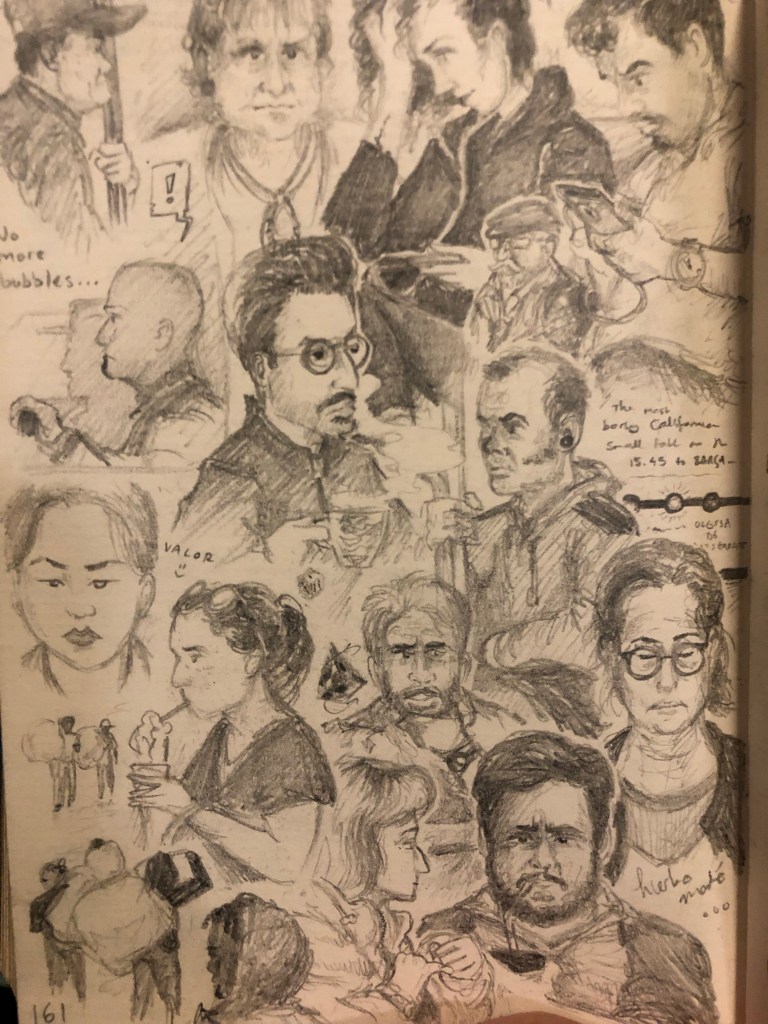
Have you ever kept a journal? I’d highly recommend it. It’s less onerous than a diary and a beautiful thing to look back on. Through mine, I can read the world around me through the strokes of my pen: the euphoria of success in the a cappella semifinals; my bewilderment at Brexit; the shockwaves of the fire of Notre-Dame; and my bottomless love for the country of my ancestors. It’s all there, and since boarding school life makes it nigh-on impossible to knock out a couple of chapters a week like I used to, my journals do a thumping good job at telling the story.
And maybe, one day, that’s exactly what they’ll do, when they fall into the hands of my grandchildren. I’d like that. I think Mercedes would have liked that, too.
BB x
 The Book of Barnabas